

As mentioned in the previous post, LexDellmeier is attending the ECTA Annual Meeting. ECTA, short for European Communities Trademark Association is an association promoting the knowledge and professionalism of members and owners alike in the fields of trade marks, designs, copyrights and other Intellectual Property rights, within the European Union. Among many other activities, they organize the Annual Meeting, this time taking place in the beautiful Dubrovnik, a historic gem in the south of the Croatian coast. We have prepared a short overview of each day of the Meeting.
The first workshop of the day was dedicated to giving us a well rounded overview of awarding damages in trademark cases in America and several countries of the EU. Although the general misconception is that it is easier to obtain damages in America, the speaker, Mr. David Donahue, explained it is not all smooth sailing. There are hurdles to cross, and the worst thing is that they vary from coast to coast and from court to court. These uneven decisions are fertile ground for forum shopping. There are multiple types of damages to be obtained: firstly, there is hypothetical royalty, where the jury estimates a higher atonement than the actual damage. This principle is not acknowledged by all American courts. Secondly, there is corrective advertising. The question that had risen was what if the money for advertising was never spent, for the lack of funding or for other reasons, and the Court decided that perspective damages are also possible. The final type of damages, and a very rare one, are treble damages. Those are imposed only when it is possible to prove an intentional infringement. Another problem mentioned was willfulness. As it is hard to prove in IP cases, two fractions have occurred: the majority still holds its ground that intent should be proven. However, a growing minority is rejecting the idea of proving willfulness.
The EU perspective was an array of interpretations and particularities coming from interpretation of the Enforcement Directive.
In the UK, the choice of remedies is between damages and accounts of profits. However, the trial is split, which means the actual amount of damages is determined after the decision on the existence of infringement. This resulted in injunction becoming the most important remedy available. In general, the system has many similarities with the American one. However, the British Courts took an interesting stand on protection of copyrights. They have decided that an author only has rights to the amount covering the economic loss, but nothing for harm of morals, as said in the Henderson case. As they believe, there is no reputation impairment, like in nude photographs publication. This is certainly an intriguing, if not controversial point of view.
In Germany, all existing methods of deciding on damages in practice usually come down to one: in 95% of cases it boils down to the fictional royalties. Those are the sum of net retail turnover and agreed rates, which are usually from 1-5% of turnover, but can amount to a lot more. Additional damages are rarely granted, but can be given on top of other damages. The specialty of German law are the “claims with the chain of distribution”, where you can get damages from every link in the chain of distribution, instead of seeking it from the manufacturer. Another difference is the prescription period of ten years. What it means is that even after the passage of the statute of limitations of three years, you can still get damages due to the other party’s unjust enrichment.
Report by Paul Maier of EUIPO that there are still many differences with conduct and practice of EU countries. An example of this is the estimation of prohibited punitive damages. In Belgium double damages are considered as “over the top”, while in Germany, they are considered as tolerable, as long as they do not reach the amount of three times the damages.
If this panel could be summarized in one sentence, it would be the one stated by Mrs. Annick Mottet Haugaard, the moderator of the panel: “We all have to work on harmonization, on both sides of the ocean.”
The second workshop was organized by EUIPO, and it was about the importance of the HDB, Harmonized Database, which contains more than 70 000 terms from which applicants can select the goods and services for which they seek protection in their trademark applications. The database is growing daily, with more and more local databases joining in. Following this introduction was short demonstrations of TMClass, the tool which helps to classify and search goods and services, and of Goods and services builder, which is a tool easing the process of the filing for the next trademark.
Although the INTA Annual Meeting has just finished, European IP professionals have another opportunity to meet, mingle and discuss the latest novelties in the field of IP. European Communities Trade Mark Association (ECTA) is organizing their annual meeting from 22 June to 25 June, 2016. The venue is the historic town of Dubrovnik, Croatia. With its colorful naval and merchant past, the organizers considered it to be symbolic to what is currently happening with the new trademark protection system, and named this year´s conference “Rogue Waves and Crosswinds: Trade Marks in Motion”. Although the program predicts a plethora of topics, they will all be emphasizing the new EU Legislative Package Trademark Reform. Although you will get a daily summary of the event, this is a short introduction to the planned discussions, workshops and events.
The Conference starts on Wednesday, 22 June 2016, with Committee Meetings, followed by the workshop “Award of damages in trade mark cases: Perspectives from the United States and the European Union”. With Mr. David Donahue representing the American colors, the European perspective will be observed from multiple standpoints: Mr. Simon Miles will confer the British, Dr. Richard Dissmann the German and Mr. David Pellisé the Spanish points of view. Comparing such versatile systems is sure to lead to an interesting panel discussion afterwards. The next workshop is organized by EUIPO, where Mrs. Inge Buffolo will hold a presentation on the new classification tools, mainly HDB. HDB is an abbreviation for Harmonised Database, the largest multilingual database of goods and services. The advantages of using the HDB are the pre-approval of terms by all national IP offices, as well as EUIPO, and the instant translation into all EU languages, which makes the process of registration run more smoothly.
The second day of the Conference starts with a Welcome speech by the ECTA Organizing Committee, followed by the Keynote speech by Mr. Emil Tedeschi. He is the founder, President and CEO of Atlantic Group, a leading food and beverages producer and distributor in South East Europe, and one of the most prominent and versatile Croatian entrepreneurs. After his speech, a short overview of the latest IP news is planned. Mr. António Campinos from EUIPO will start off with a report on trademark cooperation, whether it is between the National and Regional IP Offices and other IP Organizations, like in The European Trade Mark and Design Network (EUTMDN), or international, like within the TM5. Next, Dr. Michael Koenig from the European Commission will update us on EU Trade Mark Reform implementation, followed by Mrs. Àsta Valdimarsdòttir from WIPO, who will give us the new information on Madrid, Hague and other Treaties. The discussion will be closed with the update on status of the .eu domain, given by Marc van Wesemael, the General Manager of EURID. The next two sessions address the changes in the European Trade Mark Legislative Package. We will be introduced to crucial changes in the registration system, as well as their impact on current and future trademarks. The final session of the day is dedicated to counterfeiting, another burning issue in IP. The recent publication of OECD/EUIPO report showed some worrying figures, and the discussion on anti-piracy policy and enforcement, as well as its impact on trademark reform is expected to be very stimulating.
The final working day starts with two parallel sessions. The first one is on copyright, dealing with problems of modern technology, both from a legal and a music professional´s point of view, as well as with the thin line between necessary exceptions and fair use. The second session is on Prior Right Agreements, again opposing an industry perspective and a legal one. After a short break, the participants of the Conference can choose to attend a session on Chinese trademark law and practice, its current and future challenges, and the cooperation of China and the EU within the IPR Working Group. Alternatively, there is a possibility of attending the WIPO session on successfully filing a global trademark. The next session, titled “Rogue Waves and Crosswinds” by Mr. Mladen Vukmir will encapsulate the past, present and future of intellectual property and its meaning in today´s digital world. The final session of the Conference will bring us up to date with current case law.
We intend to post an update during the conference on important key issues.
The recent case the General Court of the European Union (the EGC) had to resolve was a great example of the correlation of conceptual similarity and public confusion. What conceptual similarity entails and how (not) to defend it, this case presents a systematic lesson for everyone.
Background of the case
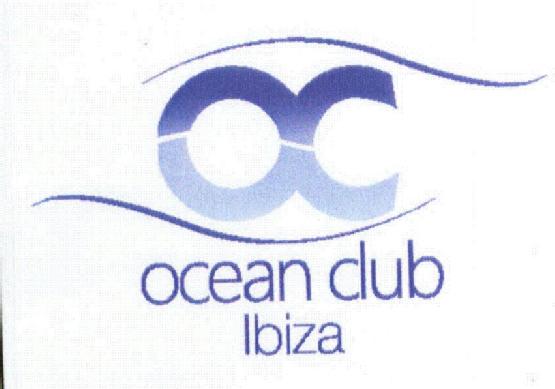
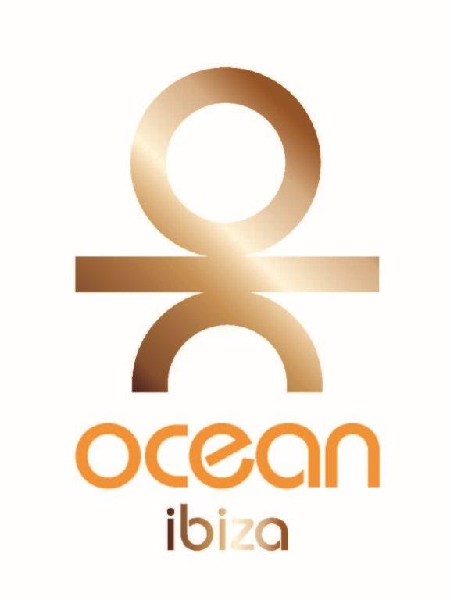
On 10 February 2012 Marbella Atlantic Ocean Club registered their logo in Spain. The sign in question was a blue figurative trademark (no. 3004401), protected for class 41 of the Nice Classification, for the offering of their entertainment services. Therefore, when the Office for Harmonization of Internal Market (OHIM, now EUIPO) registered a similar figurative trademark (CTMA no. 010610525) on 29 March 2012, they decided to oppose (case 002015835). The new application was filed by Ice Mountain Ibiza, in order to recieve protection for their film dubbing services. The Opposition Division ruled in favor of the earlier right (decision of 12 September 2013). They said that both services are intended to entertain customers and are very similar or identical. When comparing signs, the Opposition Division said the dominant word element of the sign can only be the word “ocean”, but is still weak both to the eyes and attention of the consumers and in comparison to the figurative element of the sign. Therefore, the signs are similar. Ice Mountain Ibiza appealed on 11 November 2013 (case R2207/2013-1). The Board of Appeal conducted a diligent analysis of the trademarks and their impact on consumers, and sided with the decision of the Opposition Division. The similarity of the services was not even questioned, everyone agreed they were similar. Ice Mountain Ibiza based the appeal on the figurative element of the sign, saying that the font and colors are different, but so is the perceived concept of the sign. They said that the older mark was a circle and a half-circle, obviously standing for the word “OC”. However, their figurative sign would be perceived as a stickman. The Board did not agree, deeming both signs would still present “OC” to the public and designating conceptual similarity to the trademarks. With all the mentioned similarities, consumers might be led to confusion. This was not the end of the case, as Ice Mountain appealed again, this time to the EGC.
Decision of the Court
The decision of the EGC (T-6/15), dated 25 May 2016, agreed with the previous decisions and repeated most of the Board’s reasoning. The first step the Court took was establishing the relevant public. They said it consisted of reasonably well-informed and reasonably attentive consumers. Next, it swiftly confirmed that the goods and services are similar or identical. More attention was given to the comparison of the mark itself. Visually, they looked rather similar. They do consist of the same letters, just rotated. Ice Mountain abandoned their stick figure theory and tried to argue that only figurative elements are dominant, and that the other words are insignificant, but the Court stated that even if that were true, the visual similarity still exists. The phonetic similarity was undisputed, so the applicant tried to shift the importance to visual (dis)similarity, saying that in that services sector it is more common to give weight to the visual. Thirdly, the court found it wrong to narrow the conceptual similarity just to the figurative element of the trademark, but even with that in mind, considers every part of the trademark conceptually similar. Finally, it was left to the Court to sum up and assess the likeliness of confusion. The Court decided it would be expected for the consumer to be confused, and that OHIM was right to reject Ice Mountain’s application.
Welcome to Whatsapp.com! Step one, choose a preferred language for a more personalized experience. That is, unless you are looking for the Terms of Service (ToS). Although being one of the most important elements of this messenger service, they are provided in English only. The Berlin Court on 8 April 2016 rendered the ToS invalid, requesting WhatsApp to adjust to their German-speaking users.
Background of the case
The dissatisfaction with WhatsApp´s ToS started two years ago when the Federation of German Consumer Organizations (Verbraucherzentrale Bundesrepublik, VZBV) had taken the Facebook-owned message service provider to the Berlin Municipal Court, claiming they are violating German law. They said the Terms and Services (German: Allgemeine Geschäftsbedingungen, AGB) were in English only, and therefore not understandable to German citizens. Also, they lacked a German representative in the country, as the only way to contact WhatsApp was via email. The Court ruled in their favor (case 15 O 44/13), asking WhatsApp to translate their Terms of Service. WhatsApp appealed soon after, taking the case to a higher-instance court.
Decision of the Court and its consequences
The Kammergericht, the highest state court for the state of Berlin, upheld the previous decision on 8 April 2016 (case 5 U 156/14). They ordered WhatsApp to define an alternative way of contacting the company apart from the provided email form in order to conform to the German Telemedia Act. Also, WhatsApp will have to translate their ToS into German. The judge said that although many Germans do speak English, this is specialized, legal English, which is harder to understand for the average citizen. And if incomprehensible, the ToS are ineffective and invalid. In case WhatsApp decides not to oblige, it is facing a fine up to 250 000 EUR or a six-month imprisonment of their CEO. It is yet to be seen if WhatsApp will file an appeal to the German Supreme Court.
This ruling has two major impacts. The first one targets WhatsApp itself. Their ToS are in English only and their webpage is offered in over fifty languages. If their wish is to provide equal service to all of their users, it is to be expected they provide translations.
The second impact is external, including all other companies following WhatsApp´s practice. The VZBV showed they will not tolerate such behavior and that they will have to put the safety of their users first.
Each year, top intellectual property professionals gather from all around the world to attend an yearly event organized by the International Trademark Association (INTA). This year, the 138th INTA Annual Meeting was held in Orlando, Florida, from 21 May to 25 May 2016. It was a proud moment for INTA, as the number of registrants surpassed the 10 000 milestone, making this the largest meeting in INTA´s history. Of course, LexDellmeier IP Law Firm attended the conference and continues to support INTA´s efforts by serving as a committee member on the Public Media Relations Committee. The Committee´s aim is to educate persons who do not deal with intellectual property on a daily basis.
The Annual Meeting is more than just a business event. With its diverse program it is considered to be the meeting point for all professionals working in the field of intellectual property, in order to learn something new, create new contacts and participate in the outstanding educational sessions on trademarks, designs and copyrights.
And what a year it was! On May 1, 2016 LexDellmeier IP Law firm turned seven. Founded in 2009, each year has brought exciting new challenges, cases, clients etc. leading to growth and success and a 2016 award as the Boutique IP Law Firm of the Year in Germany.

This year we decided to mark our anniversary with a new-and-improved LexDellmeier webpage at www.lexdellmeier.com. Our aim is to give you a full overview of intellectual property, whether you are an IP enthusiast or a newbie just getting interested in the subject. In particular, we have included our blog, which can now be found at http://www.lexdellmeier.com/de/blog.
Another reason to celebrate, Corporate INTL Awards awarded LexDellmeier with the honor of becoming a Corporate INTL Awards Global Winner 2016. The firm was chosen to be the boutique intellectual property law firm of the year in Germany! This award aims to commemorate those who have been successful over the past 12 months and have shown excellence not only in expertise, but also in service.
It is only left to be said that we are glad our efforts and hard work have been recognized and we look forward to meeting and working with you around the world regarding IP!
With the booming of online commerce, entering your personal information and sending it to the cloud has become inevitable. Along grew the concern of both citizens and businesses. The lack of control over given data worried many and the fragmentation of laws and complicated national systems of obtaining protection did not help. Therefore, it is no wonder that 90% of the surveyed EU citizens opted for an improved and unified EU data protection legislation.
On 4 April 2016 the European Parliament adopted the new Data Protection Regulation and Directive. The Directive entered into force on 5 May 2016, with a three-year transposition deadline, and the Regulation will enter into force on 24 May 2016, with the application date set for 25 May 2018.
The new legislation applies to organizations, based both in the EU and outside of it, when collecting EU citizens´ data.
Under the coordination of the European Data Protection Board (EDPB), each country will have to form a Supervisory Authority, a body responsible for sanctioning illegally collected data. Also, the new legislation predicts help in data controlling by a Data Protection Officer, a person with expert knowledge of data protection law, monitoring internal compliance with the Regulation. Under his scope of obligations is notifying the SA on established breaches.
The former “right to erasure” will now be replaced by a less lenient “right to be forgotten”. It is predicted that the number of deleted entries will from now on be on a rise, as more power is given to the individuals and not the controller.
Some dissatisfaction has been expressed concerning the new legislation. As most of it is pointed to forming the new bodies and difficulties reaching the high demands for protection the data, it is to be expected that private persons are to feel the benefits of the Regulation and the Directive.
With joined efforts, the Organization for Economic Co-operation and Development (OECD) and the European Union Intellectual Property Office (EUIPO) conducted a study on counterfeiting and the impact it had on economy from 2011 to 2013. Their results were published on 18 April 2016 under the name“Trade in Counterfeit and Pirated Goods: Mapping the Economic Impact”. Although presuming the results would not be satisfactory, they have exceeded all expectations, with 2.5% of world trade including counterfeits and up to 5% of imports in the EU. This might not seem significant at first glance, but 2.5% of the world trade amounts to 461 billion USD, which is equal to the GDP of Austria. 5% of EU trade is 116 billion USD, almost the GDP of Hungary. Seeing these numbers in black and white should start the alarm in policymakers´ heads and show how much we are in need of a change in the legislation.

The study
The study was set on two pillars. The first one was the impact of crime and illicit trade on good governance and public safety.
The second one was what were the economic effects of these activities.
The study included trademark, patent, copyright and design right infringements. The main focus is given to trademarks, as they represent the main identifier of the producer. Their value is constantly on the rise, especially for the scientific research, information and communication technology, agricultural, textiles and clothing and real estate sector.
The results
The first thing to be noted is the rise and importance of e-commerce. In the US, e-sales have been on a rise since 1999, and now hold 7% of total retail sales. In the EU, they have grown 5% in the last 6 years. The advantages of e-commerce are well-known: it is less expensive for both the producer and the consumer, and less time-consuming and more available to the customer. Unfortunately, it is also the easiest way to distribute counterfeits. They are available non-stop and the e-shops are easily transferrable from one site to another, making them harder to shut down.
For every of the three observed years, the number of counterfeited goods exceeded 100000. Most seized shipments come from East Asia, primarily China and Hong Kong. The goods in question are mostly luxury goods, like footwear, clothing, perfumes, leather and watches, but, can also be common goods, such as toys. The diversity of the seized goods is best described if said that even fake bananas and strawberries have been found. Another problem is that counterfeits can sometimes be a health hazard. When thinking about fake pharmaceuticals, food and drink, car parts or toys, it is obvious that their usage can put lives in danger.

Most seized products infringe IP rights of American producers (20%), followed by Italian (14.6%), French (12.1%), Swiss (11.7%), Japanese (8.2%) and German (7.5%). Interestingly, China has also made the list of the infringed, with the percentage of 1.3. This shows the impact of counterfeit goods on research and development in a country. With so many domestic counterfeits in the market, Chinese producers rarely dare to invest in R&D.

There seems to be a higher recurrence of seizure of specific brands like Rolex, Ray Ban, Louis Vuitton, and especially Nike. Special attention should be given to the growing number of credit card counterfeits. These are especially dangerous because of their connection to different types of credit card fraud. Usually, they are conducted using real credit card holder´s data, obtained by skimming the data from the magnetic strips, stealing the original cards or by obtaining data from the card holder in return for sales of inexistent products.
The end consumers can be divided into two groups: the ones who unknowingly buy counterfeits, expecting to get the original product, and the ones who willingly buy fakes, wanting and expecting a lower price for the good. Depending on the target group, a wide range of prices is offered. For example, Nike shoes go from 5 to 200 USD, and Rolex watches from 5 to 200 000 USD. The highest prices resemble the ones of the original product, but are usually marked as a special deal, a short-term discount, etc.
The image that comes to mind when thinking of seizure of counterfeits is usually a massive raid with hundreds of confiscated products. The reality is quite different. Most appropriations consist of ten products or less, usually only one. They are the easiest to ship, in small parcels via mail. Usually, there are multiple stops in different countries from the production line to the end consumer. This is necessary in order to mask the point of origin, adding parts or repackaging and re-labeling the product.
When mentioning provenance economies, the report is talking either about the economies where production is taking place or the economies used as a port of transit, where infringing goods pass. The report proves that any country can be a providence economy. They are geographically dispersed, with Hong Kong and China in East Asia, Turkey in West Asia and Europe, Tunisia in Africa, Tokelau, a tiny island situated between Hawaii and New Zealand, and many others.


It is hard to determine the total value of the counterfeit products. First of all, the pirate market changes so much and so often that any measurement would be highly imprecise. Secondly, the customs information is almost always confidential. The best that can be done is determining the upper boundary of the counterfeit trade. The final result of the study indicates that the pirate goods were worth up to 461 billion USD in 2014. This makes it 2.5% of the entire world trade. It is alarming information, because a 2008/2009 study conducted by the OECD resulted in approximately 200 billion dollars. Although that study showed a lot of imperfections in comparison to the 2015 one, it still shows an undeniable divergence.
The EU
With over 100 000 trademarks registered with the EUIPO, IP rights are of major importance in the EU. IP-strong companies have higher revenues, employ more people and offer higher wages.
The types of counterfeit goods are mostly clothing and footwear, watches and perfumes, but the list also includes tobacco, optical, photographic and medical instruments and metal tools.
The value of fakes in the EU comes up to 85 billion EUR (116 billion USD), which is 5% of all imports. They are imported or produced mostly in China, but also in Afghanistan, Greece, Hong Kong, Lebanon, etc.

The conclusion
The results of the study are worrying, as the numbers show that the impact on economy and research and development is undeniable. The next steps might be tracing the production of counterfeit goods, as well as conducting an additional study of the reasons behind the emergence of pirated products. With complete understanding of this phenomenon, the OECD countries should propose measures to reduce the rates of import of counterfeits.
1891 was the year basketball was created, American Express issued first travelers´ checks and Edison patented motion picture camera. However, the most significant date for intellectual property is April 14, 1891 as it marks the date the Madrid Agreement was adopted.
 Madrid Agreement was the first international treaty concerning the implementation of receiving trademark protection in many countries. Back then, it had nine signatory countries and only a small number of registered trademarks. Dating from 1893, the oldest still active trademark belongs to Longines, a Swiss watch maker. Constantly changing to adapt the needs of the applicants, the biggest adjustment was the introduction of the Madrid Protocol in 1996. Presenting a number of changes in order to improve practicality and efficiency of the System, it soon became more popular than the original Agreement. The next significant amendment of the System occurred in 2015, with the incorporation of the Agreement and the Protocol into a single-treaty system.
Today, 125 years later, the Madrid System counts 97 member states (status: 29 April 2016) and covers 113 countries, with over a million registered trademarks. It requires only one application in one language and one fee, which is of major convenience for the applicant.
What the future holds for the System is crossing the 100 member state threshold, faster processing time and improvement of their E-services, leading to an easier and more efficient system.
After the European General Court’s (EGC) ruling on September 2015, the battle of the reptiles continues in front of the Court of Justice of the European Union (CJEU). As Lacoste protects their famous crocodile logo, Kajman is trying to prove the difference of their KAJMAN logo.

Background of the case
On February 1, 2007, KAJMAN, a Polish clothing manufacturer owned by Mrs. Mocek and Mrs. Wenta, filed an application to register their logo, a figurative mark KAJMAN (EUTMA no.: 5 686 845), for classes 18, 20, 22, 25 and 36 of the Nice Classification. A caiman is a reptile from the family of alligators. The French textile giant Lacoste opposed the mark on October 20, 2010, based on their registered EUTM (no. 002979581), the well-known crocodile logo, and word mark “CROCODILE” (EUTM No. 005567821) registered for all classes of the Nice classification, except class 8. Lacoste claimed the marks are similar and the average consumer is likely to mistake Kajman for Lacoste, especially given Lacoste’s reputation. The Opposition Division of OHIM (now EUIPO) stated the goods were identical, and their marks were conceptually similar, but disputed their visual and phonetic similarity. Although the Lacoste sign might enjoy a higher level of recognizance and the conceptual similarity, the average consumer would not mistake a Kajman product for a Lacoste one, and the opposition should be rejected.
Lacoste appealed this decision. OHIM’s Board of Appeal partially disagreed with the decision of the Opposition Division. More precisely, they believed that Lacoste did enjoy reputation in the classes 18 and 25. It agreed that the goods are identical and the signs were slightly visually similar. Next, it took into the account a survey conducted by Lacoste that showed public recognition of over 70%, gained through an extensive use during a longer period of time. However, they deducted that the likelihood of confusion was inexistent for products other than leather goods, clothing and footwear.
The decision of the EGC and future action
The decision was found dissatisfactory by Kajman, and they brought the case to the General Court of the European Union (EGC, case T-364/13). Upon observing the similarity of the signs, the EGC concluded that the level of similarity is higher than estimated by the Board of Appeal, at least average, definitely not low. Adding the high similarity of goods and the enhanced distinctiveness of the earlier mark, the average consumer might mistake the Kajman product for a version of Lacoste’s product, or deem the undertakings as economically linked. Therefore, on September 30, 2015, the EGC decided that Kajman’s appeal should be dismissed.
On November 19, 2015, Mocek and Wenta filed an appeal again, and the case is expected to be heard in front of the Court of Justice of the EU (case C-619/15).