

n its judgement of 18 March 2016, the General Court ruled that the wordmark “BIMBO” cannot be registered as a European Trademark. The Italian-speaking consumers of the Union would merely perceive the mark as indicating that the relevant products are intended for children (Judgement T-33/15).
“BIMBO”
Background of the case
On 28 February 2013 a Mexican company, Grupo Bimbo, SAB de CV, filed an application for a European Trademark (EU TM) at the European Union Intellectual Property Office (EUIPO). The wordmark “BIMBO” was sought registered for “Flour, bread and cereal preparations and products; products of pastry and biscuit” in Class 30.
The examiner rejected the application on the grounds that the relevant Italian-speaking consumers would interpret the word “bimbo”, which is an Italian word for “child”, as indicating that the products are intended for children. The wordmark was thus not considered to be capable of indicating the commercial origin of the products in question.
Grupo Bimbo appealed the examiner`s decision and argued that the mark, being a recognized brand worldwide, had acquired distinctiveness through use. Furthermore, they stated that the word “bimbo” was normally not used to designate a child in Italian and that the Italian rules on product labelling only provided that products for children should be labelled with the reference “per línfanca” or “per bambini”, not the term “bimbo”. Grupo Bimbo also made reference to the seniority of its brand “BIMBO” in Italy and that the mark was successfully registered in Switzerland, Germany and the UK. Lastly, Grupo Bimbo argued that the Court had previously recognised the reputation of the “BIMBO” brand in Spain (in Case T-357/11).
By decision of 19 November 2014, the Second Board of Appeal (BoA) dismissed the appeal as they found that the mark in question was descriptive and not distinctive in Italy.
The decision of the General Court
The General Court dismissed Grupo Bimbo`s action and upheld the decision of the Board of Appeal.
First of all, the General Court confirmed that the existence of absolute grounds for refusal must be assessed in connection with the Italian–speaking consumer of the Union.
The General Court noted that even though the term “bimbo” is not generally used in Italy to describe or designate the relevant goods in Class 30, the Italian-speaking consumers will interpret the word “bimbo” to refer to the recipients of those products as the goods in question are suitable for consumption by children. Thus, the wordmark was found to be descriptive of the characteristics of the products concerned.
The General Court stated that it is sufficient that one of the possible meanings of the word designates characteristics of the goods in question, meaning that the Italian understanding of the wordmark rendered the mark from being registered in the whole Union.
The General Court further rejected the arguments concerning the already existing Italian, Swiss, English and German registration for the wordmark “BIMBO”. They reminded that the trademark regime of the Union is an autonomous system where EUIPO is not bound by any national decision.
Furthermore, the Court noted that the similar marks which were accepted earlier were either different marks or registered for different goods and services. Either ways, the Court said that the possibility of registering a sign as a Community trade mark must in each case be assessed solely on the basis of the Trademark Regulation.
Lastly, the General Court concluded that Grupo Bimbo had not successfully proven that the mark had acquired a distinctive character through use in Italy.
On 15 April 2016, the European Trade Mark and Design Network published a Common Communication on Convergence on graphic representations of designs (CP6).
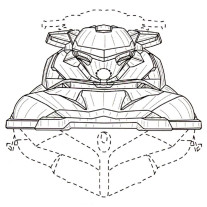
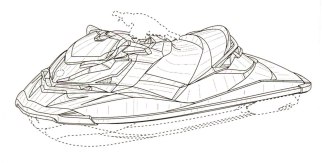
The Communication on the Graphical representations of designs is a result of the cooperation between the European Intellectual Property Office (EUIPO), National IP Offices and User Associations in a so-called Convergence Programme. The aim is to reach a common ground in areas where IP offices have different practices.
The CP6 is the first one published in the area of designs. The aim is to give guidance for the examination procedures on e.g.:
- How to use visual disclaimers.
- How to use different types of views.
- How to represent a design on a neutral background.
The document also provides recommendations to enhance the applicant´s understanding of how to reproduce their designs in the best way, in addition to an overview of the quality standards for design applications received by electronic means and by paper.
The purpose of the CP6 is to increase transparency, legal certainty and predictability for the benefit of examiners and users.
For more information, press here.
Press here for the Common Communication CP6: Convergence on graphic representation of designs.
Illustration: RCD No. 001282545-0001
[[{"type":"media","fid":"4695","view_mode":"default","alignment":"left","instance_fields":"override","attributes":{"height":266,"width":266,"style":"width:266px;height:266px"},"field_file_image_alt_text[und][0][value]":"","field_file_image_title_text[und][0][value]":""}]]A trademark can be any sign capable of distinguishing the products of one company from those of another. If you own a trademark, you have exclusive rights to use that trademark on the products you have protected and are offering on the market. This means that you can prevent any third party from using the same or a similar mark for the same products. Consumers usually base their purchasing decision on the good reputation of or their previous experience with a brand. The trademark attached to the products is therefore of great value to a company as it helps the consumers to pick out products from a specific commercial origin.
Through a license agreement the owner of a trademark, the licensor, can allow third parties, the licensees, to use his trademark under certain conditions in return for payment.
1. Why enter into a license agreement?
Sometimes the owners of intellectual property rights do not have the skills, capital and commitment to commercially exploit their rights themselves. In these situations it is a good solution to find someone who has that capacity and gr[[{"type":"media","fid":"4696","view_mode":"default","alignment":"right","instance_fields":"override","attributes":{"height":166,"width":265,"style":"width:265px;height:166px"},"field_file_image_alt_text[und][0][value]":"","field_file_image_title_text[und][0][value]":""}]]ant them a license. Others might have this capacity themselves, but wish to use licensing as a marketing and brand extension tool to expand and increase their brand value. Also, the licensee benefits from a license agreement as he can commercially exploit a trademark, in which he has not invested time and money in developing. Further advantages of license agreements will be highlighted at a later stage of this article.
2. The license agreement
When granting a license, the parties need to lay out in a contractual agreement the scope of how the licensee is allowed to exploit the granted right. The license agreement should be made in writing. However, it could be in oral if the law of the relevant country allows it.
a. Checklist for your license agreement:
What:
- Include clear definitions of which intellectual property rights are licensed, e.g. trademarks, design rights, patent rights etc.[[{"type":"media","fid":"4698","view_mode":"default","instance_fields":"override","attributes":{"height":203,"width":304},"field_file_image_alt_text[und][0][value]":"","field_file_image_title_text[und][0][value]":""}]]
- specify for which goods and services the licensee may exploit the trademark;
- the required quality of the goods and services and in which way the proprietor will monitor that such quality is delivered;
- how the royalty rates shall be calculated and under which criterions the royalty fee shall be paid;
Where:
- the territory, e.g. in which country, the licensee may use the trademark;
Extent:
- specify the degree of exclusivity that is granted, meaning whether it is an exclusive, sole or non-exclusive license;
- whether there are any restrictions on the right of the licensee to exploit the trademark;
- whether the licensee may grant sub-licenses or transfer its rights to others;
- whether the licensee has the right to take legal actions in respect of infringements of the trademark;
Duration:
- specify whether the agreement is for a fixed period of time, for indefinite duration or terminable by either party;
- under what circumstances a party might terminate the contract;
This list is not exhaustive. The parties may include individual clauses that they consider necessary.
b. Different types of licenses
The parties need to lay out in the agreement the degree of exclusivity that will be granted.
Exclusive license: The licensor is granted a right to use the trademark and exclude all others. The proprietor is thus not able to grant a license for the same trademark to any other parties and he can also not exploit the mark in trade himself. When granting an exclusive license, a minimum performance obligation is usually included in the agreement.
Sole license: The licensor is prevented from granting a license of the same mark to a third person, but, he is allowed to use the mark himself
Non-exclusive license: The agreement does not restrict the licensor from licensing the trademark to other third parties or from using the mark himself.
3. Recording of the license agreement
[[{"type":"media","fid":"4699","view_mode":"default","instance_fields":"override","attributes":{"height":203,"width":324},"field_file_image_alt_text[und][0][value]":"","field_file_image_title_text[und][0][value]":""}]]Before entering into a license agreement where your trademark will be used in a foreign jurisdiction, it is crucial to seek legal counsel in order to make sure that possible legal requirements applicable to trademark licensing agreements in that jurisdiction are met. A professional must, for example, examine whether the license agreement itself needs to be recorded in the national trademark registry. Many countries have such requirements and the failure to comply may result in the trademarks or the license agreements itself becoming either invalid or unenforceable. The failure to comply may also result in penalties for the contracting parties.
There are no legal formalities required under international law for the licensing of trademarks. Most license agreements are treated as regular contracts which are governed by the law of the country of the transaction, or any other law agreed upon by the parties.
Although international laws do not require a license to be recorded with the relevant trademark registry, some national countries require that there is an official and publicly accessible record of the permitted use. Under some laws the requirement is dependent on whether one of the parties requests such recordal. Under other national laws, such recording is not required in order for the agreement to be valid, but a failure to record a license may render the rights of the licensee ineffective against third parties.
Germany: The German Trademark Act does not demand recording of trademark licenses. However, it could help in enforcement to demonstrate use of the mark.
European Union: The license agreement is only required to be recorded where one of the parties requests it.
Other countries:
United Kingdom: There is in general no legal requirement that a trademark license must be recorded with the national trademark office. However, such licenses may be recorded and can be helpful to demonstrate use of the mark.
United States: Recordation of licenses with the national trademark office is not mandatory in this jurisdiction. However, such licenses could help to demonstrate use of the mark.
Russia: A license of a registration must be recorded to maintain the validity of the registration if it is used under the license. The license for a renewed registration need not be re-recorded.
China: In general a license of a registration does not need to be recorded. However, such licenses could help to demonstrate use of the mark.
4. Quality control
[[{"type":"media","fid":"4695","view_mode":"default","instance_fields":"override","attributes":{"height":266,"width":266},"field_file_image_alt_text[und][0][value]":"","field_file_image_title_text[und][0][value]":""}]]The main functions of a trademark are to indicate the source of origin and subsequently guarantee a certain quality. Products which are delivered by a licensee will naturally not emanate from the trademark owner himself. When making a purchasing decision, the consumers will rely on the reputation of and the previous experiences with the brand. It is thus crucial that the quality of the goods and services offered by the licensee are of the licensor’s standards in order for consumers not to be deceived and the proprietor’s reputation damaged. The inclusion of quality control provisions in the license agreement is therefore crucial to trademark licensing.
In practice, most trademark owners see the important commercial purpose served by quality control requirements and do generally include them in their license agreement. Some countries also place a duty on the licensor to exercise a quality control over the licensee’s goods and services. If the licensor fails to take reasonable measures to control the products of the licensee it can result in the loss of trademark rights or the trademark may become vulnerable to attack.
5. Advantages of license agreements
There are several reasons why it makes sense for a company to exploit its intellectual property rights by entering into license agreements. Such agreements can be a valuable part of a strategic business plan for both a licensor and a licensee:
a. Additional revenue
[[{"type":"media","fid":"4700","view_mode":"default","instance_fields":"override","attributes":{"height":190,"width":253},"field_file_image_alt_text[und][0][value]":"","field_file_image_title_text[und][0][value]":""}]]By licensing, one can enhance the value of the trademark and increase financial returns for the trademark owner. Product manufacturers are often willing to pay significant royalty rates for the right to identify their goods with an established and widely recognized trademark. The royalty rates will usually amount to a certain percentage of the expected profits from the products that incorporate the licensed trademark. The criterions for the royalty rates are determined after negotiation between the parties.
The trademark owner can grant several businesses a permit to exercise his rights at the same time. By each licensee the licensor will create an additional revenue stream without having to shoulder the risk of manufacturing the products.
b. Strategic partnerships
A license agreement can be a “win-win” situation for both the licensor and the licensee. The licensor can enjoy the licensee’s local knowledge and manufacturing- , distributing- and marketing capacity, while the licensee can commercially exploit a trademark, in which he has not invested time and money in developing. This is beneficial for the licensee who will get his products and services to the market faster. Through licensing agreements one can gain strategic partnerships where one can rely on the ability of the partner to meet challenges one cannot meet alone.
c. Increase of brand recognition
[[{"type":"media","fid":"4701","view_mode":"default","instance_fields":"override","attributes":{"height":166,"width":318},"field_file_image_alt_text[und][0][value]":"","field_file_image_title_text[und][0][value]":""}]]Brand recognition is crucial for a trademark proprietor, and the more the mark is used, the greater the recognition among the consumers will be. A licensed trademark may be used on products other than the proprietor’s core products, and thus extend its visibility to consumers. It may also expand the brand to territories where the proprietor himself is not active. The risks and costs of territorial expansion are eliminated when the brand is manufactured and distributed in the new territory by a local licensee. Furthermore, expansions to new territories and markets mean that new revenues may be extracted. This can thus be achieved without having to do big investments or research.
d. The license agreement as a tool to keep your trademarks rights
Sometimes a license agreement is necessary for the proprietor in order to meet the requirements of use of the mark for the goods and services it is registered for. The situation could be that the proprietor himself cannot use the mark himself for a period of time because of mergers, acquisitions, bankruptcy etc. It could also be that the proprietor does not provide all the goods and services the mark is registered for. As trademark use of the licensee is in general considered use by the proprietor himself concerning the obligation to use the mark, the granting of a license can in these situations be a great tool for the proprietor to keep his trademark rights. In addition, the license agreement makes sure that there is a continuous revenue stream until the proprietor can use the mark himself again.
To sum up, license agreements may reduce the investments needed to access the marketplace for both the licensor and the licensee. While the licensor receives revenues from the use of the mark, but does not take the risk of manufacturing, promoting and selling the products, the licensee can exploit the IP right without the expense and risk of the research and the costs of developing the trademark.
6. Disadvantages of license agreements
[[{"type":"media","fid":"4702","view_mode":"default","instance_fields":"override","attributes":{"height":188,"width":251},"field_file_image_alt_text[und][0][value]":"","field_file_image_title_text[und][0][value]":""}]]One should also be aware that there could be some disadvantages of trademark licensing. As mentioned above the trademark indicates the origin of the products bearing it. The fact that a trademark is licensed to a third party might confuse the consumer and lead to dilution of the brand if the quality of the products does not hold the same standards as that of the trademark owner. Furthermore, the licensor may suffer severe damages if the licensee does not meet the quality that is expected behind the brand. There is also a risk to be drawn into product liability disputes.
To prevent the effect of these disadvantages, the licensor should carefully line up an agreement where he can terminate the license if the licensee damages the reputation of the licensor’s brand, if the quality of the products does not hold the standards of the proprietor or if the licensee does not maximize the opportunities to exploit the mark. The licensor may sue for trademark infringement and breach of contract if the licensee contravenes to the provisions laid out in the license agreement.
7. Different ways of licensing a trademark
a. Brand extension
This type of licensing is common where one wants to extend the trademark to other products or services than what it is originally used for. “Porsche” and “Ferrari” are for example not only used for cars, but is extended to a large variety of products such as watches, sunglasses, clothing, umbrellas, chairs and toys. Further, the “UCLA” trademark which originally stands for “University of California, Los Angeles”, is today licensed for a wide range of products e.g. clothes, headwear, watches, backpacks, towels and sports equipment.
To grant a license in this way is a good marketing strategy as the licensor extends the brand to other product categories while the licensee may offer products containing well-developed marks.
b. Franchising
Licensing may also appear as a part of a more comprehensive cooperation project called “franchising agreements”. The franchisee will be allowed to use a particular business model and is granted a license to use the specific trademarks. The franchisee will also be supported by training, technical support and mentoring. The franchisees will run the businesses on their own account, but will for the customers appear as a strong unity under the same trademark. Examples of businesses who are under such agreements are: McDonald´s, Subway, Domino`s Pizza, Dunkin` Donuts and 7-eleven.
c. Merchandising
The licensing of trademarks and designs, as well as fictional characters and real personalities protected by these rights, can also be conducted through merchandising. Manufacturers of ordinary consumer’s goods are through a licensing agreement allowed to apply well-known marks and designs to their goods. Trademarks of, for example, popular sports teams or entertainment distributors have huge consumer recognition and appeal to the consumers and are thus licensed for products such as towels, toothpastes or clothing.
d. Co-branding
[[{"type":"media","fid":"4703","view_mode":"default","instance_fields":"override","attributes":{"height":266,"width":266},"field_file_image_alt_text[und][0][value]":"","field_file_image_title_text[und][0][value]":""}]]
Co-branding is where two or more trademarks are combined in one product to make a stronger appeal to the same clientele or conquer a new market. The product will thus be associated with strengths from both brands. An example is where the well-known mark “UCLA” is used in combination with “Adidas” on sportswear. Another move for two brands to extend brand recognition can be illustrated with the partnership between the brand owners of “Kinder” (chocolate eggs) and “STAR WARS” as shown on the picture to the left.
e. Component or ingredient branding
A product manufacturer may license the right to use the trademark of an ingredient. A key ingredient in a product may often affect the consumer`s decision to buy a product, even though the consumer might not even be aware of it. Such ingredients can for example be “Gore-Tex” for sportswear of “Teflon” for cookware.
f. Standards
[[{"type":"media","fid":"4704","view_mode":"default","instance_fields":"override","attributes":{"height":189,"width":161},"field_file_image_alt_text[und][0][value]":"","field_file_image_title_text[und][0][value]":""}]]
Some trademarks communicate to the consumers that the relevant product complies with certain standards. When a product is bearing such a trademark the costumer appeal of the product will enhance and can thus increase revenue for the licensee. An example of such a mark is the well-known international “FAIRTRADE" mark (EU TM No. 007408917) which is licensed to a wide range of manufacturers and distributers.
Further references:
Press here for a comprehensive guide to trademark licensing written by WIPO´s Committee on Development and Intellectual Property.
Every year huge licensing events are arranged so that retailers, licensees or sales promotions professionals can meet face-to-face with leading brand owners and be introduced to a huge variety of brands available for licensing. Press here if you want more information about the “Brand Licensing Europe” and here if you want more information about “Las Vegas Licensing Expo 2016”.
Disclaimer: The information provided in this article does not constitute legal advice. Please be aware that laws might change, leaving this article outdated
In its preliminary ruling of 3 March 2016, the European Court of Justice (ECJ) ruled that actions on trademark infringements in online advertising cannot be brought against a third party who is not in direct or indirect control of the act constituting the trademark use (Judgement C-179/15).
[[{"type":"media","fid":"4693","view_mode":"default","instance_fields":"override","attributes":{"height":81,"width":452},"field_file_image_alt_text[und][0][value]":"","field_file_image_title_text[und][0][value]":""}]]
Background of the case
Daimler AG, a German motor vehicle manufacturer, is the proprietor of the international figurative trademark “Mercedes-Benz”, No. 321168, as shown above. Együd Garage is a Hungarian company engaged in the retail sale of motor vehicles and parts and their repair and servicing.
In 2007, Együd Garage and Mercedes Benz Hunaria Kft, a subsidiary of Daimler, concluded an after-sale services contract where Együd Garage was entitled to use the “Mercedes-Benz” trademark and describe itself as “authorised Mercedes-Benz dealer” in its advertisements. The contract expired on 31 March 2012.
While the contract was still in force, Együd Garage ordered a company providing online advertisement services (MTT) to publish advertisements for the year 2011 to 2012 where Együd Garage would be named as an authorised Mercedes-Benz dealer.
Following the termination of the contract, Együd Garage asked MTT to amend the advertisement so that the public would not assume that there still was a contractual link between Együd Garage and Daimler. Együd Garage also wrote to operators of other websites requesting the removal of the online advertisement, which had been published without its consent. Despite the efforts, online advertisement containing references to Együd Garage as an “authorised Mercedes-Benz dealer” continued to be distributed online.
Daimler brought an action before the Municipal Court of Budapest seeking a declaration that Együd Garage infringed its “Mercedes-Benz” trademark by the references in the advertisements.
The Municipal Court of Budapest referred a question to the ECJ for preliminary ruling concerning the interpretation of art. 5 (1) of the Trademark Directive. In short, the question was whether the trademark proprietor could prevent a third party named in an advertisement on the internet from making use of the mark, even though the advertisement was not placed on the internet by the person featuring in it or even though the third party took all reasonable steps to have it removed, but did not succeed in doing so.
The decision of the Court
The Court first dealt with the question regarding the continued reference to Daimler in the advertisement published by MTT. The Court ruled that Együd Garage, as the advertiser, cannot be held liable for the acts or omissions of a provider who, intentionally or negligently, disregards the express instructions to stop the use of the mark. The Court was of the opinion that when MTT failed to comply with Együd Garage`s request to remove the reference to the mark in the advertisement, the publication of that reference can no longer be regarded as use of the mark by Együd Garage.
Secondly, the Court dealt with the question regarding the publication of the advertisement on other company referencing websites. The Municipal Court of Budapest explained that it is the common practice of some operators of such sites to take up advertisements published on other advertising sites, without the knowledge or consent of the advertiser, to promote the use of their own site, in order to suggest to potential paying users that they are dealing with a popular website with a solid basis.
The Court ruled that an advertiser cannot be held liable for the independent actions of other economic operators with whom it has no direct or indirect dealings and who do not act by order and on behalf of that advertiser, but on their own initiative and in their own name. The Court reasoned that the ordinary meaning of the word “use” involves active behavior and direct or indirect control of the act constituting the use. That is not the case if the act is carried out by an independent operator without the consent of the advertiser, or even against his express will.
In addition, the Court argued that the law cannot be interpreted in a way of allowing prohibition solely on the ground that the use could possibly provide a financial benefit to the advertiser. In cases like this, the advertiser is not effectively able to stop the use and the Court stated that it cannot legally oblige someone to do the impossible (impossiblium nulla obligation est). The Court thus ruled that under these circumstances Daimler was not entitled to take actions against Együd Garage on the grounds of Art. 5 of the Trademark Directive.
However, the Court does not rule out the possibility for the trademark proprietor to claim reimbursement of any financial advantage on the basis of national law, nor that of taking action against the operators of the referencing websites.
On 21 October 2015, the German Federal Court of Justice (BGH) ruled that the registered 3D trademark of Mars‘ „Bounty“ chocolate bar is protected against trademark use by competitors. The Court held that if the public perceived the shape of a product as a source indicator, then it was very likely to do the same with a highly similar shape of a competitor’s product, as long as the goods were identical.
Background of the case
On 11 October 2011, the German Patent and Trademark Office registered the following shape as a 3D trademark under No. 30 2010 033 190 for Mars Inc. for „non-medical sweets“:
[[{"type":"media","fid":"4691","view_mode":"default","instance_fields":"override","attributes":{"height":243,"width":205},"field_file_image_alt_text[und][0][value]":"","field_file_image_title_text[und][0][value]":""}]]
Registration had become possible because by presenting a survey from 2004, Mars had been able to prove that 53.2 % of the relevant German public recognized the form of the „Bounty“ chocolate bar as coming from a single source and that the mark had, thus, acquired distinctiveness through secondary meaning.
During a German trade fair in 2012, Mars became aware that a competitor was distributing chocolate bars under the trademark „Wish“,
[[{"type":"media","fid":"4692","view_mode":"default","instance_fields":"override","attributes":{"height":264,"width":205},"field_file_image_alt_text[und][0][value]":"","field_file_image_title_text[und][0][value]":""}]]
, that Mars thought to be identical, but at least very similar, to its newly registered German trademark.
In fact, the competitor’s product is a little flatter and the ridges on the top are somewhat coarser than on the „Bounty“ bar.
The German licensee of Mars Inc. sued the competitor for trademark infringement.
While the Court of First Instance (Landgericht) decided in favor of Mars Inc., the Court of Appeal (Oberlandesgericht) denied the claims. It stated that the shape of the „Wish“ chocolate bar did not differ significantly from the usual forms of chocolate bars and would, thus, not be perceived as an indicator of the source of origin of the goods. Consequently, it was not used as a trademark and Mars could not claim trademark infringement.
Upon further appeal, the decision was overturned by the German Federal Court of Justice (BGH).
Decision of the BGH
With regard to three-dimensional trademarks, the BGH had stated in earlier decisions that experience showed that the public would first and foremost attribute a functional and aesthetic purpose to the shape of a good. Thus, the shape would not be perceived as an indicator of the source of origin of the good in the same way as it would have been the case with a word or figurative mark.
However, the „Bounty“ chocolate bar had been registered because it had acquired distinctiveness through secondary meaning. That showed that the public perceived the shape of the „Bounty“ chocolate bar as an indication of the source of origin and, thus, as a trademark.
When the BGH now had to decide if the form of the „Wish“ chocolate bar was used as a trademark, it found no reason why the public would treat the shape of the „Wish“ chocolate bar differently from the „Bounty“ chocolate bar. The judges said that if the public perceived the „Bounty“ shape as a source indicator, then it was very likely to do the same with the shape of the „Wish“ chocolate bar – as long as the goods were identical and the signs highly similar to each other which was confirmed in the present case. Therefore, the decision of the Court of Appeal was corrected and trademark infringement confirmed.
Overall, the decision strengthens the position of the owners of German 3D trademarks that have been registered because of acquired distinctiveness and the value of those trademarks is enhanced.
Greek Police has had a productive month. With a massive destruction of seized counterfeits, they are showing the counterfeiters they are a force to be reckoned with. On March 17, 2016 Hellenic Police conducted a huge raid and seizure of counterfeit goods. The Police reported appropriation of around 19 000 items, 11.517 of which were blouses, 2.918 pairs of sports shoes, 1.845 purses and bags, 1.444 pieces of underwear, and the rest was divided between pants, shirts and caps.
[[{"type":"media","fid":"4690","view_mode":"default","instance_fields":"override","attributes":{"height":359,"width":638},"field_file_image_alt_text[und][0][value]":"","field_file_image_title_text[und][0][value]":""}]]
One person was held liable, arrested and charged with forgery, market regulation violation and trademark and unfair competition criminal offences. The raid was recorded and posted online, and the video is available here. Also, the a full report by the Police can be read here.
The raid is a part of Greece´s five-year effort to reduce distribution of counterfeit goods. The number of seized items has dropped significantly and during the last few years the statistical data has shown it to be more or less stable. What has not changed is the origin of the goods as well as the destination. Most goods come from China or Hong Kong and are heading for the Balkan countries or central Europe.
Starting 2015, the new EU Regulation concerning customs´ enforcement of intellectual property rights became applicable. The main changes concern enabling customs control to destroy items suspected to be fakes, without waiting for decision of the court, and simplifying the destruction procedure for goods of smaller value. The Regulation has resulted in a decrease of sales of counterfeit goods. The most common fakes are still cigarettes, clothing, accessories and bags.
[[{"type":"media","fid":"4689","view_mode":"default","instance_fields":"override","attributes":{"height":155,"width":570},"field_file_image_alt_text[und][0][value]":"","field_file_image_title_text[und][0][value]":""}]]
As of 23 March, the Office's name has changed to the European Union Intellectual Property Office (EUIPO).
The name of the unitary trade mark administered by the Office has changed to the European Union trade mark.
These changes took effect upon the entry into force of Regulation (EU) 2015/2424.
The EUIPO's website, e-business applications, fee calculators and online tools have all been updated to reflect the change of name, the new trade mark fee structure and other technical changes brought about by the Regulation.
Its website address has changed to www.euipo.europa.eu.
For more information on the changes in EU trademark law, please see our detailed, previous blog entry under: https://lexdellmeier.wordpress.com/2016/03/01/summary-of-changes-in-eu-trademark-law-as-from-23-march-2016/
With the CJEU´s ruling on 17 February 2016, a lengthy saga concerning Adidas might have come to an end. After contesting everything from two to five stripes, creating and using an abundance of case law, logging a fair share of hours in the courtroom, it might have all- at least in the EU- come down to one thing: acquired distinctiveness.
[[{"type":"media","fid":"4688","view_mode":"default","instance_fields":"override","attributes":{"height":105,"width":596},"field_file_image_alt_text[und][0][value]":"","field_file_image_title_text[und][0][value]":""}]]
Background of the case
In 2009, Shoe Branding Europe BVBA (‘Shoe Branding’) applied for a Community Trademark with OHIM. The filed trademark was a position mark, consisting of two stripes, sloping from the instep to the sole. Adidas opposed the application, protecting their famous figurative three-stripe trademark (CTM nr. 003517646). When the Opposition Division rejected the opposition, Adidas tried to appeal, also with a negative outcome.
The Board of Appeals decided to disregard the reputation of the marks due to the simplicity of the trademark. The Board was of the opinion that the trademark´s banality combined with a different number of stripes and positioning means it is unlikely that the public would be confused.
Adidas sought justice in front of the General Court (EGC), which in deed annulled the previous decision, stating the abovementioned differences are minimal and will be overlooked by the average consumer. This decision led to Shoe Branding´s revolt. The case was finally brought to the European Court of Justice (CJEU).
Decision of the CJEU
Shoe Branding started the appeal criticizing the EGC´s definition of their average consumer. According to Shoe Branding, their products are specialized sporting goods, and the consumers should be expected make a distinction between different brands of sporting goods. Therefore, a higher threshold of necessary awareness is required. The Court disagreed, noting that sporting goods are everyday products and the average consumer is only reasonably informed and observant.
Next, the EGC ruled that likelihood of the confusion must be assessed regarding the entire product, but, with a focus on the distinctive parts of the product, which the CJEU confirmed. The CJEU added that the small differences, like the number of stripes, do not influence the overall impression of the product.
Finally, the CJEU challenged Board of Appeal´s view, stating that the reputation of the mark is important and can not be disregarded.
This may be the final curtain for a long series of “stripe cases”. Only three months prior, the “five-stripe shoe” case had reached its end. K-Swiss Inc. lost the battle against OHIM, who rejected registration of a position trademark they applied for. The trademark in question is a sport shoe with five stripes on the outer side of each shoe. The case was brought in front of the EGC. The decision was reached that there is no distinctiveness in putting five stripes on a shoe and it is not an indication of a commercial origin. The interesting part of the ruling is where the Court says: ” …to accept that every geometric shape, even the most simple, has distinctive character because it features on the side of a sports shoe would make it possible for some manufacturers to appropriate simple, and above all decorative, shapes, which must remain accessible to everyone, with the exception of those situations in which the distinctive character of the sign has been acquired by use.”
This statement, combined with the “Shoe Branding” decision, might be the final recognition of Adidas´rights, and a proof that three really is a charm.
On 26 February 2016, the European General Court (EGC) upheld OHIM´s decision dated 13 May 2014 and ruled in favor of Renfro Corp., deciding that the name “HOT SOX” for hosiery is not descriptive and does not lack distinctiveness.
[[{"type":"media","fid":"4684","view_mode":"default","instance_fields":"override","attributes":{"height":417,"width":625},"field_file_image_alt_text[und][0][value]":"","field_file_image_title_text[und][0][value]":""}]]
Background of the Case and Subject Matter
In 2008, Renfro Corp. registered Community word mark “HOT SOX”(CTM No. 0962191), the brand name of their socks line, but was challenged by provima Warenhandels GmbH, a seller of special grain products which become wearable thermophores upon microwaving. The applicant said the name “HOT SOX” for socks lacks distinctive character and is overly descriptive, asking for cancellation of the registration. Both the Cancellation Division and the Board of Appeal of OHIM rejected the claims, explaining that terms “socks” and “hot” (in any possible meaning) are not terms that come to mind as complementary, and therefore, are neither descriptive, nor insufficiently distinctive.
The applicant, still standing their grounds, contested OHIM´s decision again and finally brought the case before the EGC.
Decision of the EGC
The EGC agreed with OHIM´s Board of Appeals´ decision: “hot” is not characteristic or usually affiliated with socks, nor does it imply the purpose of socks. The function of socks is to keep feet warm, so there might had been a problem if the term “warming” was used. “Hot” means “overly warm” and it might be seen as actually having a negative connotation.
When it came to the other meaning of “hot”, indicating something alluring, sexy or seductive, it is highly unlikely the average consumer would consider those terms a natural pairing. It could be considered “hot” as “fashionable” or “currently popular”, but, the Court deemed it was not the intended meaning in the word mark “HOT SOX”.
The applicant also tried to prove that the word “sox” is an obvious misspelling of the word “socks”, which makes it descriptive. The Court did take this argument into consideration, but noted that the term “sox” never stands alone. It is always accompanied by the adjective hot. In this case, the trademark should be regarded as a whole sign, and not as individual words that are evaluated separately .
“Sox” is also the distinctive element of the term, meant to catch the consumer´s attention. Combined with the word “hot”, it is sufficient to make the wordmark unusual and distinguishable.
Every angle taken into consideration, the EGC decided the name “HOT SOX” is distinctive and nondescriptive, and therefore eligible for trademark registration.
ECJ´s full decision is available here.
The Federal Administrative Court in Switzerland recently ruled that Apple’s home button cannot be registered as a trademark as it lacks distinctive character. The Court did not find it evident that the mark had acquired distinctiveness. (Judgement B-2418_2014 of 17 February 2016).
[[{"type":"media","fid":"4683","view_mode":"default","instance_fields":"override","attributes":{"height":236,"width":236},"field_file_image_alt_text[und][0][value]":"","field_file_image_title_text[und][0][value]":""}]]
Background of the case
Apple Inc. applied to the World Intellectual Property Organisation (WIPO) to register an international trademark consisting of a representation of the home button used on iPhones as shown above. The international registration (No. 1051626) has been accepted by most of the trademark offices it was designated for, including OHIM (registration no. 1051626).
OHIM originally objected to the registration on the grounds that the mark lacked distinctive character. However, they found the evidence raised by Apple Inc. sufficiently convincing to support a finding of acquired distinctiveness.
In Switzerland, the Swiss Intellectual Property Office refused trademark registration of the home button as they considered it to lack distinctiveness.
The decision of the Federal Administrative Court
The Federal Administrative Court confirmed the Swiss Intellectual Property Office`s refusal. They agreed that the graphic representation of the iPhone’s home button lacked inherent distinctive character and was thus not able to function as an indication of source of origin.
The Court reasoned that in general, shapes that consumers expect to be based on the function or aesthetics of the product will not be perceived as indication of origin. Apple’s home button is an integral part of the iPhone and the Court found that the consumers will perceive the shape of the button as being purely functional and decorative.
Apple tried to overcome the refusal by filing evidence showing acquired distinctiveness. Apple has a higher market share in Switzerland than across all member states of the European Union. Still, they did not succeed to prove that the home button could lead the consumer to perceive the indication of origin.
Apple argued that the placement of the home button centrally below the screen on the most popular electronic device in Switzerland could prove that it was used as a trademark. However, the evidence provided mostly concerned the marks “Apple” or “iPhone”, and not the home button as a mark. The Court ruled that the fact that the sign was used a part of the product did not demonstrate use of the home button as a trademark.
Furthermore, the Court agreed that trademarks usually can be found centrally below the screen on these types of products, but noted that this concerned traditional word or figurative marks and was thus not convinced of Apple’s arguing.
It is not certain whether Apple will appeal this decision yet.