

Turbulent times require innovative ideas and solutions. The difficult situation surrounding the Corona crisis is forcing countless companies to send their employees to their home office. We believe it is important to see this as an opportunity to use the time wisely and use some of the time for further education and training in the field of intellectual property (IP) rights. The 10 webinars spread over the year 2020 are partly aimed at beginners and partly at advanced learners and are held in German or English. All dates and registration options are listed below.

PARTICIPANTS - to whom the webinars are addressed:
- Start-ups & Founders
- Managing directors / CEOs of small, medium-sized or family owned or industrial companies
- IP lawyers, patent law clerks, paralegals, trademark administrators etc.
- Heads of research and development departments
- Legal Departments
- Inventors and other interested person
REGISTRATION - free of charge:
You can register for the webinars on XING or Eventbrite free of charge. You will find the respective registration links below the webinar announcement.
ALL DATES AND TOPICS OF THE WEBINAR SERIES 2020:
WEBINAR 1:
29 April 2020, 10:00 a.m. to 11:00 a.m.: Trademarks, Designs, Patents - Overview (in German)
Registration at: XING or Eventbrite
WEBINAR 2:
29 April 2020, 14:00 p.m. to 15:00 p.m.: Update MaMoG - Changes from 1 May 2020 and update Brexit (in German)
Registration at: XING or Eventbrite
WEBINAR 3:
27 May 2020, 10:00 a.m. to 11:00 a.m.: Trademark Law - 1 x 1 (in German)
Registration at: XING or Eventbrite
WEBINAR 4:
27 May 2020, 5:00 p.m. to 6:00 p.m.: Trademark Law - Basics (in English)
Registration at: XING or Eventbrite
WEBINAR 5:
17 June 2020, 17:00 p.m. to 18:00 p.m. (5:00 p.m. - 6:00 p.m. German time - 11:00 am - 12:00 noon EST (US-Standard Eastern Time) Brand Value & Financial Instruments (in English)
Registration at: XING or Eventbrite
WEBINAR 6:
1 July 2020, 10:00 a.m. to 11:00 a.m.: Design Law- 1 x 1 (in German)
Registration at: XING or Eventbrite
WEBINAR 7:
1 July 2020, 17:00 p.m. to 18:00 p.m. (5:00 p.m. - 6:00 p.m. German time - 11:00 a.m. - 12:00 noon EST (Standard Eastern Time): Design Law - Basics (in English)
Registration at: XING or Eventbrite
WEBINAR 8:
7 October 2020, 10:00 a.m. to 11:00 a.m.: Trademark Law advanced - for advanced users: Preservation of the trademark (in German)
Registration at: XING or Eventbrite
WEBINAR 9:
25 November 2020, 10:00 a.m. to 11:00 a.m.: Design law advanced - for advanced users: Strategic considerations for registration (in German)
Registration at: XING or Eventbrite
WEBINAR 10:
9 December 2020, 17:00 p.m. to 18:00 p.m. (5:00 p.m. - 6:00 p.m. German time - 11:00 a.m. - 12:00 noon EST (Standard Eastern Time): BREXIT update - Legal changes in trademark and design law as of 1 January 2021 (in English)
Registration at: XING or Eventbrite
Documents / confirmation of participation:
The documents/slides will be sent to the participants by email or for download (via link) after the respective webinar. Upon request, we will also gladly issue a confirmation of participation.
Speakers:
Alexandra Dellmeier, Attorney at Law and Certified IP Attorney
F. Andrea Breier, LL.M., Attorney at Law
Karolin Ernst, Attorney at Law
Organizer:
LexDellmeier - Intellectual Property Law Firm
Nymphenburger Str. 23
80335 Munich
Germany
www.lexdellmeier.com
Turbulente Zeiten erfordern besondere Maßnahmen. Die schwierige Situation rund um die Corona-Krise zwingt unzählige Unternehmen dazu, ihre Mitarbeiter ins Homeoffice zu schicken. Darüber hinaus stagniert in vielen Firmen die Auftragslage. Wir denken, es ist wichtig, die Zeit sinnvoll zu nutzen, die sonst im hektischen Alltag häufig zu kurz kommen. Besonders am Herzen liegt uns hier Fortbildung, Weiterbildung und Schulung im Bereich der gewerblichen Schutzrechte (= Intellectual Property – oder kurz „IP“). Die 10 verschiedenen Webinare über das Jahr 2020 verteilt richten sich teils an Anfänger, teils an Fortgeschrittene und finden auf Deutsch oder Englisch statt. Alle Termine und Anmeldemöglichkeiten sind unten aufgelistet.

TEILNEHMER – an die die Webinare gerichtet sind:
- Start-ups & Gründer
- Geschäftsführer / CEOs von kleinen, mittelständischen oder Familien- oder Industrie-Unternehmen
- IP-Anwälten, Patentanwaltsfachangestellten, Rechtsanwaltsfachangestellten, Paralegals, Trademark Administrators etc.
- Leitern von Forschungs- und Entwicklungsabteilungen
- Rechtsabteilungen
- Erfindern und sonstigen interessierten Personen
ANMELDUNG – kostenlos:
Sie können sich auf XING oder Eventbrite zu den Webinaren kostenlos anmelden. Die jeweiligen Links zur Anmeldung finden Sie unterhalb der Webinarankündigung.
ALLE TERMINE UND THEMEN DER WEBINAR REIHE 2020:
WEBINAR 1:
29. April 2020, 10:00 Uhr bis 11:00 Uhr: Marken, Designs, Patente – Überblick
Anmeldung unter: XING oder Eventbrite
WEBINAR 2:
29. April 2020, 14:00 Uhr bis 15:00: Update MaMoG - Änderungen ab 1. Mai 2020 und Update Brexit
Anmeldung unter: XING oder Eventbrite
WEBINAR 3:
27. Mai 2020, 10:00 Uhr bis 11:00 Uhr: Markenrecht - 1 x 1 (Deutsch)
Anmeldung unter: XING oder Eventbrite
WEBINAR 4:
27. Mai 2020, 17:00 Uhr bis 18:00 Uhr: Trademark Law - Basics (English)
Anmeldung unter: XING oder Eventbrite
WEBINAR 5:
17. Juni 2020, 17:00 Uhr bis 18:00 Uhr: Brand Value & Financial Instruments (English)
Anmeldung unter: XING oder Eventbrite
WEBINAR 6:
1. Juli 2020, 10:00 Uhr bis 11:00 Uhr: Designrecht - 1 x 1 (Deutsch)
Anmeldung unter: XING oder Eventbrite
WEBINAR 7:
1. Juli 2020, 17:00 Uhr bis 18:00 Uhr: Design Law - Basics (English)
Anmeldung unter: XING oder Eventbrite
WEBINAR 8:
7. Oktober 2020, 10:00 Uhr bis 11:00 Uhr: Markenrecht advanced - für Fortgeschrittene: Erhaltung der Marke
Anmeldung unter: XING oder Eventbrite
WEBINAR 9:
25. November 2020, 10:00 Uhr bis 11:00 Uhr: Designrecht advanced - für Fortgeschrittene: Strategische Überlegungen zur Anmeldung
Anmeldung unter: XING oder Eventbrite
WEBINAR 10:
9. Dezember 2020, 17:00 bis 18:00 Uhr: BREXIT update - Legal changes in trademark and design law as of 1 January 2021 (English)
Anmeldung unter: XING oder Eventbrite
Unterlagen / Teilnahmebestätigung:
Die Unterlagen/Slides werden den Teilnehmern im Nachgang zum jeweiligen Webinar per Email oder zum Download (per Link) gerne übermittelt. Auf Wunsch stellen wir auch gerne eine Teilnahmebestätigung aus.
Sprecher:
Alexandra Dellmeier, Rechtsanwältin und Fachanwältin für Gewerblichen Rechtsschutz, Inhaberin der Kanzlei LexDellmeier
F. Andrea Breier, LL.M., Rechtsanwältin
Karolin Ernst, Rechtsanwältin
Veranstalter:
LexDellmeier – Intellectual Property Law Firm
Kanzlei für Gewerblichen Rechtsschutz
Nymphenburger Str. 23
80335 München
www.lexdellmeier.com
Corona. Not just a beer, a cigar or a white halo during a solar eclipse, but also one of a group of viruses that infect humans and can be responsible for serious respiratory diseases. Corona viruses are not new which makes it unbelievable, how fast the latest mutation has become a threat to our economy on a global basis. But any crisis should not just be seen as an obstacle, but also as a chance to review, think, improve, find solutions and move forward.

With people panicking and bowing to the Corona virus, companies slowing down or completely shutting down business and governments seeming somewhat lost to cool down the situation, recession seems to be ahead.
In times like these it is important to remember the words of Francis Gurry, said in an interview during the financial crisis in 2009 (see https://news.un.org/en/story/2009/09/313102-economic-crisis-drives-down-applications-patents-and-trademarks-un-report). Back then, the Director General of the World Intellectual Property Organization (WIPO) stated that “History has shown… that companies and countries which continue to invest in new products and innovation during times of economic recession will be those that will be best positioned to take advantage of the recovery, when it arrives.” Let us keep this in mind and be prepared to face the months to come!
While it will be important for technology driven companies and branches to keep investing in innovations and patent applications, studies have shown that trademarks are just as and increasingly important to the economic success of a company. Trademarks are powerful means of marketing a company’s product. Especially in economically difficult times, consumers pay more attention to quality and performance. Thus, companies should be confident and not bow to a crisis by selling their products at lower and lower prices but face the challenge in order to strengthen customer loyalty by investing in trademarks and marketing. Trademarks that convey a convincing emotional promise of success and reliability will make it easy for the consumer to choose the respective product over those of competitors with less credibility. Those individuals, start-ups, SME’s and large corporations who continue to invest in innovation and marketing will have a head-start after the crisis.
However, for a company to invest in trademarks and the corresponding marketing efforts, it is important to register the trademark in all relevant markets and, thus, bar third parties from taking advantage of those marketing efforts.
Overall, let us keep in mind what American economist Milton Friedman once said: “When you have a time of crisis what happens depends on what ideas are floating around, and what ideas have been developed, and thought through, and are made effective.“
Stay well, everyone!
IMPORTANT FOREWORD (Date 10 March 2020): In view of the ongoing Corona/Covid-19-crisis: Our thoughts and best wishes are with all persons, institutions etc. (incl. doctors/medical staff, persons infected incl. family, fiends & colleagues as well and individuals and companies) who are encountering health issues, anxieties and economical losses due Corona/Covid-19. Please all stay safe and we call for support and solidarity in an unconventional manner between all parties (e.g. individuals, business partners, institutions, governments etc.) involved during these uncertain times.
Blog-entry and Update LexDellmeier:
In view of the crisis and technological innovations at LexDellmeier we wanted to update you. We have expanded our availibitly to an online booking tool (available 24/7) to be found on its website in
English: https://www.lexdellmeier.com/en/book-online
German: https://www.lexdellmeier.com/de/terminbuchung
[[{"type":"media","fid":"5112","view_mode":"default","instance_fields":"override","attributes":{"height":511,"width":511},"field_file_image_alt_text[und][0][value]":"24_7_Tool_Availability_LexDellmeier_2000","field_file_image_title_text[und][0][value]":"24\/7_Tool Availability LexDellmeier"}]]
Similar to already known services like Opentable (online bookings for restaurants) we have set up an online booking website where you can "book a lawyer" for a personal meeting, telcon, Skype, FaceTime, Teams etc. meeting and consultation. The tool is available 24/7. You will receive an immediate confirmation of receipt of the "booking invitation". Currently, a separate confirmation regarding confirmation of the day and time will be sent via email shortly afterwards. However, full-automization (as with OpenTable) is underway. Currently, we are still in a "test phase". However, especially start-ups and clients from oversees and from different time zones have enjoyed trying out the tool and using it as ist is simpler than sending an email.
Besides this new online booking tool - and especially due to the current Corona/Covid-19-crisis - please note:
- that our office is staffed at all times during regular office hours (in case of shut downs we have an emergency plan and team(s) in place)
- we can work 100% digital/paperless
- we meanwhile have 100% home-office covereage incl. taking telcons over VoIP, using Teams (formerly Skype for Business) etc. from our fully equipped home-offices
- are connected electronically to all IP offices we service, namely the German Patent and Trademark Office (GPTO), the European Intellectual Property Office (EUIPO) and the World Intellectual Property Office (EUIPO).
You may of course use any an all regular means of contacting us (phone, fax, email - central email: info(a)lexdellmeier.com).
World Intellectual Property Day and 50th anniversary of the WIPO Convention on 26 April 2020
The World Intellectual Property Organization (WIPO) celebrates World Intellectual Property Day (World IP Day) every April 26 with the aim to “learn about the role that Intellectual Property (IP) rights play in encouraging innovation and creativity”. This year 2020, the WIPO Convention turns 50 on the same day. Two reasons for celebrating and for dedicating this day a very important topic: “Innovate for a Green Future”.
[[{"type":"media","fid":"5099","view_mode":"default","instance_fields":"override","attributes":{"height":500,"width":500},"field_file_image_alt_text[und][0][value]":false,"field_file_image_title_text[und][0][value]":false}]]
The goal is to highlight that tasks of development and innovation are also carving a pathway to a green future and accepting responsibility for the future: “The earth is our home. We need to care for it”. And we need to do it now. Another goal of the campaign is to pay respect to inventors who are already working on a greener future and use IP rights to support and to market their work.
With the World IP Day, WIPO wishes to offer an opportunity for interested people in the IP world to join with others around the globe to elaborate and to celebrate how IP rights may help supporting a green future by technological innovation: “a balanced IP system recognizes and rewards inventors and creators for their work and ensures that society benefits from their creativity and ingenuity”.
But how will this be celebrated? A lot of events will be organized around the world which can be attended, like webinars, conferences, national award ceremonies, workshops and exhibitions (check out the World IP Day events map under https://www.wipo.int/ip-outreach/en/ipday/2019/map.html). And everyone (interested people, like law offices, universities, organizations, companies) can organize an event on his or her own. WIPO has published a list of event ideas for inspiration and allows to use their free publicity materials and social media kit to promote events. Finally, own events can be added to the World IP Day events map. It is WIPO’s expressive wish that World IP Day is celebrated globally and anyone can take part in the campaign (and likewise be part of the campaign).
This year, WIPO and the whole IP world have double cause for celebrating: the 50th anniversary of the enforcement of the WIPO Convention and, coincidently, of WIPO, falls on the same date as World IP Day, namely 26 April 2020. The origins of WIPO go back to 1883 and 1886 when the Paris Convention (for the Protection of Industrial Property) and the Berne Convention (for the Protection of Literary and Artistic Works) each established an “International Bureau”. The two bureaus were united in 1893. By virtue of the WIPO Convention – which entered in force on 26 April 1970 – WIPO replaced these two bureaus.
For more information as to the World IP Day or the WIPO, please refer to WIPO’s website under https://www.wipo.int/ip-outreach/en/ipday/
Mit dem Austritt Großbritanniens aus der Europäischen Union mit Ablauf des 31. Januar 2020 stellt sich die Frage, welche Auswirkungen dies für den Schutz Ihres geistigen Eigentums hat, insbesondere für Ihre Unionmarken und eingetragene / nicht eingetragene Gemeinschaftsgeschmacksmuster. Hier ist eine kurze Zusammenfassung über den Status quo (Stand: 10. Februar 2020) und darüber, was Ende 2020 geschehen wird...
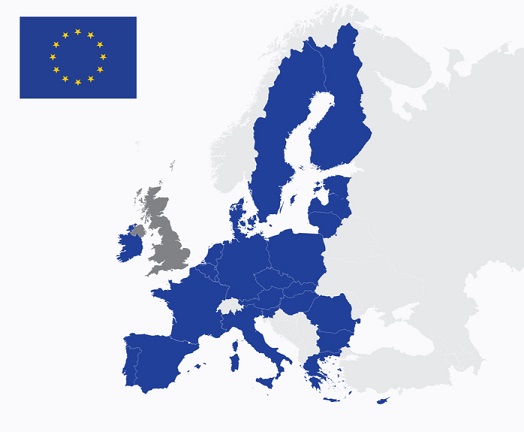
Mit einer Verzögerung von fast einem Jahr hat Großbritannien die EU am 31. Januar 2020 endgültig verlassen. Das zwischen Großbritannien und der EU geschlossene Austrittsabkommen sieht jedoch vor, dass EU-Recht für einen Übergangszeitraum vom 1. Februar 2020 bis zum 31. Dezember 2020 (Übergangsfrist) unverändert auch in Großbritannien anwendbar bleibt. Das bedeutet, dass das System des geistigen Eigentums bis zum 31. Dezember 2020 ohne Änderungen weiterläuft.
Aber auch nach Ablauf der Übergangsfrist gewährleistet das Austrittsabkommen den weiteren Schutz Ihrer in der Europäischen Union bestehenden Rechte des geistigen Eigentums in Großbritannien.
REGISTRIERTE MARKEN / DESIGNS: Am Ende der Übergangszeit wird das Britische Amt für geistiges Eigentum (UKIPO) alle eingetragenen EU-Marken und Gemeinschaftsgeschmacksmuster automatisch in vergleichbare britische Rechte umwandeln, die dann am 1. Januar 2021 in Kraft treten:
- IDENTISCHE Marke,
- IDENTISCHES Waren- und Dienstleistungsverzeichnis,
- IDENTISCHER Anmeldetag,
- IDENTISCHER Prioritätstag,
- IDENTISCHES Verlängerungsdatum,
- KEINE Gebühr,
- KEINE neue Prüfung der Marke,
- KEINE neue Eintragungsurkunde.
ANHÄNGIGE MARKEN- / DESIGNANMELDUNGEN: Alle am 31. Dezember 2020 noch nicht eingetragenen Marken- und Designanmeldungen werden nicht automatisch umgewandelt. Es besteht für Sie jedoch die Möglichkeit, innerhalb weiterer neun Monate bis zum 30. September 2021 eine inhaltsgleiche neue Anmeldung in Großbritannien einzureichen, die den gleichen Anmelde- und Prioritätstag erhält wie die zugrundeliegende EU-Anmeldung; hier fällt allerdings eine weitere Anmeldegebühr an.
INTERNATIONALE REGISTRIERUNGEN: Es ist noch nicht ganz klar, was mit internationalen Marken- und Designregistrierungen, in denen die EU benannt ist, am 1. Januar 2021 geschehen wird. Es ist jedoch sehr wahrscheinlich, dass sie genauso wie jede andere EU-Marke oder jedes andere Gemeinschaftsgeschmacksmuster einschließlich der Anmeldungen behandelt werden.
- BENUTZUNGSNACHWEISE: Für die neuen britischen Marken wird keine neue 5-jährige Benutzungsschonfrist in Gang gesetzt. Wenn aber für die neue britische Marke die ernsthafte Benutzung nachgewiesen werden muss und der relevante Zeitraum Zeit vor dem 1. Januar 2021 einschließt, wird jede Benutzung in der EU bis einschließlich 31. Dezember 2020 berücksichtigt werden.
- VERLÄNGERUNG: Wenn eine EU-Marke oder ein Gemeinschaftsgeschmacksmuster am oder vor dem 31. Dezember 2020 verlängert werden muss, bewirkt die Zahlung der Verlängerungsgebühr an das EUIPO automatisch auch die Verlängerung des am 1. Januar 2021 entstehenden, korrespondierenden britischen Rechts. Es ist keine separate Verlängerung in Großbritannien erforderlich. Fällt das Fälligkeitsdatum für die Verlängerung jedoch auf einen Zeitpunkt nach dem 31. Dezember 2020, hat die vorzeitige Zahlung der Verlängerungsgebühr beim EUIPO keine Auswirkungen auf das neue britische Recht. Wenn Sie also Ihre EU-Marke oder Ihr Gemeinschaftsgeschmacksmuster zwischen dem 1. Juli 2020 und dem 31. Dezember 2020 verlängern, das tatsächliche Ablaufdatum aber nach dem 31. Dezember 2020 liegt, wird die vorzeitige Zahlung nur die EU-Marke oder das Gemeinschaftsgeschmacksmuster verlängern, aber keine Auswirkungen auf das korrespondierende, neue britische Recht haben! Das neu britische Recht muss gesondert verlängert werden, um im Vereinigten Königreich für weitere 10 Jahre Schutz zu genießen.
- NICHT-EINGETRAGENE GEMEINSCHAFTSGESCHMACKSMUSTER: Jedes nicht-eingetragene Gemeinschaftsgeschmacksmuster, das am oder vor dem 31. Dezember 2020 automatisch durch erstmalige Offenbarung in der Europäischen Union entstanden ist (ohne beim EUIPO eingetragen zu sein), wird für insgesamt 3 Jahre ab seinem Bestehen geschützt - in der EU und auch in Großbritannien, dort durch ein entsprechendes, nicht eingetragenes britisches Design.
Für detaillierte Informationen zu den Folgen des Brexits für Ihre individuellen Marken und Designs kontaktieren Sie uns einfach unter info@lexdellmeier.com und wir beraten Sie gerne.
With the exit of the UK from the European Union at the end of 31 January 2020, you might ask yourself what the consequences for the protection of your intellectual property, particularly European Union trademarks and registered / unregistered Community designs are. Here is a short summary on the status quo (on 10 February 2020) and of what will happen at the end of 2020…
With a delay of almost a year, the UK departed the EU on 31 January 2020. However, the Withdrawal Agreement reached between the UK and EU foresees that, for a transition period from 1 February 2020 to 31 December 2020, EU law will continue to operate in the UK as it did until exit day. That means that the Intellectual Property system will also continue as it is until 31 December 2020.
But even after the end of the transition period, the Withdrawal Agreement ensures continued protection of existing EU Intellectual Property rights in the UK:
REGISTERED TRADEMARKS / DESIGNS: At the end of the transition period, the UK Intellectual Property Office (UKIPO) will automatically convert all registered EU trademarks and Community designs to corresponding UK rights which will then come into effect on 1 January 2021:
IDENTICAL mark,
IDENTICAL specification of goods/services,
IDENTICAL application date,
IDENTICAL priority date,
IDENTICAL renewal date,
NO charge,
NO new registration procedure,
NO new registration certificate.
PENDING TRADEMARK / DESIGN APPLICATIONS: All trademark and design applications not registered on 31 December 2020 will not be converted automatically. However, you will have another nine months until 30 September 2021 to apply for the same protection in the UK (with the same priority date) by paying the normal application fee.
INTERNATIONAL REGISTRATIONS: It is not yet completely clear what will happen to international trademark and design registrations designating the EU on 31 December 2020. However, it is very likely that they will be treated just like any other EU trademark or Community design including applications.
GENUINE USE OF A TRADEMARK: For the new UK trademarks, there will be NO new 5-year grace period of non-use, but where the 5-year period includes time before 1 January 2021, use in the EU will be taken into account. The same will apply to any 5-year period for which genuine use of the new UK trademark will have to be proven.
- RENEWAL: Where an EU trademark or design is to be renewed on or before 31 December 2020, payment at the EUIPO will also extend to the new UK right. No separate renewal will be necessary. Where, however, the renewal date falls after 31 December 2020, early payment of the renewal fee at the EUIPO will have no effect in respect of the new UK right. Thus, if you renew your EU trademark or design between 1 July 2020 and 31 December 2020, but the actual expiry date is after 31 December 2020, the early payment will only renew the EU trademark or design but will have no effect on the new comparable UK trademark or design! The newly created UK right will need to be renewed separately to enjoy protection in the UK for another 10 years.
- UNREGISTERED COMMUNITY DESIGNS: Any unregistered Community design that has come into existence automatically by first disclosure in the European Union (without being registered at the EUIPO) on or before 31 December 2020, will be protected for a total of 3 years from its coming into existence – in the EU and also in the UK by a corresponding unregistered UK design right.
Contact us at info@lexdellmeier.com for more detailed information about the consequences of Brexit for your individual EU trademark and designs rights and we will be glad to advise.
When was the last time that you bought something not just off the shelf, but with giving it a little more thought before buying? Did you look for test results for the product category that you were interested in and if so, did the results influence which product exactly you ended up buying? And what does all of that have to do with trademarks? Here is the answer…
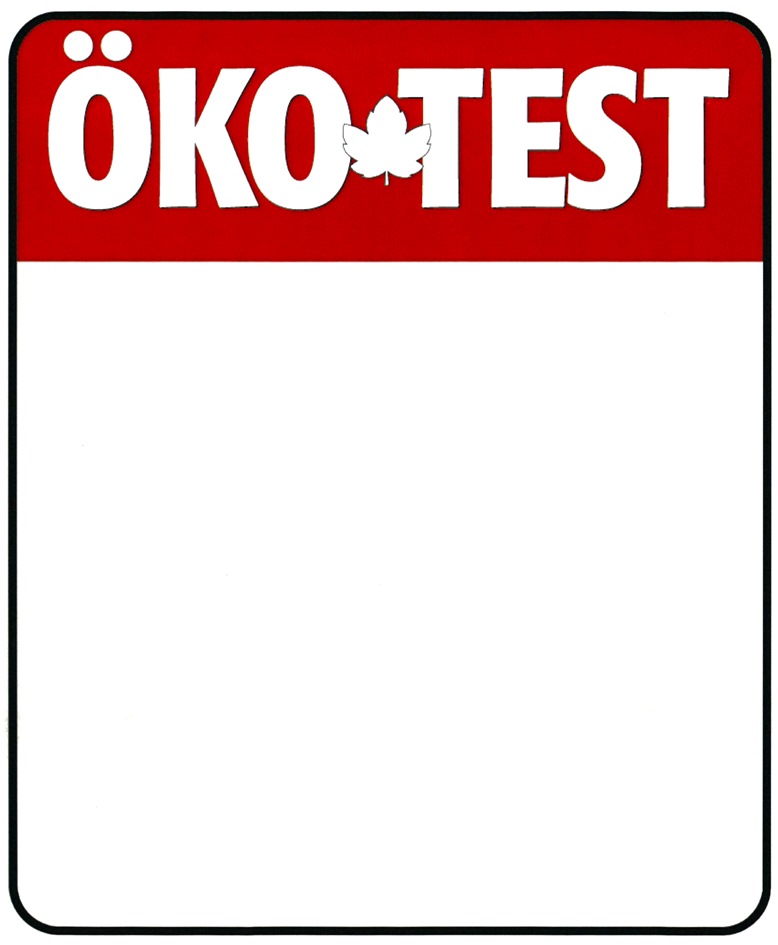
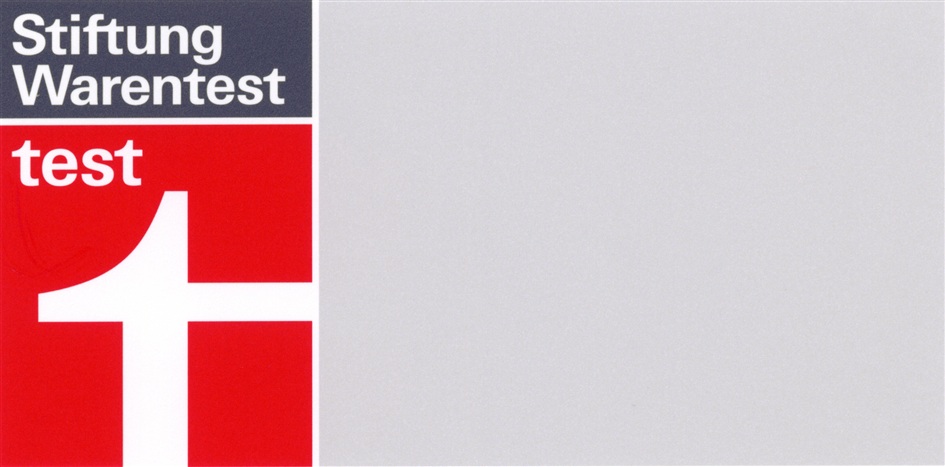
DE 30 2016 033 191 DE 30 2008 025 577
(Examples of blank test labels registered with the German Patent and Trademark Office)
Background
No matter if you are looking to buy a new electronic device, a new pillow, baby clothing or just plain water, there are (independent) tests and rankings for nearly everything and under all kinds of aspects. Over the years it has become quite common that before buying something, consumers search print and online media to see which products are “good” and which ones they should better not focus on. It is, therefore, of interest for manufacturers and merchants to use positive test result in the advertising of products.
Test institutions and media companies “allow” use of the test results for the tested products under certain circumstances and by use of their own trademarks – usually some kind of blank label that shows the name of the testing institution (the “test label”). The name of the tested product, the test result and information on where the test result has been published (in most cases the issue number of a print or online magazine) are then added by the manufacturer according to the license agreement with the testing institution for its trademark. Unfortunately, the test labels are often also used without a license and/or in relation to goods and services that have not been tested or that have been tested in a different size or color.
For instance, if a bed mattress has been tested “very good” in size 90x200 cm, can the testing institution’s trademark showing the label “very good” for size 90x200 cm be used on a bed mattress in size 140x200 cm as well or is that trademark infringement? Or if a baby bodysuit in color light blue has been tested, can the test result be used on the same good in color pink or yellow? The question has been subject of several warning letters and court cases over the years and now the German Federal Court of Justice (BGH) had to decide. It did so with three (3) decisions of 12 December 2019 (case no. I ZR 173/16 – “ÖKOTEST I” and case nos. I ZR 174/16 and I ZR 117/17 – “ÖKOTEST II”). The press release (in German only) can be found at the following link:
https://www.bundesgerichtshof.de/SharedDocs/Pressemitteilungen/DE/2019/2019158.html?nn=11918200
The Decisions
The BGH decided in favor of the testing institution (the plaintiff) and found it trademark infringement that the testing label had been used on products or in advertisements for products that had been tested in other sizes and/or colors.
Interestingly, the Court did not confirm likelihood of confusion between the registered trademark of the testing institution and the test label as used by the defendants. In fact, it held that the services covered by the registered trademark, namely, consumer advice and information, and the commercial services provided by the defendants (merchants in these cases) were dissimilar. A merchant who provides information about the characteristics of a product, such as its evaluation in a test carried out by a third party, does not provide the service of consumer advice and information in addition to the commercial offering. This finding seems non-compulsory and could well be argued to the contrary.
However, in its overall assessment, the Court concluded that the reputation of the test label and the high degree of similarity between the signs in comparison offset the dissimilarity of the goods and services concerned. The decisions confirmed that the test institution’s trademark is a well-known mark and that use of the mark without a license or in advertisements for goods other than the exact ones tested and without due cause, constitutes trademark infringement. If a third party attempts to gain advantage – at no cost – through the use of a sign similar to a mark with a reputation in order to benefit from the power of attraction, the reputation and the prestige of that mark and to exploit the economic efforts of the trademark owner to create and maintain the reputation of the trademark, the advantage resulting from such use must be considered an unfair advantage taken of the distinctive character or the repute of the mark.
After all, the Court – like the appellate courts before - gave greater weight to the test institution’s interest in controlling the advertising with its sign than to the defendants’ interest in informing their customers about the test institution’s assessment that the offered products were good or very good.
Conclusion
It remains to be seen if the use of test labels will change in the aftermath of these decision to make them more reliable for consumers again. For the moment, and no matter if you are a law firm, a testing institution, a manufacturer or a merchant – we are interested to hear how situations like these are dealt with in your country and welcome your comments. You may contact us at info@lexdellmeier.com or by phone at +49 – (0)89 – 55 87 98 70. We look forward to hearing from you!
As of 1 January 2020 you should be aware that various (international) classifactions have been updated again and have come into force. Classifications serve to index the content of intellectual property rights and documents. The aim is to standardize and to allow for content-driven retrieval, independent of the language of the respective document or the catchwords used. Classifications are important for systemizing IP searches in the corresponding databases, enabling to retrieve detailed and correct information.
[[{"type":"media","fid":"5083","view_mode":"default","instance_fields":"override","attributes":{"height":627,"width":1200,"style":"width: 800px; height: 314px;"},"field_file_image_alt_text[und][0][value]":"IP Classification Update","field_file_image_title_text[und][0][value]":"IP Classification Update"}]]
Here is a quick overview of the relevant IP rights and the classifications:
- TRADEMARKS
On 1 January, the 2020 version of the 11th edition of the Nice Classification entered into force, updating the 11th edition of the Nice Classification (NCL 11-2019) from 1 January 2019.
- DESIGNS
The official product list Design 2020 came into force on 1 January 2020, the 12th edition of the Locarno Classification already on 1 January 2019, replacing all previous editions of the classification and product lists.
- PATENTS and UTILITY MODELS - IPC version 2020.01
As of January 1, 2020, the IPC has more than 1,100 new entries. It now has a total of 75,548 main groups and subgroups. This is about 6,000 more than 10 years ago. Our "IPC Revisions" subpage provides an overview of the most important changes.
For more information please be referred to the link at: German Patent and Trademark Office
Oktoberfest Table in Munich, Germany, for 8 people – Sunday, 27 September 2020, 4.30 pm – 11.00 pm
Charity Auction: starts: 5 December – ends 15 December 2019 (9.06 pm German time)
[[{"type":"media","fid":"5066","view_mode":"default","instance_fields":"override","attributes":{"height":400,"width":800},"field_file_image_alt_text[und][0][value]":"LexDellmeier Holiday Charity Auction 2019","field_file_image_title_text[und][0][value]":"LexDellmeier Holiday Charity Auction 2019"}]]
Why should you participate and bid:
- You will have a very unique and great holiday present for family, friends, colleagues, your firm or company.
- You will support with your bid and the auction the Make-A-Wish Foundation.
- You know exactly what you are bidding for – date and time are already fixed.
- You will make at least one child in this world very, very happy.
Possible bidding methods:
- ebay: You may use the following link on ebay https://www.ebay.de/itm/114002694748 to bid in case you own an ebay account.
- Email: In case you do not have an ebay account, you can also send us your bid to our firm’s email address to: info@lexdellmeier.com
Note: Same deadline for bids via ebay or email, namely Sunday, 15 December 2019, 9.06 pm German time (time stamp counts), applies.
Prize:
You are bidding for a wonderful, reserved table for eight (8) persons at one of the famous Oktoberfest tents. The table includes coupons for 16 beers, 8 chicken and a plate of fantastic Bavarian appetizers for 8 persons. You will also receive VIP wristbands for priority entry into the tent.
Date and Time:
Sunday, 27 September 2020, 4.30 pm – 11.00 pm
Organizer of the Charity Auction and Donor of the Oktoberfest Table: LexDellmeier – Intellectual Property Law Firm, Nymphenburger Str. 23, 80335 Munich, Germany – www.lexdellmeier.com – contact person: Alexandra Dellmeier, Owner and Attorney at Law;
Donation will go to:
Make-A-Wish Foundation – see https://wish.org/about-us
LexDellmeier during the holiday season wishes to support children who are diagnosed with a critical illness. For this reason we have chosen to donate the money raised by the auction to Make-A-Wish Foundation.
Publication:
The auction ends on 15 December 2019, 9.06 pm (German time). We will then publish the bidder (by name or if he wishes anonymously) on our LexDellmeier blog at: https://www.lexdellmeier.com/de/blog
Spread the news and the link to our charity holiday auction:
If you like our idea – please forward this to friends, family, colleagues and/or bosses.
Hope you participate and support our good intention! Happy holidays and best wishes from the trademark and design team at LexDellmeier.