

When a striker acts as a defender: EU General Court’s decision “NEYMAR” (T-795/17)
With its decision dated 14 May 2019, the European General Court confirms a decision of the European Union Intellectual Property Office’s Board of Appeal invalidating European Union trademark registration no. 011432044 “NEYMAR”.

I. Introduction to Neymar and his brand value
Since 2017, the famous Brazilian soccer pro Neymar da Silva Santos Júnior (“Neymar”) has been contracted to Paris Saint-Germain. His moving to the French champion involved costs amounting to 222 million Euros (EUR 222,000,000) and made Neymar the world’s most expensive football player in history.
II. Background of the case
EU trademark no. 011432044 “NEYMAR” (word mark) was filed by a Portuguese individual for goods in class 25 (clothing, footwear, headgear) on 17 December 2012; the European Union Intellectual Property Office (EUIPO) registered the mark on 12 April 2013.
The same individual filed for a EU trademark “IKER CASILLAS” (no. 011431996) also on 17 December 2012, and in 2015 for further trademarks containing the element “NEYMAR” or abbreviations thereof (i.e. EU trademark registration no. 013533261 “NJR”, no. 013334503 “NJR NEYMAR JR” and no. 013002894 “NEYMAR FOOTWEAR”).
In early 2016, Neymar attacked EU trademark registration no. 011432044 “NEYMAR” with respect to all goods by filing an invalidity action with the EUIPO arguing on the one hand that the application was registered contrary to his earlier name rights. In this connection, Neymar also underlined the existence of his company “NEYMAR SPORT E MARKETING S/S LIMITADA” to which he had given a license to develop and commercialize products on which the pseudonym “NEYMAR” appears.
In addition, Neymar argued that the applicant was acting in bad faith when filing the application which would constitute an absolute ground for refusal.
Neymar could win both EUIPO instances (Examining Division and Board of Appeal). Therefore, the applicant filed an action to the European General Court (GC) on 28 November 2017 arguing in particular that the EUIPO Board of Appeal was wrong to find that the applicant was acting in bad faith when he filed the application for registration of the contested mark.
III. The decision of the General Court
The decision of the GC fully supports the position of the EUIPO and of Neymar who intervened the proceedings.
Initially, the GC outlines the European Court of Justice’s (ECJ) criteria regarding the way in which the concept of bad faith should be interpreted: account must be taken of all the relevant factors specific to the particular case which obtained at the time of filing the application for registration of a sign as an EU trademark, in particular
(i) the fact that the applicant for registration knows or must know that a third party is using, in at least one member state, an identical or similar sign for an identical or similar product or service capable of being confused with the sign for which registration is sought
(ii) the intention of the applicant for registration to prevent that third party from continuing to use such a sign and
(iii) the degree of legal protection enjoyed by the third party’s sign and by the sign for which registration is sought.
In this connection, the GC comes to the conclusion that the applicant of the contested mark could not have been unaware of the rights he infringed since Neymar was famous in European Union countries even before 17 December 2012, although he only started playing in Europe in 2013 (after the relevant date!). This is, according to the GC, particularly supported by a portfolio of evidence submitted by Neymar showing that he was a Brazilian football player internationally known under the name “Neymar” and that he was already known in Europe at the relevant date, in particular for his performances for the Brazilian national football team. The GC acknowledges that Neymar was already recognized as a very promising football player and compared to the most renowned football players at that time. He had drawn, accordingly, the attention of top-flight clubs in Europe in view of future recruitment several years before his actual transfer to FC Barcelona in 2013.
In addition, the judges of the GC are of the opinion that the fact that the applicant of the contested mark had – on the same date as he had applied for registration of the contested mark – also sought registration of the name of another well-known football player as a trademark, namely Iker Casillas. This shows that the applicant was well aware of the world of football and acted in bad faith. They find it inconceivable that the applicant had not been informed of the intervener’s existence at the time when he filed the application for registration of the contested mark.
Under the second part of his single plea, the applicant denied, in essence, having intended to benefit illegally from the intervener’s renown by seeking registration of the contested mark. In this connection, he argued that the decision to choose the word mark “NEYMAR” was a mere coincidence and does not stem from a conscious desire to use the name of a known football player. The GC rejected this argument by repeating that it cannot be considered that the applicant did not know who the intervener was at the relevant date. According to the judges of the GC, the EUIPO Board of Appeal’s finding that the applicant was acting in bad faith when he filed the application for registration of the contested mark is based on the applicant’s dishonest intention at the relevant time. Moreover, the assessment itself as to whether that intent was dishonest follows from the fact that the application for registration was filed deliberately with the purpose of creating an association with the intervener’s name in order to benefit from its attractive force.
Finally, the GC dismisses the applicant’s action in its entirety and orders him to pay the costs of the proceedings, including those incurred by the intervener before the Board of Appeal of the EUIPO.
IV. Remarks
The GC’s decision is very interesting and important for future “bad faith” cases. What we learn is that it is of great importance to carefully collect and provide evidence supporting the “bad faith”-argument – like Neymar’s representatives obviously did perfectly right from the beginning of the invalidity proceedings.
The battle was not (yet) fought through all possible EU instances – the applicant may still appeal the GC’s decision at the ECJ. It would, however, not surprise if the highest European instance would also maintain the line of the previous instances in case the applicant would indeed make the last step and put the case to the ECJ.
For more information, please find the full decision here: http://curia.europa.eu/juris/document/document.jsf?text=&docid=214045&pageIndex=0&doclang=EN&mode=req&dir=&occ=first&part=1.
By the way: the further “NEYMAR” trademarks (EU trademark registration no. 013533261 “NJR”, no. 013334503 “NJR NEYMAR JR” and no. 013002894 “NEYMAR FOOTWEAR”) have meanwhile also been cancelled. EU trademark no. 011431996 “IKER CASILLAS” is still registered and has apparently not been attacked, so far.
The German Federal Court of Justice (BGH) recently rendered a decision on trademark use in the field of textiles that is worth reading.
In general, use as a trademark requires that a significant part of the relevant public recognizes a sign as indicating the origin of a product. For that, it is not sufficient that a sign is originally distinctive and that its use is not plainly descriptive. Instead, use as a trademark has to be assessed in each case individually taking into account all circumstances of the case. Thus, use of a first name like “SAM” as a model designation can also constitute use as a trademark and, in consequence, be deemed trademark infringement.
BACKGROUND
For years, there has been a trend to register first names as brands for textiles. At the same time, there exists a common practice in the textile industry to distinguish different products and product series within a manufacturer’s portfolio by using first names (examples: SAM, MO, JULIA, NINA, LARISSA or STELLA). This led to several warning letters and infringement proceedings in the past. Conflicting decisions of different German courts made it hard to determine whether or not a specific use of a sign could be deemed as a trademark infringement or not.
One of these infringement cases now made it all the way to the German Federal Court of Justice. In its decision of 7 March 2019 (BGH I ZR 195/17 – SAM), the Court overruled a decision of the Higher Regional Court of Frankfurt by saying that the original decision had not taken into account all relevant factors of the case and that it was not sufficient to simply find a sign to be distinctive and not used in a plainly descriptive manner to assume use as a trademark and, thus, find an infringement of an identical or similar registration.
FACTS
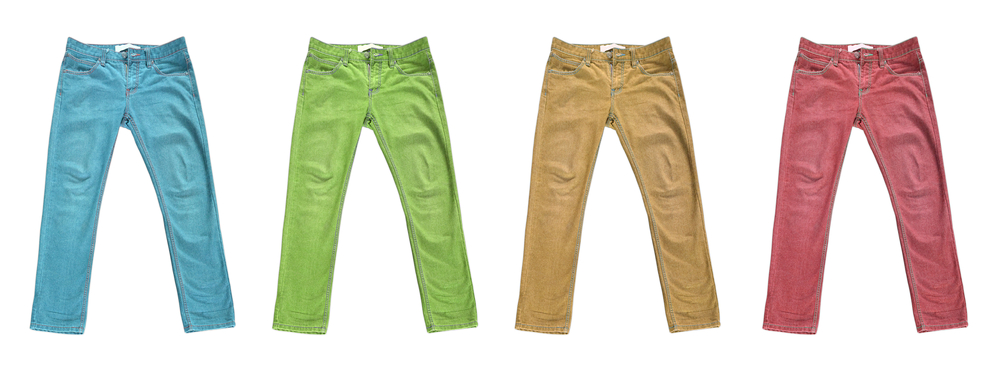
In the case that was brought before the Federal Court of Justice, the owner of German trademark No. 2004517 for “SAM” (word mark), registered inter alia for “clothing” in international class 25, had claimed trademark infringement by use of the sign “SAM” in an online shop for trousers. More specifically, the product description of trousers offered under the name “EUREX BY BRAX” mentioned that the trousers were “Model: Sam” – by that referring to the specific cut and fit of the pants. While the District Court of Frankfurt as well as the Higher Regional Court of Frankfurt had held that such use of the word “SAM” was use as a trademark and would, accordingly, constitute infringement of the registered trademark “SAM”, the District Court of Munich in a parallel proceeding had found the same use non-infringing. The diverging decisions prompted the Higher Regional Court of Frankfurt to allow the case to proceed to the Federal Court of Justice for clarification.
THE DECISION
The Court reviewed the case, examined all relevant aspects and dismissed most of the reasons of the defendant fashion company as unfounded. Applying constant case law, the Court found that the defendant had used an identical sign “SAM” in business without the consent of the trademark owner for goods, namely, trousers, that were identical to the goods for which the plaintiff’s trademark was protected in Germany.
The key issue then was whether or not the Higher Regional Court of Frankfurt had rightly assessed the impact that use of the contested sign had had on the registered trademark. It found that this had not been the case. The Higher Regional Court of Frankfurt had missed to make any substantial findings on how exactly the relevant public perceived the sign "SAM" in the specific online advertisement and whether or not “SAM” was understood as an indication of origin for clothing and, thus, seen as a trademark. It will now have a chance to discuss the case further, taking into account several issues that the Federal Court of Justice would like to see addressed, in particular:
- If it is common in a particular industry to use certain characters as model names, their attachment to the product itself or to labels can be understood as an indication of origin by the relevant public. In the clothing and retail industry, the use of first names to designate models by manufacturers is quite common.
- If a specific model designation is well-known (like “501” for Jeans), it seems reasonable to assume that the public will perceive it as a trademark – even if it is not highlighted within an advertisement or sales offer.
- If it cannot be assumed that a specific model designation is well-known, the design of the advertisement or sales offer in question must be considered carefully when examining whether use of the model designation also serves as an indication of origin. If the model designation is used in direct connection with the manufacturer’s name or an umbrella mark, the public is likely to understand it a source indicator as well.
- If a model designation is not known as a trademark and is used in a way and place where the public is rather unlikely to expect trademark use, it will have to be determined on a case-by-case basis whether or not the specific use will be deemed use as a trademark.
CONCLUSION
It remains to be seen how the Higher Regional Court of Frankfurt will apply these terms to the current “SAM” case and it does not seem unreasonable to believe that the Federal Court of Justice might have to deal with the case again in a year or two.
For the moment, the decision of the Federal Court of Justice has not really brought any clarification for the clothing and retail industry as to when exactly use of a model designation that is identical to a registered trademark constitutes trademark infringement. However, the Court has given at least some guidance that can help to counteract the impression of an indication of origin and, thus, trademark infringement. For instance, fashion companies and retailers that would like to use a name as part of a model designation, should carefully consider how to exactly position the model designation on its goods and in advertisements and sales offers. If a sign is printed on the goods itself in a place where a consumer expects to see a trademark, there is a high risk that such use will be found trademark infringing. The same applies to use on product labels or packaging. Also, when describing goods online or in print media, care should be taken to ensure that the model designation is used in a place where it seems rather unlikely that the consumer will expect to a see a trademark. It should, thus, not be used in direct proximity to the name of the manufacturer or another trademark like an umbrella brand name.
Should you have doubts if your use of a specific model designation might (also) be considered use as a trademark, you are welcome to contact us for an assessment at info@lexdellmeier.com
The decision of the Federal Court of Justice (BGH I ZR 195/17 – SAM, in German only) can be found at
Two new member states are accessing the Madrid Protocol for the international registration of marks. The Protocol will enter into force in Canada on 17 June 2019, and Brazil is expected to follow late in 2019.
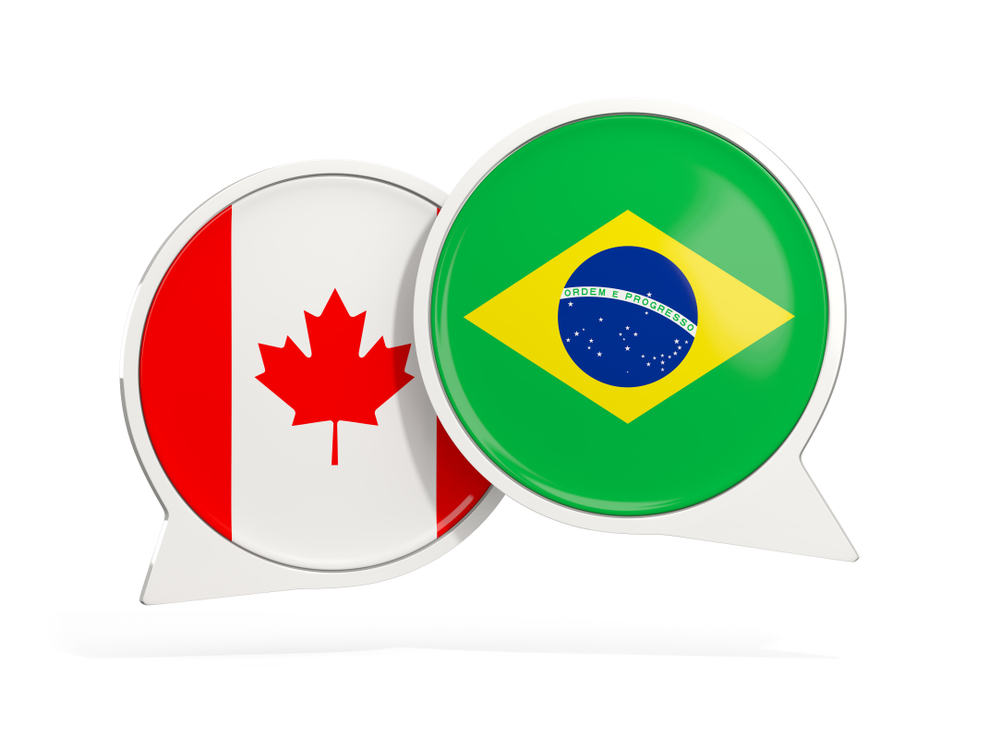
After a long wait, Canada and Brazil are finally joining the Madrid Protocol for the international registration of marks. The treaty will enter into force for Canada on 17 June 2019. This is not the only big change in Canada’s trademark regime, since it will also become part of the Nice Agreement and the Singapore Treaty on the same day.
Brazil is expected to accede to the Madrid Protocol by the end of 2019. On 22 May 2019, the country’s Senate passed the bill in a vote. The country is able to join the Protocol after the Brazilian President, Jair Bolsonaro, has signed the Act.
The Madrid Protocol is a treaty administered by the World Intellectual Property Organization (WIPO). It provides trademark owners a possibility of having their trademarks protected in a large number of countries by filing a single application directly with a national or regional trademark office. The applicant must designate the members of the Madrid Protocol in which the trademark is to be protected. If protection is not refused by the trademark office of a designated contracting party, the international registration has the same effect as if it had been registered by that office.
In practice this means that Canada and Brazil can soon be named as designated countries in an international trademark application, instead of applying a registration separately in front of the national offices. The accession of Canada and Brazil to the Madrid Protocol is of great advantage as it makes the trademark registration process easier and more cost-effective for trademark owners.
For more information, please contact us at info@lexdellmeier.com.
Alexandra Dellmeier and Freia Andrea Breier will represent the LexDellmeier Team at the International Trademark Association’s 141st Annual Meeting in Boston, Massachusetts, from 18 – 22 May 2019.

The INTA Annual Meeting is the world’s largest conference of trademark owners and IP professionals with a record 11,000+ participants already registered this year.
Both, Alexandra and Andrea have been to several annual meetings over the years and always treasure the opportunity to meet with international clients face to face, learn about their trademark strategies and discuss current trademark matters. By catching up with colleagues from all over the world and by constantly meeting new colleagues, Alexandra and Andrea enjoy expanding their knowledge about intellectual property issues, while at the same time also giving advice themselves on German and European Union trademark law and related issues. This year, for instance, LexDellmeier will host a Table Topic on “How much is your trademark worth? Financial Instruments on how to evaluate the value of a trademark.”
While the schedule of Alexandra and Andrea will be quite busy during INTA, they will be more than happy to welcome you at Business Hub #35 in the Boston Convention & Exhibition Center, right next to the INTA registration area, to discuss trademark issues or just get to know you in person.
We wish everybody at INTA a fruitful and enjoyable time! Look forward to seeing you there – and if you cannot make it this year, reach out to us next year in Singapore…
Zielgruppe: Ein Workshop für Unternehmer, Geschäftsführer, Start-Ups sowie Leiter und Mitarbeiter von Rechts-, Marken- und IP-Abteilungen.
[[{"type":"media","fid":"5012","view_mode":"default","instance_fields":"override","attributes":{"height":220,"width":646},"field_file_image_alt_text[und][0][value]":"Workshop Marke \u0026amp; Oktoberfest","field_file_image_title_text[und][0][value]":"Workshop Marke \u0026amp; Oktoberfest"}]]
Flyer, Anmeldung und Zahlung auf XING unter:
https://www.xing.com/events/markenrecht-oktoberfest-2099509
WOKRSHOP: 11.00 - 15.00 Uhr
Thema 1: Marken & Designs – effektiver Schutz für Ihre Produkte
Thema 2: Rechtserhaltende Markenbenutzung in Deutschland, der EU und den USA
Thema 3: Exkurs: Das Imperium Oktoberfest
OKTOBERFESTBESCUH: 16.00 - 22.00 h
Übernachtung: Im Hotel Eden Wolff haben wir jeweils 10 Einzelzimmer von Sonntag auf Montag, 29./30. September sowie von Montag auf Dienstag 30. September/1. Oktober 2019 zum Selbstzahlerpreis von 255 EUR/Nacht reserviert. Bei Interesse schicken Sie uns bitte eine Email an workshop@lexdellmeier.com
PROGRAMM- und WORKSHOP-FLYER: Weitere Informationen können Sie dem unten angehängten Workshop-Flyer entnehmen.
Programm:
Thema 1: Der rechtliche Schutz von Marken
Die Wahl des richtigen Schutzrechtes
Was kann wie geschützt werden?
Welche Unterschiede bestehen?
Wo gibt es Überschneidungen?
Die individuelle Anmeldestrategie
Staying local, going global oder beides?
Vorteile einer individuellen Strategie im Vorfeld
Stark im Konfliktfall
Welchen Schutzumfang haben Marken & Designs?
Wie kann ich meine Rechte im Streitfall durchsetzen?
Thema 2: Rechtserhaltende Markenbenutzung in Deutschland, der EU und den USA
Warum sind Marken im Markt zu benutzen?
Wann sind entsprechende Nachweise zu erbringen?
Wie sind Marken rechtserhaltend zu benutzen?
Benutzung des eingetragenen Markenzeichens
Wie ist die ernsthafte Benutzung nachzuweisen?
Zeit, Ort, Umfang
Sonderfall USA
Thema 3: Exkurs: Das Imperium Oktoberfest
Historie, Fakten & Zahlen
Marken- und Designschutz
Abschlussdiskussion
Ab 16.00 - ca. 22.00 Uhr - Oktoberfestbesuch (reservierte Tische)
On 15 April 2019, the Directive on Copyright in the Digital Single Market, a.k.a. the EU Copyright Directive, was approved by the Council of the European Union.
As the European Commission emphasizes (please see https://ec.europa.eu/digital-single-market/en/modernisation-eu-copyright-rules), the new Directive should support “creating a Digital Single Market” and “bringing down barriers to unlock online opportunities”. The aim is to provide EU copyright rules that fit to the digital age.
The main goals are:
• better access to online content and across borders,
• improved copyright rules for education, research, cultural heritage and inclusion of disabled people and
• a fairer online environment for creators, the press and a well-functioning marketplace for copyrights.
The EU member states now have two (2) years to implement the reform into national law.
1. Draft Article 13 of the Directive under cross-examination
The approval of the Directive results from previous heated debates, in particular about Draft Article 13 (which will be Article 17) of the Directive which deals with the “use of protected content by online content-sharing service providers”. Critics fear that this rule – which is exclusively directed to for-profit platforms like YouTube or Facebook – will force commercial platform operators to implement “upload filters” on their websites resulting in a censorship and a violation of the freedom of speech.
More than 5,000,000 signatures were gathered and resulted in a petition against Article 13, the largest in EU history. By demonstrating on the streets, particularly in Germany, 200,000 protesters ensured that their concerns became impossible to ignore – and nevertheless, the reform passed.
2. Content of Draft Article 13 in a nutshell
Draft Article 13 clarifies initially that certain platforms that rely on user-uploaded content are not just hosts, but that they are “performing an act of communication to the public or an act of making available to the public” – in other words: that they are using the content uploaded by the users by themselves in a way which may be subject to copyright law.
Therefore, according to Draft Article 13 they are – first and foremost – required to negotiate license agreements with rightholders. If the provider obtains such authorization, for instance by concluding a licensing agreement, the regulation provides that that authorization shall also cover acts carried out by non-commercial users. This is huge for ordinary (non-profit) users as their use of any copyrighted material is covered by deals which have been negotiated between the online content provider and the rightholder.
Only if no authorization is granted, online content-sharing service providers shall according to Draft Article 13 be liable for unauthorized acts of communication to the public, including making available to the public, of copyright-protected works and other subject matter, unless they can demonstrate that they have
“(a) made best efforts to obtain an authorization and
(b) made, in accordance with high industry standards (…) best efforts to ensure the unavailability of specific works (…) for which the rightholders have provided the service providers with the relevant and necessary information; and in any event
(c) acted expeditiously, upon receiving a sufficiently substantiated notice from the right holders, to disable access to, or to remove from, their websites the notified works (…) and made best efforts to prevent their future uploads in accordance with point (b).”
Popular belief is that such “best efforts to ensure the unavailability of specific (unlicensed) work” can in fact only be upload filters. However, this section of Draft Article 13 holds platforms accountable only in the absence of a deal with the rightholders and, in addition, provides some exceptions: if the platform providers have proven they have made a real effort to get a license and stopped users from accessing unauthorized content. In practice, it shall mean that if a rightholder refuses to conclude a license agreement with the platform provider, then the two parties have to work together to make sure that those works are not made available on the site. While platform providers need to be able to identify specific copyright protected content for which rightholders provide relevant information, there is no obligation for platform providers to put upload filters in place. In fact, it is even questionable whether randomly used filters would help stopping unlicensed content from being posted.
In addition, according to Draft Article 13, the obligations of online content sharing service providers will be proportional to their size, means and business models as well as to the type of content which is uploaded by the users. Start-ups will under certain conditions benefit from a smart and special exemption during their first three years. They will only have to make best efforts to obtain licenses from rightholders and to remove unlicensed work notified by rightholders. There is no stay-down obligation for start-ups falling under this Article.
As a consequence of the heated debates and protests against Article 13, the wording of the regulation now provides that Member States shall ensure that users in each Member State are still able to rely on quotation, criticism, review or the use for the purpose of caricature, parody or pastiche as existing exceptions when uploading content generated by users. This section should safeguard freedom of speech and protect from automated blocking.
It is also fixed that the application of Article 13 shall not lead to any general monitoring obligation – service providers do not need to implement global monitoring of any and all content which is uploaded by users. However, platforms have to ensure that they are transparent about their rules and practices regarding cooperating and licensing and that they are able to provide rightholders, at their request, with respective information.
3. Comment to Draft Article 13
The Directive in general and Draft Article 13 strengthens the rights of the creators as the rightholders. This is to be highly welcomed. Therefore, the Directive has widely been supported by newspapers, publishers, and media groups.
Due to Draft Article 13 and its alleged violation of the freedom of speech and due to its alleged heavy consequences for platform providers, the Directive has been opposed by major tech companies and Internet users, as well as human rights advocates.
However, the Directive in its final version provides a fair and balanced exceptional-law-principle, which does in the end in fact not force platforms to use upload filters (an expression which is not even used by the wording of the Directive). The Directive highlights repeatedly that a “Big Brother”-style monitoring is not the aim of the work. In addition, the special situation and specific interests of small enterprises and, in particular, start-ups are considered.
After weighing the interests of all parties and also taking into consideration the concerns of the rightholders whose rights will be strengthened, Article 13 in its current form is to be welcomed.
For more information, please contact us via info@lexdellmeier.com.
[[{"type":"media","fid":"5008","view_mode":"default","instance_fields":"override","attributes":{"height":220,"width":646},"field_file_image_alt_text[und][0][value]":"LexDellmeier 10th Anniversary","field_file_image_title_text[und][0][value]":"LexDellmeier 10th Anniversary"}]]
Alexandra Dellmeier is a German Attorney at Law and Certified IP Attorney. She founded the law firm LexDellmeier Intellectual Property Law Firm 10 years ago in Munich, Germany. It is time to say:
“Thank You” on behalf of great clients and colleagues in Germany and around the world!
“Happy Anniversary” to all its fantastic team members!
To celebrate this milestone, here are highlights from our interview with Ms. Dellmeier featuring 10 things you may or may not have known about LexDellmeier.
1. Why did you call the firm “LexDellmeier”?
As a trademark attorney, I wanted to establish a “brand” – different than other firms who usually use the founders last names, string them together and end up having extremely long firm names. “Dellmeier” reflects my last name. The “meier”-part makes it rather clear that we are German or have German roots, and are perceived around the world as hard-working, diligent and reliable. And “Lex” has two meanings. In Latin “Lex” means “the law”. And, “Lex” is also a short version of “Alexandra”, my first name. So, that is the how the brand “LexDellmeier” was born.
2. Ms. Dellmeier, what was your first contact with IP?
Coincidence. Curiosity. Luck. On my first day as a legal intern at a Munich IP firm in 1997, I discovered a gigantic shelf of Adidas t-shirts, shorts and jogging suits in the office. I was excited and immediately ran to one of the partners and proclaimed: “I would like to join the firm’s soccer team!” The managing partner looked bewildered and told me that the firm did not have a soccer team. I persisted: “But, I saw the full closet of sports clothing …” - I still remember his loud and hilarious laugh. After a moment, he finally explained that the sportswear was counterfeited and confiscated by German Customs from a shipment coming from Turkey into Hamburg harbor.
So, trademark infringement, counterfeits and border seizures were my first entree to IP. I will never forget that first day, which sparked my interest in Intellectual Property.
3. How has your career developed in the field of IP?
Prior to starting LexDellmeier, I was an equity partner at another renowned German IP firm with 100 people. During those years, I had the opportunity to work on incredibly interesting and prestigious trademark, design, patent and utility model litigation cases. That is where I made the link between non-technical and technical protection and I became a “true” IP attorney. Before that, I worked as VP/in-house counsel at a German broadcasting and television studio which gave me an insight into what it is like to be inside a company and contract out for legal services. This experience gave me a better understanding of what my clients need from my firm as an outside attorney and I designed our services accordingly.
One of my best talents that has supported my career from the beginning and maes it possible for me to work internationally with ease, are my language skills. In this resepct I was quite fortune. My father was a chemist and exchange scientist in the United States and I had the opportunity to go to school in the US for six years. Growing up in a bi-lingual home, speaking German and English, has been a real advantage for me professionally.
4. Why did you start LexDellmeier?
I love my work and I really enjoy advising clients all over the world, especially the international aspect of IP. My aim was, is and always will be to be part of a firm that has a passion for IP, its clients and its employees. I did not find this combination in any other firm in Germany. So, with 12 years of IP experience under my belt, I decided to start my own firm and do things differently and better back in 2009. First, we listen to clients. Second, I trust my colleagues and team members. Third, I am happy when clients and employees are happy.
5. Do you still have clients from 10 years ago?
Yes. I am proud and honored to say that we still advise and represent almost all of the clients we started with 10 years ago. We had a small number of clients back in 2009. Over the past 10 years, LexDellmeier has grown its client base. Traditionally, we had more clients from overseas. Today, approximately 40% of our clients come from Germany – 60% from other countries including USA, Canada, China, Switzerland, France etc.
6. What markets and clients do you represent?
We represent clients from different industries, such as the cosmetic and fashion industry, automotive, high-tech, medical, pharmaceutical, aerospace, food & beverage sector, etc. We enjoy working with single applicants, start-ups, SME’s and large companies and have a great mix of clients and industries which makes our daily work challenging, interesting and rewarding.
7. What three things are needed to be a successful IP boutique law firm?
Expert knowledge in the IP field, understanding clients and their business needs – and PASSION! The ability to listen to clients’ needs, strong communication and language skills as well as “thinking outside the box” are talents I believe are important, too.
Of course, you need to have a fantastic team. LexDellmeier started as a one (wo)man show on 1 May, 2009. Three days later I had my first employee, Elisabeth Sandmair, a certified IP paralegal with an LLB law degree who still works with me. And now, LexDellmeier has eight highly qualified, communicative and fun team members.
8. How important is education in the field of IP?
Extremely important. As Kofi Annan once said: “Knowledge is power. Information is liberating. Education is the premise of progress, in every society, in every family (… and in every firm).
We have internal firm meetings every two weeks where one person gives a lunch talk about changes and updates in law, new technologies etc. In addition, each firm member is encouraged to attend at least one CLE class in the field of IP. I myself started the INTA paralegal roundtable in Germany in 2013 in order to specifically support paralegals to have access to valuable education. Since 2017 I have been an adjunct professor at the Hochschule der Bayerischen Wirtschaft (HDBW) in Munich, Germany for IP Law. And, each year we have two to three law students working as interns in our firm. They receive valuable technical training and are also involved in the daily business of the firm.
9. What are your short-term future goals and your long-term vision?
Our short-term future goals are to "go green" and fully paperless as of 1 January 2020. Our IP software and docketing system has already been reprogrammed so that we can work fully digital. We are currently in the process of streamlining our work and changing and adapting procedures and working 100% digitally In addition, we are experimenting internally with AI and its applicability to the legal field - especially regarding IP. We are also testing chatbots to see if they are useful for our clients. I love technology - but, sometimes I have mixed feelings about the speed of innovation in this area. We are open-minded about technology and use it to help clients and our team in our daily work. Our primary focus remains to be a boutique firm with a personal touch - we still like to talk to our clients and meet up with them in person. Going forward, we will continue with both approaches - personal and technology driven.
Albert Einstein once said: “Logic will get you from A to B. Imagination will take you everywhere”. My vision was and is to continue having a local presence and boutique office in Munich, Germany but, to also to expand virtually. We have team members with young children. They cannot travel long distances to the office every day or only want to work part-time when their children are small. LexDellmeier offers the option to work from home part-time and strives to enhance work-life balance for its employees. Our systems are highly secure, with firm-paid hardware, software and IT support. Prerequisite is, however, that the employee has a separate room or office to work from home. A coffee table in a kitchen is not a professional surrounding and we do not support that. Our guideline is that employees come to the office at least 50% of the time to talk, participate in meetings, interact, eat lunch together and stay up-to-date. This was my vision 10 years ago when I started the firm and it has become reality. Besides being flexible regarding work hours, the possibility to work from home has attracted some highly qualified women to our firm as their careers came to a stop in large law firms when they started families. Bottom line: If managed correctly with clearly stated expectations, flexible work arrangements are a win-win for all involved - clients, the firm and the employees.
10. What are LexDellmeier’s 10th anniversary plans?
May 1 is “Labor Day” – a public holiday in Germany. Therefore, the firm will be closed on that day. We have always been known for having “party” plans throughout the year that suit our boutique law firm’s culture. We will celebrate with our international clients at the upcoming INTA Meeting in Boston from May 18 – 22, 2019 (world’s largest IP conference with over 10,000 trademark experts). In Germany, we plan a trademark seminar during the Oktoberfest in Munich in September 2019, a great reason for a business trip for our clients from near and far away. Towards the end of the year from November 22 – 24, 2019, the entire firm and all its team members are going to our bi-annual very special “spa and strategy” retreat.. The date is set and the hotel is booked, but the location is still a secret and a surprise. Work sessions are planned from 9 am – 3 pm, then everyone has free time to get a massage, go hiking, swimming or just chill and get to know each other better. In preparation for the work sessions, each team member selects and presents a topic of their choice, typically a specialty area of their expertise to share their knowledge and educate the others. This is also the time, when we discuss how to improve our services and response time, plan new alliances, educate and improve ourselves – and have some fun at the same time.
Intellectual property authorities of China have recently gone through major changes. This blog post briefly introduces the merger of patent and trademark authorities into the China National Intellectual Property Administration (CNIPA).

In August 2018, the State Intellectual Property Office of China (SIPO) was renamed to China National Intellectual Property Administration (CNIPA). On 14 February 2019, the CNIPA issued a notice informing that, as of 1 April 2019, the following entities will also be merged with the CNIPA:
- China Trademark Office (CTMO)
- Trademark Review and Adjudication Board (TRAB)
- Trademark Examination Cooperation Center (TECC)
- Patent Review Board (PRB)
The names of the former entities are no longer used. The new structure is similar to the United States Patent and Trademark Office as well as the German Patent Office (Deutsches Patent- und Markenamt).
This means, in practice, that all trademark prosecution work will be carried out by CNIPA. In principle, the restructuring will not affect to the process and procedures in any way. The new agencies will handle all pending cases and all we have to do is get used to the new name. For more information, please see CNIPA’s official website in English at english.cnipa.gov.cn.
Talking about changes in China, it is also worth mentioning that the Administration for Industry and Commerce (AIC) is now called the Administration for Market Regulation (AMR). Respectively, the State Administration for Industry and Commerce (SAIC) is now the State Administration for Market Regulation (SAMR).
Every year on April 26 we celebrate the World Intellectual Property Day organized by the World Intellectual Property Organization (WIPO). This year’s theme is “Reach for Gold: IP and Sports”. The campaign encourages taking a closer look inside the world of sports, where intellectual property rights also play an important role.

The kick-start of the World IP Day was already in the year 2000. WIPO's member states decided to designate April 26 as the World IP Day because the WIPO Convention came into force on that day in 1970. The goal of the World IP Day is to increase general understanding of intellectual property and raise awareness of how different IP rights impact on our daily life.
“IP and Sports” is an inspiring theme that raises many interesting questions. Especially topical issues relate to the game-changing technological advances in artificial intelligence and robotics that are driving change in all sports fields. Here are some examples of how IP rights support the development of sport and its enjoyment globally:
- Trademarks and branding maximize commercial revenue from sponsorship, merchandising and licensing agreements. These revenues offset the cost of organizing sport events, such as the Olympics. Athletes can generate earnings from sponsorship deals with brands and by building their own brands.
- Sport businesses use patents and designs to foster the development of new sports technologies, materials, training and equipment.
- Broadcasting rights form the basis for the relationship between sport and television and other media, bringing sports fans closer to the action.
Get the ball rolling and find out what is happening near you from the World IP Day events map. More information about the World IP Day 2019 can be found here.
Traditional forms of trademarks will remain the most relevant, but companies should also start making more of the new possibilities to register and use more complex marks like hologram marks, motion marks or multimedia marks to strengthen their business. However, give a lot of thought into creating such marks to ensure they will be recognized as TRADEMARKS by the public.
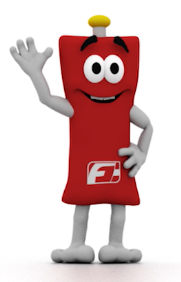
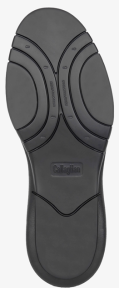

EUTM No. 017451816 EUTM No. 017941596 EUTM No. 017965087
(Examples of multimedia marks registered with the EUIPO)
1. Registration of Multimedia Marks
With new forms of marks having become eligible for trademark registration, the possibilities of creating and using new trademarks have become numerous for companies of all sizes. Over the past months, I have been asked a lot about the registrability of marks combining different elements like still pictures, moving images and sound – and the answer is, yes, such marks can be registered as multimedia trademarks in Germany and at the European Union Intellectual Property Office. To find out about other countries of interest for you and your company do not hesitate to contact me at info@lexdellmeier.com and I will be glad to advise further.
To obtain a registration for a multimedia trademark requires giving some thought though to the mark itself and to what exactly you would like to see protected in commerce. While with traditional trademarks like words or logos it is rather clear what the public will see and keep in mind, this question gets harder to answer the longer and more complex your mark becomes.
In theory, your multimedia mark can combine all kinds of moving or non-moving images with sound. While that might be quite tempting for the creation of new marks, always keep in mind that you still want the multimedia spot to be recognized as a TRADEMARK by the public. The longer and more complex a multimedia spot is, the more unlikely it will be that the spot per se will be deemed a trademark. Thus, you might want to keep your multimedia spot rather short. Besides that, there are hardly any restrictions as to the content of the spot. From the above examples of multimedia marks that have been registered with the European Union Intellectual Property Office over the past months, the one with the sole of a shoe (EUTM No. 017941596) even shows that by combining different media, you can create a mark that describes a technical function of your product, but is still sufficiently distinct to be considered a TRADEMARK. Follow the link given above and you will see what I mean.
2. Maintaining and Enforcing Multimedia Marks
While the possibilities that multimedia marks offer to business owners are huge, there will, however, also be challenges in maintaining and enforcing such rights. A particular issue that should be taken into account is that a mark needs to be genuinely used in relation to the goods and services it is protected for. Otherwise, it might lose protection after five consecutive years of non-use. As long as a multimedia mark can be part of the product itself, this should be less of a problem. But this will not be the case for all kinds of products (see the shoe example above). Thus, use of a multimedia trademark should be thoroughly prepared and archived to ensure that the registration will earn a long life.
Multimedia marks are an exciting new form of trademarks and we will surely see a lot more of them in the near future. Should you consider adopting a multimedia mark for your business, you are welcome to contact us for further information and advice at any time at info@lexdellmeier.com.