

On 26 June 2018, the General Court (GC) upheld the decision of the Board of Appeal (BoA) and confirmed that the word and device trademark “France.com” cannot be registered in the EU due to a likelihood of confusion with the earlier trademark “France”.

Applicant´s EU Trademark No. 013158597 (word/device mark)
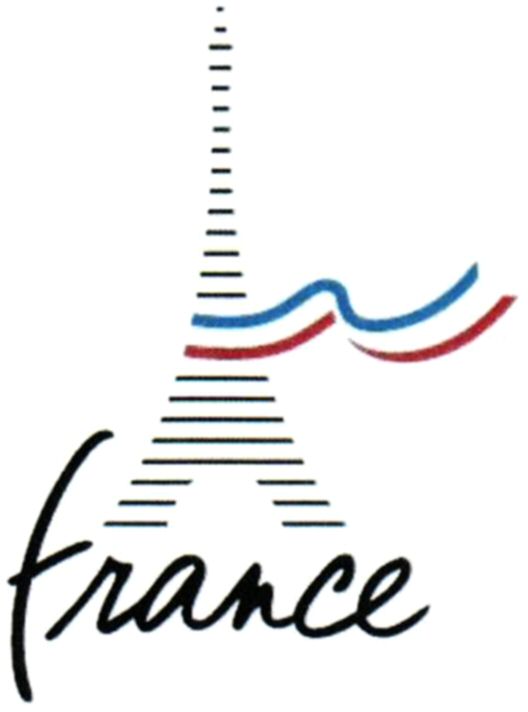
Opponent´s International Registration No. 1032440 designated for the EU (word/device mark)
I. Background of the case
On 9 August 2014, an American company FRANCE.COM, Inc. filed an application for registration of the EU Trademark No. 013158597 (word/device mark) for the services in the class 35 (advertising services), class 39 (services related to travel) and in the class 41 (on-line publications).
The application was then later, on 5 December 2014, questioned when the French Republic filed a notice of opposition. The opposition was based on its prior international registration No. 103244 (word/device mark) which was in 2010 designated for the area of the European Union. This earlier trademark was registered for goods in the class 9 (apparatus and media for recording) and 16 (printed matter) and further for services in the class 35 (advertising services) and 41 (cultural activities and on-line publications). The opponent claimed likelihood of confusion set out in the Article 8 (1) b) Regulation No. 207/2009 (now Art. 8 (1) b) Regulation No. 2017/1001).
On 13 October 2015, the Opposition Division firstly rejected the opposition. The opponent appealed against this decision. On 20 October 2016, the Board of Appeal came to the opposite conclusion than the previous instances and annulled the decision of the Opposition Division. The BoA held that the marks are overall highly similar. The decision was based on following founding:
- the goods and services in question are in part identical and in part similar
- the marks are registered for the same territory,
- the signs have an average degree of visual similarity and are phonetically and conceptually identical.
France.com then brought the action to the General Court and further requested that the GC refers questions about this case to the CJEU for a preliminary ruling.
II. Ruling by the General Court
On 26 June 2018, the GC came in its decision (T-71/17) to the conclusion that the sought trademark “France.com” cannot be registered due to likelihood of confusion with the prior registered trademark “France”.
The GC answered two main questions concerning this case:
a) Likelihood of confusion - similarity of the signs in question?
The GC emphasized that the global assessment must be based on the overall visual, phonetic and conceptual impression of similarity given by the signs and that important by such analysis are the distinctive and dominant elements of each sign. Likelihood of confusion is then given, if the relevant public considers the signs in question to be too similar.
As depicted above, the marks are a combination of a word and of a figurative element. Regarding the case-law, where a sign is composed of a word and figurative element, the word element is given the primary attention as the average consumer will more easily refer to the goods and services by name than by describing the figurative part of a sign.
In the case at hand, both signs have the same key word element “France”, which is according to the GC to be understood as a shortened name of the official name of a public entity - French Republic. Next, the earlier mark also contains a depictured Eiffel tower, the later one a colored pentagon as well as the abbreviation “.com” in addition to the word element “France”.
The Court ruled that the marks as a whole share only a low degree of visual similarity as the dominant color and the figurative elements are different. Further, the word element is also not completely the same as the later mark has an added “.com”.
Concerning the phonetical similarity of the signs, the Court found the signs to be almost identical. The signs only differ in the word part “.com”. This part is easily noticed by the consumers as a reference to a website and is therefore usually not attended to. As a result, most consumers will refer to the mark applied for only by the word “France”, which is then identical with the earlier mark. When examining a phonetic reproduction, only word elements need to be taken into account as the figurative elements are of more importance when analysing the signs visually.
Finally, also from a conceptional point of view the signs were determined to be identical as they both consist of colors, word and figurative elements that refer to the same concept - to the country - the French Republic.
Further, the Court found that the goods and services in question are partially identical and in part similar.
In light of the above-mentioned examination and given the particularly high degree of phonetic and conceptual similarity between the signs, the GC held that there is a likelihood of confusion within the meaning of the Article 8 (1) b) of Regulation No. 207/2009 (now Art. 8 (1) b) Regulation No. 2017/1001).
b) Request to refer the case to the CJEU
Next, the Court rejected the applicant´s plea to refer the case to the CJEU for preliminary ruling with the argumentation that the procedure under Art. 267 TFEU is an instrument for cooperation between the CJEU and national courts, and is therefore not admissible to the GC.
For a better insight on this topic, read the whole decision here.
The Cornell University, INSEAD and the WIPO just published its 11th edition of Global Innovation Index (GII) for the year 2018 with the theme “Energizing the World with Innovation”. The Global Innovation Index is an annually published report since 2007, which gives an impartial view to the measuring of innovation worldwide. The 2018 edition provides detailed information about the state of innovation performance of 126 countries and economics around the world, which represent about 90,8% of the world´s population and 96,3% of global GDP.
The GII is based on 80 indicators, such as vision of innovation, political environment, education, infrastructure or business sophistication. This year´s 2018 edition was dedicated to the theme “Energizing the World with Innovation” and contains the analysis of the energy innovation landscape for the next decade and identifies some possible breakthroughs in various fields – for example ,energy production, storage, distribution and consumption.
Further, the report also gives a closer look at how breakthrough innovation occurs at the grassroots or how small-scale renewable systems are on the rise.
Rankings
According to the GII 2018, the top six most globally innovative countries are:
- Switzerland,
- the Netherlands,
- Sweden,
- the United Kingdom,
- Singapore and
- the USA.
In comparison to the last year, the European countries held their leading positions.
In the category “Innovation efficiency ratio”, the following countries are at the top: Switzerland, Luxembourg, China, the Netherlands, Ukraine and Republic of Moldova.
Then, in the next category “Innovation input sub-index”, the top countries are ranked as follows: Singapore, Switzerland, Sweden, the United Kingdom, Finland and the USA.
And finally, in the ranking concerning “Innovation output sub-index”, the countries are listed as follows: Switzerland, the Netherlands, Sweden, Luxembourg, Germany and the United Kingdom.
For a better insight on this topic, read the whole report here. Furthermore, to learn about the current rankings of the countries based on different indicators, have a look here.
On 4 May 2018, the General Court (GC) dismissed the action filed by the trademark applicant Skyleader. The GC stated that in revocation proceedings, the EUIPO cannot accept evidence of proof of use which is submitted after the time limit. Further, the EUIPO is not allowed to exercise discretion on whether or not to take such evidence into account. It has no other option than to revoke such trademark if use documents are not filed on time.

EU Trademark No. 006347827 (word/device mark)
I. Background of the case
On 1 November 2007, Skyleader a.s., a Czech company active in the light aircraft industry applied for the EU Trademark No. 006347827 (word/device mark) for the goods and services in following Nice Classes:
- Class 12: vehicles, apparatus for locomotion by land, air or water
- Class 41: education, providing of training, entertainment, sporting and cultural activities.
On 14 October 2008 the trademark was then registered by the Intellectual Property Office of the European Union (“EUIPO”). But later in 2015, Sky International AG (“Sky”), a Swiss entertainment group, filed an application for revocation for all registered goods and services on the grounds that the trademark had not been genuinely used for the required five-year time period. The Cancellation Division of EUIPO then set a time limit of three months for the owner of the challenged trademark to submit proof of genuine use, which expired on 13 October 2015.
On 12 October 2015, one day before the end of the deadline, the owner of the trademark filed a two-page fax to the EUIPO. In the fax, Skyleader was seeking to challenge the application for revocation and then, in annexes, listed which proof of genuine use that had been sent to the EUIPO via a courier. These documents, containing proof of use on 211 pages, arrived at EUIPO on 15 October 2015.
On 15 October 2015, the Cancellation Division informed the parties that the submitted documents by Skyleader cannot be taken into account because they did not meet the given deadline. The owner then argued that the fax arrived at EUIPO on time and that the documents had been dispatched by the official post office of the Czech Republic also within the deadline on 7 October 2015. Therefore, Skyleader could not further influence the delivery time.
Nevertheless, the Cancellation Division did not accept this argument and revoked the trademark in its entirety as of 24 June 2015. Against this decision, Skyleader filed a notice of appeal with EUIPO, but, only to be dismissed by the Fourth Board of Appeal of EUPO (“BoA”) on 21 November 2016. The BoA stated that the actual original documents containing proof of use need to arrive by the EUIPO within the time limit, not simply a letter listing them. And if it is not the case, they cannot be taken into account. Further, it was Skyleader´s error that it did not request an extension of the time limit.
II. Ruling by the General Court on genuine use deadlines
Skyleader then brought an action against the decision of the BoA to the General Court (“GC”). On 4 May 2018, the GC came to its decision and assessed to Skyleader´s two main arguments as follows:
a) Misinterpretation and misapplication of the Rule 40 (5) of Regulation No 2868/95 in light of Article 76 (2) of Regulation No 207/2009 (CTMR)
The substance of the case was a different interpretation of the word “may” in following provisions:
- The Rule 40 (5) of Regulation No 2868/95 states that in case of an application for revocation, the EUIPO shall invite the proprietor of the trademark to furnish proof of genuine use. The Office shall further set a period of time in which this has to occur. For the case it is not provided within this period, the Office should revoke the trademark.
- Art. 76 (2) of Regulation No 207/2009 states that EUIPO “MAY” disregard facts or evidence which are not submitted within the time period.
The applicant claimed that the BoA misinterpreted the rules and the meaning of the word “may”. In its view, the word “may” grants the Office the possibility of discretion – to decide whether to take into account evidence which was provided after the deadline - and that this should also apply on the evidence of proof of use in revocation proceedings.
Regarding this, the Court explained that Art. 76 (2) of Regulation No 207/2009 provides a general rule (unless specified otherwise) that the submission of facts and evidence is also possible after the time limit and that the EUIPO is not prohibited from accepting such facts and evidence. Based on the wording, the EUIPO has a wide discretion to decide whether or not take these into account because the provision does not include a regulation of how the time limit is to be set. The EUIPO then also needs to give reasons for either accepting or refusing such evidence.
On the other hand, the Rule 40 (5) of Regulation No 2868/95 is also clear in its wording. This special provision on submitting evidence of proof of use in revocation proceedings allows the EUIPO to specify the time limit within the proprietor needs to furnish proof of genuine use. But if this is provided after the limit, the EUIPO must revoke that trademark. For such cases, the wording of the provision does not allow the EUIPO to exercise discretion, but, to only automatically reject such delayed evidence. The Court further explained that the EUIPO possesses discretion just in the situation when the party submitted the evidence on time and after the time limit wants to submit some additional evidence.
Therefore, in the case at hand the Court did not consider the cover letter sent by the applicant via fax as a proper proof of use because it did not include real evidence but just a listing it.
As a result, GC upheld the decision of BoA and declared the trademark as correctly revoked from the register due to late submission of proof of use.
b) EUIPO - violation of the principle of sound administration in not informing the applicant of the means for rectifying the late submission of proof of use
In this regard, the Court explained that there is no legal background giving the EUIPO the duty to inform a party of the procedures available to it in order to rectify the late submission of proof of use (Art. 81 and 82 of Regulation No 207/2009). Moreover, all such information for the parties is contained in the Guidelines for Examination in the Office.
As a result, the EUIPO did not violate the principle of sound administration and so the Court dismissed the action filed by Skyleader in its entirety.
On 20 June 2018, the General Court of the European Union (GC) ruled that the distinctiveness of the trade mark ‚POLO’ by Ralph Lauren’s eponymous fashion brand is indeed so famous that it requires broader legal protection against similar trademarks. What is significant in this decision is the fact that, even though a mark may not be exceptionally distinctive, its recognition by the public combined with its acquired reputation and its influence on the market is enough to grant ‘POLO’ enhanced protection against the registration of similar marks.
POLO vs. HPC POLO
(EU Trademark No. 4049334) (EU Trademark No. 013531462)
(Word mark) (Word mark)
I. Background of the case
On 5 December 2014, the applicant Mr. Gidon Anabi Blanga,a resident of Mexico, filed an EU trademark with the European Union Intellectual Property Office (EUIPO). The mark the registration was requested for was the word sign HPC POLO (Trademark No. 013531462). The goods in respect of which registration was applied for belong to Classes 18 and 25 of the Nice Agreement. After the publication of the trademark application, the intervener, The Polo/ Lauren Company LP filed a notice of opposition with the EUIPO, citing the similarity between the trademarks and the goods and services covered (Article 8(1)(b) of the Community Trade Mark Regulation-from now on CTMR), as well as the reputation of the trademark ‘polo’(Trademark No. 4049334) within the Community (Article 8(5) CTMR), as reasons for which the registration of the later mark should not be granted.
The EUIPO’s Opposition Division upheld the opposition, after which Mr. Blanga filed a notice of appeal, which in turn the First Board of Appeal of EUIPO dismissed in accordance to Articles 8(1)(b) and 8(5) CTMR. According to the Board, the goods covered by the two marks were found to be identical and the signs in question similar to an average degree, on account of their common element ‘polo’. The average consumer in the European Union (EU), claimed the Board, could likely confuse the two marks, given the reputation the word mark ‘POLO’ has acquired and its immediate connection to a particular fashion house. Mr. Blanga then turned to the General Court of the European Union (GC), asking for the annulment of the contested decision to the part where the Board of Appeal upheld the merits of the opposition.
II. Decision of the GC (T-657/17)
In its preliminary observations the GC confirms that a likelihood of confusion between the two marks exists, namely because the average consumer in the EU territory could quite possibly associate the HPC POLO word sign with that of the world-famous fashion brand. Moreover, the fact that the goods the signs represent, are identical and come from economically-linked undertakings (as they both have to do with leather goods and clothing) further adds to the confusion created on the market. The element ‘HPC’ of the mark Mr. Blanga applied for was deemed insufficient to differentiate the signs from each other, given that the perception of the mark from the consumer is based on its entirety and not on an analysis of its various details. By examining each mark as a whole, along with the element ‘HPC’, the GC upheld the Board of Appeal’s argument that they were visually, phonetically and conceptually similar and that the aforementioned element was included in its entirety within the mark applied for. This is further strengthened by the lack of a respective claim by Mr. Blanga, who failed to argue that the ‘HPC’ element gives the overall sign a completely different meaning from that of the trademark of the famous fashion brand. The Court specified that, even though the word ‘polo’ could immediately correspond to a certain type of clothing in the minds of consumers, it is still not generic enough and must be protected, since it is also one of the most influential trademarks internationally. On that note, the Court deduced that signs that are especially popular in the market should and must enjoy broader protection given the high risk of confusion with other similar marks and the similar goods and services they may offer.
It remains to be seen if Mr. Blanga appeals this decision and takes it to the last instance, the European Court of Justice (ECJ).
On the occasion of the World AntiCounterfeiting Day, the European Union Intellectual Property Office (EUIPO) has published a Synthesis Report on IP Infringement this month. This Report contains valuable information on criminal activities against the IP community relating to the last five years and aims to inform the public about the important economic consequences of product infringement in the EU area.
Source: EUIPO
I. Value of IP Rights (IPR)
The grave importance that counterfeiting has on the EU economy cannot be fully comprehended, without evaluating the growth of IPR-intensive industries first. According to the aforementioned Report, IP proves to be a lucrative business contributing to 42% of the total EU Gross Domestic Product (GDP), which roughly translates to a staggering € 6 trillion in 2016 only. In the same year, IP business employed 28% of the total EU employees, while offering them a 46% wage premium over employees of other business areas. Interesting enough, IPR- intensive industries have contributed to a decline in unemployment rates in countries like the Czech Republic and Hungary, which only joined the EU in 2004. What is also characteristic of the significance of IP in the economic field, is that the trademark intensive accounts for 35% of the total IPR-intensive Industries, since it is used for the identification of the products and services offered by companies. Besides, the contribution of the trademark in differentiating a business from their competitor is undeniably essential for a healthy free market economy.
II. The reasons behind IPR infringement and the role of the internet
IPR counterfeiting can be a prolific business for those engaging in these criminal activities, since the high amount of income that comes from related undertakings combined with lenient sentences offers a solid motive. The low production costs and the lower risk of detention are faces of the same coin. And here how it is done: Transporting a massive amount of products by the sea and then changing the transportation method through shipment via rail makes it hard for the authorities to keep a tab on the whole procedure. Bribery, document falsification, product re-labelling and factory over-runs are all considered effective measures in reinforcing those criminal ventures. A perfect example is counterfeiting pharmaceuticals, the sales of which can lead to $500.000 profit.
The role technological development plays is also decisive for the expansion of those activities. In the era of digitalization, the internet is a medium in which not only infringed products can be freely promoted and purchased, but also where pirated digital content (films, television shows, music) can be downloaded with mostly zero to minimum consequences. The internet’s impossible-to-control nature makes it a great playground for criminal gangs, which enjoy impunity for the most part. While investigating the benefits of illicit internet activity, among the 1.400 web pages that came under EUIPO’s scrutiny, 13% of them were Bit Torrent Portals (sharing pirate copies of films, TV shows, music and computer games), while 64% of them were not illegal per se, but were linking consumers to other illegal web sites.
III. Who is buying counterfeiting goods?
In other words, who is supporting all this criminal activity? Do people really need to buy products that are the result of illegal production methods? In surveys conducted by EUIPO, 10% of the people asked (all citizens of the EU), had purchased counterfeit goods and the same amount had illegally downloaded/streamed online content, notwithstanding the fact, that almost all of them are firm supporters of IPR protection. Naturally, most of them belong to the 15-24 age range, citing the affordable prices of the counterfeit products bought as a reason behind the purchase, while also maintaining the notion that most products they buy illegally are not available in the mainstream market. When it comes to illegal downloading and/or streaming, the typical respondent is -as the Report describes him- a young, educated, employed male, with good internet access, and who most probably resides in a large town.
IV. The financial (and other) consequences of counterfeiting
To put it simply: Everything is counterfeited. From laptops and computer software to shampoo and toothpaste, there is no limit to product piracy. High-risk sectors include foodstuffs, pharmaceuticals, perfumery & cosmetics, articles of leather and handbags, clothing & textile fabrics, footwear and jewellery among others.
That reflects to € 85 billion of total imports of counterfeit and pirated products into the EU alone in 2013, which make 5% of the total EU imports. China holds the sceptre of product piracy, since it illegally produces goods that belong to almost all of the aforementioned categories, with Hong Kong being the channel of their export to other parts of the world. India, Turkey and Thailand come next, with Turkey specializing in leather goods and cosmetics, while Thailand focuses on mobile phones and accessories, the latter of which surprisingly find a market in Germany. Direct lost sales due to counterfeiting amount to almost €60 billion per year and that also leads to a considerable annual loss of jobs (435.000). Moreover, a large company spends roughly €159 thousand battling infringement every year. Those financial losses are minor in comparison to the health and safety issues arising with the use of counterfeit goods as chemicals, cosmetics and pharmaceuticals, which can also be life threatening to the consumer.
V. Battling infringement
Terrorism, migrant smuggling and drug trafficking have all stolen the spotlight from battling IPR criminality. Nevertheless, EUIPO offers a few solutions towards that direction. With its Enforcement Database, it allows owners to keep in contact and provide information in regards of the goods they are selling, so that their counterfeits could be identified more easily from the authorities. Cross-border investigations in co-operation with Europol are to be intensified, since EUIPO is funding the organisation’s Intellectual Property Crime Coordination Centre, which provides training to law enforcement on IP criminality and also monitors the modus operandi of the individuals engaging in this kind of criminal activity. Europol, in turn, co-operates with Interpol on battling counterfeiting on an international level. Last, but definitely not least, the implementation of higher penalties will at least weaken the incentive for those criminal groups and discourage them from undertaking those financially harmful actions.
For more information and infographics please see:
On 15 March 2018, the General Court of the European Union (GC) annulled the prior decision of the Fourth Board of Appeal of the EUIPO (Case R 165/2016-4), deeming that there indeed was a likelihood of confusion between the figurative marks “Winged bull“ and “Griffin“. The parties involved were the internationally known hospitality company Marriott Worldwide Corp. , which held the rights for the figurative mark representing a griffin and Johann Graf, a famous Austrian billionaire and owner of the international gambling company Novomatic, who had obtained a EUTM registration for the use of the figurative mark of a winged bull. The interesting part in this case is the difficulty in objectively assessing whether the trademarks were visually and conceptually similar, since the organs of the EUIPO deemed the signs very different from each other while paying attention to details, whereas the GC sifted the focus on the overall meaning of the signs in the sense that they were both representing imaginary beings.
 vs
vs 
Marriott Johann Graf
EU Trademark No. 8458259 EU Trademark No. 010511723
(Figurative mark) (Figurative mark)
I. Background of the case
On 18 April 2012, Mr. Graf applied for and obtained a EUTM registration (No 010511723) for services listed under Class 43 (Nice Agreement) and primarily connected with providing food and drink as well as with catering and providing food and drink for cafes, hotels and restaurants. Nevertheless, on 14 June 2014 Marriott Worldwide Corp., filed an application requesting the declaration of invalidity of the contested registration based on the similarity with two previous identical to each other figurative marks registered under the No 8458259 in the EU and No 2536999 in the UK which also related to the services described under Class 43 of the Nice Agreement. The invalidity request was also based on earlier copyright acquired through registration at the US Copyright Office, for which Marriott had additionally obtained a user license and claimed protection under the UK legislation (the alleged copyright). More specifically, the applicant claimed infringement of Article 53(1)(a) of Community Trade Mark Regulation (CTMR-now the European Union trade mark regulation) in conjunction with Article 8(1)(b) and 8(5) CTMR, citing relative grounds of invalidity. Furthermore, the application requesting the declaration of invalidity was also based on absolute grounds of invalidity, namely on bad faith, as stated in Article 52(1)(b) CTMR.
The Cancellation Division rejected the application in its entirety and after a notice of appeal from the part of Marriott against the decision of the Cancellation Division, the case was further dismissed from the Fourth Board of Appeal of the EUIPO. The reasons for that were that the signs were visually and conceptually different, whereas, as figurative marks it was not possible to compare them aurally and that the appellant had failed to establish the existence of the alleged copyright. Furthermore, Mr. Graf’s EU trademark was not found to have been filed in bad faith. Marriott then, filed another appeal before the GC maintaining infringement of Article 76(1) CTMR, since there was –according to them- a visual and conceptual similarity and infringement of Article 53(1)(a) CTMR, read in conjunction with Article 8(1)(b), claiming that the consumer perceives the marks as a whole, without analysing the details.
II. Decision of the GC
On 15 March 2018 the GC published its Decision (T-151/17) in favour of Marriott Worldwide Corp., annulling the decision of the Fourth Board of Appeal of the EUIPO. Marriott’s argument that the signs are similar to a high degree both visually and conceptually, due to the fact that they both depict black-on-white silhouettes of mythical creatures shown in profile was accepted by the GC who found the error in the assessment of the Board, contrary to Mr. Graf’s argument regarding the differences of the two creatures represented.
Mr. Graf based his own argument on the relevant public’s ability to distinguish the mythical creatures depicted, but, the GC assessed that there was no solid evidence adduced to prove the fact that there is sufficient knowledge of that from the part of the consumer. Moreover, the goods or services in question come from the same undertaking or financially similar undertakings, so, in this case, the likelihood of confusion persists. The GC also assessed that the Board erred on the basis of reasoning, since the phrase that it used in describing the dissimilarity of the two trademarks (‘for the same reasons as to why the conflicting marks in question are dissimilar’) is not unambiguous and rejected the decision of the Board on the grounds of Article 53(2)(c) CTMR, the infringement of which was also presented by Marriott as an additional ground of appeal.
It remains to be seen if Mr. Graf appeals this decision and takes it to the last instance, the European Court of Justice (ECJ).
SECURING CLIENT-LAWYER COMMUNICATION IN THE NEW DATA PROTECTION ERA
Blog post by Ioanna Zacharopoulou, Trainee at LexDellmeier IP Law Firm
In light of the new General Data Protection Regulation (95/46/EU), which will be enforceable from 25 May 2018, the Council of Bars and Law Societies in Europe (CCBE) and the Munich Bar Association both published rough guidelines regarding the steps every law office should take in order to comply with the new rules set by the EU. Aim of the Regulation is to further unify and simplify the legal status quo in the EU, this time by setting the lawyer-client relationship in the center of attention.
Source: Pixabay
Protecting and ensuring the confidentiality between the lawyer and the client is the key in finding eligible solutions - both on technical and legal level – on the matter of data protection. What is critical is finding a balance between professional secrecy and governmental surveillance especially when the latter of which could lead to unwanted third-party interference. The bearers of such responsibility are first and foremost the law firms, who have to take measures to safeguard their professionalism, whilst providing a safer communication environment.
I. First Steps
First and foremost a minimum level of IT knowledge from the part of the lawyer is required. In that way, they will be able to have a clear overview of the procedure of protecting their firms and - most importantly – avoid personal responsibility for possible lack of IT security. Recruiting an IT specialist who would be able to directly apply security services is practically deemed mandatory. Furthermore, according to Article 17 of the new Regulation every state itself must provide the addressee (in this case the lawyer) with all means necessary to safeguard the circulation of data. A vocational training of the personnel is recommended to ensure the compliance to security standards and the clarification of important strategy points. Applying already tested and recognised security systems is always helpful in increasing the credibility of the firm, as well as the level of trust from the part of the client. It is also vital for the latter to be notified of the firm’s modus operandi with respect to his right of choosing a law firm that meets his criteria. Lastly, the identification of key assets, such as important client information and documents, which need to be secured, is deemed necessary as the starting point of the data protection procedure.
II. Suggested Measures
Below follows a list where the most important measures are displayed in a suggested chronological order:
- Data protection: A thoughtful and organised data protection policy begins with the education of the lawyer on the matter. All lawyers must possess at least minimum knowledge of what data protection really means, what the new Regulation is about and most importantly, what penalty follows the complete and irretrievable loss of data.
- Safe communication: At this point, the use of an encrypted password in all communications is of vital importance. A further measure could be the storing of client data in clouds.
- Data-handling with the help of service contractors: Trustworthy service contractors who can process and safeguard important client information are perhaps the most important step a professional could take to protect his clients. Nevertheless, a written declaration of consent to the processing of their data from the part of the client is also advisable as a means of complete protection of the lawyer and his associates from unwanted legal disputes.
- Data-handling through employees: All the staff working at a legal firm should be thoroughly informed and strictly follow certain rules based on lawyer-client confidentiality. Disclosure of client information to third parties must be avoided at all costs.
- Processing directory: Article 30 of the General Data Protection Regulation (GDPR) requires the writing of a directory for every involved supplier connected with data processing and data protection in general, which can function as written evidence for the legitimacy of the procedure.
Plus 1
In Germany, the Federal Data Protection Act regulates the data protection policy and offers an additional safety net for legal practitioners.
- Data protection officer: § 4f of the Federal Data Protection Act (BDSG) orders the employment of a data protection officer for firms that consist of a more than 9 people staff. Reliability and technical proficiency are crucial requirements.
III. Conclusion
Even with all these measures taken, absolute protection of information cannot be achieved, as there are still many technical obstacles. However, the importance of the new GDPR cannot be questioned, since it not only raises awareness on the matter, but also enforces minimum protection standards for law firms and businesses in general. The most essential thing remains the updating of clients on the measures taken to protect their data and the procedures that are followed. Trust between the lawyer and the client is a major factor in safeguarding professional confidentiality and the lack of it can lead to criminal prosecution of the lawyer according to Art. 203 (1) 3 of the German penal code. Protection of privacy is after all a fundamental human right, a principal of the Rule of Law, solidified in Art. 8 of the Charter of Fundamental Rights of the European Union.
More information can be found here:
https://rak-muenchen.de/rechtsanwaelte/mitgliederservice/datenschutz-in-anwaltskanzleien.html
On 4 May, all fans of the commercially most successful movie series are celebrating the international Star Wars Day. In the fan community, this tradition has been established over 10 years ago. The 4th of May was not chosen randomly, but, because of the very similar pronunciation to the Star Wars most popular Jedi saying: “May the force be with you”.
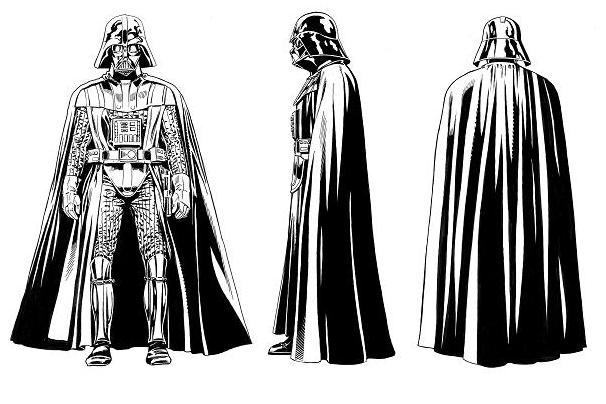
Source: EU 3D shape trademark No. 005896601
From an intellectual property point of view it is worth mentioning that the author, director and producer of the Star Wars films, George Lucas, is also very successfully protecting one of his main sources of income. Only by selling merchandising Star Wars branded products, he has already earned approx. 30 Billion US Dollars. Therefore, it is no wonder that the Lucasfilm companies (now belonging to Disney) are owners of many intellectual property rights worldwide. For example, just at the German Trademark and Patent Office, the company has filed over 292 trademarks.
Lucas is not only protecting his main characters like Darth Vader, Yoda or Obi-Wan Kenobi, but, he is also active in the field of protecting new computer graphics.
For a better insight, here is just a shortlist of his well-known protected trademarks:
- “Star Wars” - protected as an EU word trademark No. 000175380
- “Figure of Master Yoda” – protected under an US Patent No. US265754S
- “Yoda” – protected as an EU word trademark No. 000559591
- “Lord Darth Vader” – protected under the German Law as a German word trademark No. 990370
- “Lord Darth Vader” – protected as an EU 3D shape trademark No. 005896601
- “Obi-Wan Kenobi” – protected as an EU word trademark No. 000559948
- “I´ve got a bad feeling about this” – protected as an EU word trademark No. 071480435
On 28 March 2018, the Directorate-General for Communications Networks, Content and Technology for the European Commission (DG CONNECT) published a Notice to Stakeholders stating that after the UK leaves the European Union on 30 March 2019, all domain name owners based in the UK will no longer be entitled to “.eu” top-level domains.
Source: Shutterstock
DG CONNECT declared in its current notice with the title: “Withdrawal of the United Kingdom and EU rules on .eu domain names” that as of the Brexit day, UK owners will no longer be able to register or renew “.eu” domains. Furthermore, since no additional arrangement on this topic was reached between EU and UK, EURid, the official registry operator for “.eu” for the European Union, will be entitled to revoke such domain names on its own initiative. As a result, EURid will have to delete over 300.000 “.eu” domains that are nowadays owned by registrants based in the UK.
This issued rule will apply on following owners:
- Undertakings and organisations that are established in the United Kingdom but not in the EU
- Natural persons who reside in the United Kingdom
For a better insight on this topic, read the whole Notice here. Furthermore, to learn about the present regulation on who is entitled to register an “.eu” domain, read Article 4 (2) (b) of Regulation (EC) No 733/2002 here.
The World Intellectual Property Organization (WIPO) and the European Union Intellectual Property Organization (EUIPO) have recently published their statistics regarding information on applications and cases filed during the year 2017. What is impressive is the amount of registrations at both Organizations, which in 2017 reached an unprecedented number.

Source: Shutterstock
I. International Registrations filed at WIPO
An impressive 56.200 trademark applications were filed in 2017 via the Madrid System, the system administered by WIPO, which allows and simplifies the procedure of registration of trademarks on an international level. This is a 5% increase from 2016, while the countries that could be described as application “champions” are the US, Germany, China, France and the UK. A number of 7.884 applications have been filed by the US alone, whereas, the most important increase came from China, where applications grew by a double-digit 36,3%. On the other hand, Italy Austria and the Netherlands were the three countries where a small drop in filings was noticed. Back to the “champions”, the companies with the most filings were L’Oréal, Novartis and Abercrombie & Fitch Europe, to name a few.
II. UDRP-Proceedings
2017 was also a record year for the Uniform Domain-Name Dispute-Resolution Policy (UDRP) with 3.074 cases filed. 17% of them were country code top-level domain (ccTLD) disputes.
Furthermore, in 2017, the WIPO Center received 52 mediation and arbitration cases and 84 good offices requests, a rather insignificant upturn from 2016 when all these cases and requests reached the number of 114, with Europe being the top applicant.
III. EUIPO EUTM applications
In 2017, the EUIPO saw the highest number of trade mark applications in its history, namely around 147.418 applications, which was also an increase of 8% from the previous year. More than half of those (53%) were for word marks with applications for figurative marks following in a close second (46%). The newly introduced collective and certification mark applications gathered 119 and 58 filings, respectively. Collective marks, on the one hand, are defined as signs which distinguish the geographical origin or means of production of the product represented, whereas, on the other hand certification marks are used to define the quality standard of a particular product. Once again, Germany, the US and China hold the record for the most applications.
From all those trademarks the vast majority was also registered in the end (128.375 of them were registered in 2017) with a slight increase from 2016 (almost 126.000 trade marks were registered then). This fact could be attributed to the small decline in oppositions in comparison to 2016 (only 18.646 oppositions were pursued in 2017 if one takes the large number of applications into account) in connection to the slight downturn of trademark cancellations (832 in 2016 against 755 in 2017).
The upcoming growth of filings is actually showcased in the number of applications filed in January 2018 (12.106), a notable rise of 22% from the same period in 2017, which might lead to another record year in the field of Intellectual Property.
For more information please be referred to:
http://www.wipo.int/ipstats/en/
http://www.wipo.int/pressroom/en/articles/2018/article_0001.html
http://www.wipo.int/pressroom/en/articles/2018/article_0002.html