

Post Date:
Categories:
 The World Customs Organization (WCO) published the Illicit Report 2013.It includes six chapters, each dedicated to one thematic area: Drugs, Revenue, Intellectual Property Rights, Environment, Security and the Customs Enforcement Network (CEN).
Post Date:
Categories:
 The World Intellectual Property Organization (WIPO) published the Global Challenges Report on June 11, 2014. The study deals with the climate change as one of the biggest global challenges of our time. Therefore, the study analyzes the patent landscapes of four Climate Change Mitigation Technologies (CCMTs): Biofuels, solar thermal, solar photovoltaic (PV) and wind energy.
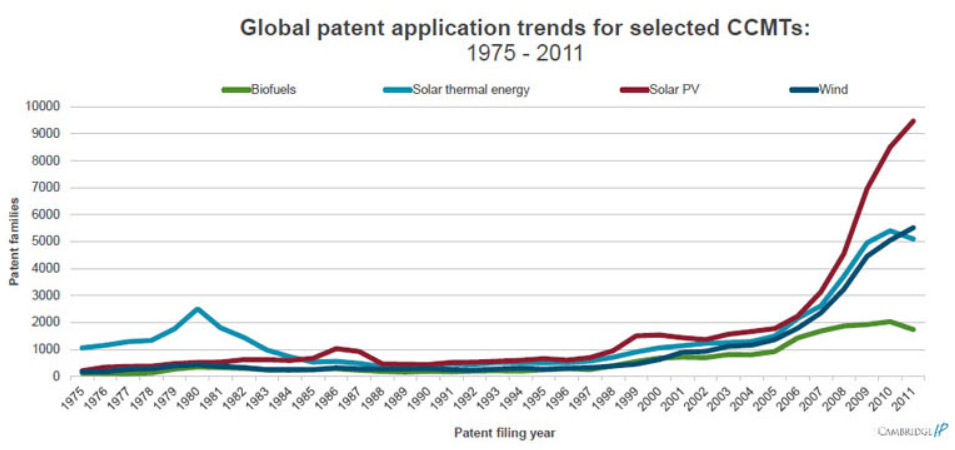
The study wants to acclerate policy discussions by providing evidence about innovation trends, technology ownership and other background information in the green tech field. The report shows an increase of patent filing between 2006 and 2011 of 24 % regarding the four selected CCMTs. In fact, between these five years more patents in these sectors have been filed than in the last 30 years (see below). Also interesting is that China and the Republic of Korea have filed the most patents in the last years in relation to the four CCMTs. However in the area of solar photovoltaic the top 20 technology owners are all centered in Asia.
The World Intellectual Property Organization (WIPO) published the Global Challenges Report on June 11, 2014. The study deals with the climate change as one of the biggest global challenges of our time. Therefore, the study analyzes the patent landscapes of four Climate Change Mitigation Technologies (CCMTs): Biofuels, solar thermal, solar photovoltaic (PV) and wind energy.
The study wants to acclerate policy discussions by providing evidence about innovation trends, technology ownership and other background information in the green tech field. The report shows an increase of patent filing between 2006 and 2011 of 24 % regarding the four selected CCMTs. In fact, between these five years more patents in these sectors have been filed than in the last 30 years (see below). Also interesting is that China and the Republic of Korea have filed the most patents in the last years in relation to the four CCMTs. However in the area of solar photovoltaic the top 20 technology owners are all centered in Asia.
 To see the whole report, follow the link: http://www.wipo.int/export/sites/www/policy/en/climate_change/pdf/ccmt_report.pdf
Post Date:
Categories:
The European General Court (EGC) decided that “JUNGBORN” cannot be registered because there is likelihood of confusion to the older German trademark “BORN” (Case T-401/12, July 11, 2014).
Introduction
Likelihood of confusion is assessed on the basis of if there is a high risk that the targeted consumers must assume that the relevant goods and services derive from the same or connected companies. Therefore, various factors need to be taken into account. On the one hand side, the specific goods and services of the applied for mark and the earlier sign need to be evaluated. On the other hand, the script, sound and meaning of the two trademarks have to be compared.
Background of the Case and Subject Matter
In the present case, the Robert Klingel OHG applied for the Community Trademark “JUNGBORN” for different kinds of gourmet food products. Subsequently, Develey Holding GmbH & Co initiated an opposition because of the similarity to their German Trademark “BORN”. They also sell gourmet food products under this trademark name. Therefore, similarities between the specific goods and services are indisputable. Regarding the similarities of the trademarks themselves, the Office for Harmonization in the Internal Market (OHIM) decided that there is likelihood of confusion. One reason for this decision was that OHIM sees asimilarity between the signs, if one trademark contains the other one and just the beginning varies. Robert Klingel OHG is of the opinion that there is no likelihood of confusion, especially because the focus of their trademark is “JUNG”. This follows from the fact, that the consumer pays more attention beginning of a trademark. Therefore, a similarity between the trademarks is not given from their point of view.
Decision
The EGC compared the signs and took note of the fact that both designations share the component “BORN”. Even though the word “JUNG” is at the beginning of “JUNGBORN”, the court believes that the average consumer will not perceive the mark as a whole, but, still split it into two parts, namely “JUNG” and “BORN”. In this specific case, the EGC is of the opinion that the component “BORN” stands out and can claim individual character. Therefore the court decided that a likelihood of confusion exists and the application “JUNGBORN” is confusingly similar to the prior trademark “BORN” and therefore may not be registered.
Post Date:
Categories:
 Interbrand, started in 1974 with its approximately 40 offices around the globe, is one of the biggest and oldest brand consultancy companies around the world. Every year, Interbrand conducts and publishes various studies relating to brands, their value and the impact on companies and consumers.This year they published for the first time a ranking of the 50 best German Brands. The new study published on 6 June 2014 relates to the “Best German Brands 2014″, which does not just give an in-depth insight, but also an overview about new trends and developments.
Automotive Brands in Germany
The most valuable German brand 2014 is Mercedes Benz with a brand value of 25,54 billion Euros. Competitor BMW is following close behind with a brand value of 25,49 billion Euros. Volkswagen, which is the European market leader is ranked on place five with a brand value of 8,9 billion Euros. Audi made the eighth place and Porsche is ranked as number twelve. All in all, automotive brands from Germany perform extremely well. One reason for this result is that the automotive industry has been investing for many years in the brand management.
Telecommunication Brands
Deutsche Telekom is ranked as number four. A result of constant and in-depth brand management in the last 20 years. Deutsche Telekom showed that brands always have to face the change of costumers needs. Surprising is that Congstar as a young brand is placed on rank 45 with a brand value of 222 million Euros. This result shows that also new brands can be successful because of a good brand idea and a high flexibility with regard to customers' requirements.
Retail Brands in Germany
Germany also has strong retail brands. Therefore, 13 German Brands are ranked in the “Best Retail Brands 2014”. Thus, it is not surprising that also some retail brands count to the “Best German Brands”. For example Aldi is ranked 18 with a brand value of 2,18 billion Euros or Edeka, on 27 with a brand value of 1,15 billion Euros and REWE placed on number 41 with a value of 385 million Euros. To reach a high brand value the retail brands have to follow new trends and be quick and innovative. Edeka, for example, is very successful with its own bakery and own products like SOYES (pasta made out of soya). Another strategy of a lot of retailers is to go back to the places where the consumers are, for examples in the city centers, at airports, railway or petrol stations. This development can be seen by projects like “REWE city” or the “REWE Center Concept Stores”. Of course, also salesvia ecommerce are rising. Therefore it is getting more and more important to offer easy assesable online shops for the consumers. Also some shops like Douglas, ranked at place 46 with a brand value of 156 million Euros use successful bonus systems. The Douglas Card for example is used by more than eight million consumers in Europe.
Business to Business (B2B) Brands in Germany
B2B describes commerce connections between businesses, such as between a producer and a retailer. The opposite are transactions between business and consumer or government. B2B Brands of Germany as BASF (rank 7 with a brand value of 6,4 billion Euros), Linde (rank 19 with a brand value of 1,72 billion Euros) und Evonik (rank 22 with a brand value of 1,51 billion Euros) have a high potential. Through stronger brands they are able to improve the value of their companies. The ranking shows that they are quick successful with their boarding and marketing strategies.
Industry Brands
Germany also has got some strong very industry brands. Siemens as the largest technology company in Europe is ranked on place 6 with a value of 6,81 billion Euros. Especially strong is the chemical industry. For example BASF is placed on 7 with a brand value of 6,47 billion Euros, followed by the chemistry and pharma company Bayer ranked on place 10th with a brand value of 5,61 billion Euros.
If you want to see the whole ranking, follow the link: http://www.bestgermanbrands2014.de/en/
Interbrand, started in 1974 with its approximately 40 offices around the globe, is one of the biggest and oldest brand consultancy companies around the world. Every year, Interbrand conducts and publishes various studies relating to brands, their value and the impact on companies and consumers.This year they published for the first time a ranking of the 50 best German Brands. The new study published on 6 June 2014 relates to the “Best German Brands 2014″, which does not just give an in-depth insight, but also an overview about new trends and developments.
Automotive Brands in Germany
The most valuable German brand 2014 is Mercedes Benz with a brand value of 25,54 billion Euros. Competitor BMW is following close behind with a brand value of 25,49 billion Euros. Volkswagen, which is the European market leader is ranked on place five with a brand value of 8,9 billion Euros. Audi made the eighth place and Porsche is ranked as number twelve. All in all, automotive brands from Germany perform extremely well. One reason for this result is that the automotive industry has been investing for many years in the brand management.
Telecommunication Brands
Deutsche Telekom is ranked as number four. A result of constant and in-depth brand management in the last 20 years. Deutsche Telekom showed that brands always have to face the change of costumers needs. Surprising is that Congstar as a young brand is placed on rank 45 with a brand value of 222 million Euros. This result shows that also new brands can be successful because of a good brand idea and a high flexibility with regard to customers' requirements.
Retail Brands in Germany
Germany also has strong retail brands. Therefore, 13 German Brands are ranked in the “Best Retail Brands 2014”. Thus, it is not surprising that also some retail brands count to the “Best German Brands”. For example Aldi is ranked 18 with a brand value of 2,18 billion Euros or Edeka, on 27 with a brand value of 1,15 billion Euros and REWE placed on number 41 with a value of 385 million Euros. To reach a high brand value the retail brands have to follow new trends and be quick and innovative. Edeka, for example, is very successful with its own bakery and own products like SOYES (pasta made out of soya). Another strategy of a lot of retailers is to go back to the places where the consumers are, for examples in the city centers, at airports, railway or petrol stations. This development can be seen by projects like “REWE city” or the “REWE Center Concept Stores”. Of course, also salesvia ecommerce are rising. Therefore it is getting more and more important to offer easy assesable online shops for the consumers. Also some shops like Douglas, ranked at place 46 with a brand value of 156 million Euros use successful bonus systems. The Douglas Card for example is used by more than eight million consumers in Europe.
Business to Business (B2B) Brands in Germany
B2B describes commerce connections between businesses, such as between a producer and a retailer. The opposite are transactions between business and consumer or government. B2B Brands of Germany as BASF (rank 7 with a brand value of 6,4 billion Euros), Linde (rank 19 with a brand value of 1,72 billion Euros) und Evonik (rank 22 with a brand value of 1,51 billion Euros) have a high potential. Through stronger brands they are able to improve the value of their companies. The ranking shows that they are quick successful with their boarding and marketing strategies.
Industry Brands
Germany also has got some strong very industry brands. Siemens as the largest technology company in Europe is ranked on place 6 with a value of 6,81 billion Euros. Especially strong is the chemical industry. For example BASF is placed on 7 with a brand value of 6,47 billion Euros, followed by the chemistry and pharma company Bayer ranked on place 10th with a brand value of 5,61 billion Euros.
If you want to see the whole ranking, follow the link: http://www.bestgermanbrands2014.de/en/
Post Date:
Categories:
The question if and which slogans and claims can receive trademark protection is topic of a lot of disputes in Germany and throughout the European Union.
 Introduction
The protection of slogans is very interesting for brand owners, because slogans are a key element in advertising. The consumers identify themselves with the slogans or associate a slogan with certain products and services. Therefore, slogans are eye catchers and indirectly help to encourage people to choose certain goods or services over others. In principle, slogans can be protected as trademarks. However, many applications fail if they are purely descriptive or lack distinctiveness.
Examples
The easiest way to outline the difficulties of getting slogans or claims registered as trademarks, is giving some examples.
1. Test it
The German Federal Supreme Court (BGH) decided that the slogan „Test it“ for matchsticks of the cigarette producer WEST is protectable, because the combination of words does not describe a special characteristic of them. But, in contrast to matchsticks, the slogan is not protectable for cigarettes because in this connection the slogan is just a demand to taste cigarettes (BGH, I ZB 34/98; 23.11.2000).
2. Das Prinzip der Bequemlichkeit ("The Principle of Comfort")
One of the first cases decided in relation to the protection of slogans started with the application for registration as a Community Trademark for the slogan “Das Prinzip der Bequemlichkeit” (The Principle of Comfort) by Erpo Möbelwerke. The first and second instance rejected the protection of the slogan and argued that it did not display any element of imaginativeness. Therefore, the slogan lacks distinctiveness and is not protectable. The European General Court (EGC) overturned the former decisions, because it is not appropriate to apply criteria to slogans, which are stricter than those applicable to other types of trademarks. Therefore, it does not matter that the slogan does not have any element of imaginativeness. In the last instance, the European Court of Justice (ECJ) stressed that the correct test for whether a mark of any kind, including slogans, is devoid of distinctive character, was to ask if the trademark is an indication of the origin of the product (C-64/02 P; 21.10.2004). Thereby, the ECJ cnfirmed the decision of the EGC. Finally the slogan was registered because the slogan “Prinzip der Bequemlichkeit” is to be assessed as being distinctive.
3. Get a break – Get a KitKat
The slogan “Get a break – Get a KitKat” is very popular, and nearly everybody connects it with the chocolate bar KitKat. However Nestle, who is the owner of the brand “KitKat” had some difficulties by trying to register the phrase “Have A Break” as a separate trademark. The fundamental problem was that Mars, another chocolate producer, thought the phrase it not distinctive. Therefore, the case went to different UK courts. They all decided that the phrase cannot get protected, because the public is connecting ”Have a break” with KitKat but not with Nestle. But only if the slogan is an indication of the origin, can it receive protection as a trademark. Finally, Nestle appealed to the Court of Appeal, which denoted the following question to the European Court of Justice (ECJ): “May the distinctive character of a mark … be acquired following or in consequence of that use of that mark as part of or in conjunction with another mark?” The answer of the EJC was positive. Therefore, Nestle received protection for the slogan “Have a break” in 2012 (C-353/03; 07.07.2005).
4. Tame it
The slogan „Tame it“ for beauty and hair care products is not distinctive, because it is just an invitation to use the products. Therefore, the slogan is just an indication of the positive effect of the product, but not for the origin (T-471/07; 15.09.2009).
5. Vorsprung durch Technik ("Progress through Technology")
The slogan „Vorsprung durch Technik“ (Progress through Technology) of Audi got registered because the European Court of Justice (ECJ) overruled all decisions of previous instances. The slogan conveys an objective message to the effect that technological superiority enables better goods and services to be manufactured and supplied. The special aspect about this judgment is that the ECJ is of the opinion that being an objective message, does not however exclude the possibility that the slogan could also be an indication for the origin of the product. Because the slogan is imaginative, new and famous, the ECJ finally came to the result that “Vorsprung durch Technik” is protectable (C-398/08 P; 21.02.2010).
6. Leistung aus Leidenschaft ("Power to Perform")
The slogan “Leistung aus Leidenschaft” (Power to Perform) of the Deutsche Bank could not get registered because the European General Court (EGC) decided that the slogan just gives the impression that the Deutsche Bank is performing their services with special enthusiasm. Therefore, it is just descriptive. Also, it is not as imaginative or famous as “Technik durch Vorsprung” and thereby it also cannot serve as an indication of the origin of the product so that the slogan is not protectable (T-539/11; 25.03.2014).
Conclusion
The success of a trademark application of slogans and claims as trademarks is always uncertain. As the examples show, the result is often not clearly predictable. If is worth applying for the slogan or claim in order to receive protection. However, it is advisable to receiveprior advice by a knowledgeable IP and trademark attorney
Introduction
The protection of slogans is very interesting for brand owners, because slogans are a key element in advertising. The consumers identify themselves with the slogans or associate a slogan with certain products and services. Therefore, slogans are eye catchers and indirectly help to encourage people to choose certain goods or services over others. In principle, slogans can be protected as trademarks. However, many applications fail if they are purely descriptive or lack distinctiveness.
Examples
The easiest way to outline the difficulties of getting slogans or claims registered as trademarks, is giving some examples.
1. Test it
The German Federal Supreme Court (BGH) decided that the slogan „Test it“ for matchsticks of the cigarette producer WEST is protectable, because the combination of words does not describe a special characteristic of them. But, in contrast to matchsticks, the slogan is not protectable for cigarettes because in this connection the slogan is just a demand to taste cigarettes (BGH, I ZB 34/98; 23.11.2000).
2. Das Prinzip der Bequemlichkeit ("The Principle of Comfort")
One of the first cases decided in relation to the protection of slogans started with the application for registration as a Community Trademark for the slogan “Das Prinzip der Bequemlichkeit” (The Principle of Comfort) by Erpo Möbelwerke. The first and second instance rejected the protection of the slogan and argued that it did not display any element of imaginativeness. Therefore, the slogan lacks distinctiveness and is not protectable. The European General Court (EGC) overturned the former decisions, because it is not appropriate to apply criteria to slogans, which are stricter than those applicable to other types of trademarks. Therefore, it does not matter that the slogan does not have any element of imaginativeness. In the last instance, the European Court of Justice (ECJ) stressed that the correct test for whether a mark of any kind, including slogans, is devoid of distinctive character, was to ask if the trademark is an indication of the origin of the product (C-64/02 P; 21.10.2004). Thereby, the ECJ cnfirmed the decision of the EGC. Finally the slogan was registered because the slogan “Prinzip der Bequemlichkeit” is to be assessed as being distinctive.
3. Get a break – Get a KitKat
The slogan “Get a break – Get a KitKat” is very popular, and nearly everybody connects it with the chocolate bar KitKat. However Nestle, who is the owner of the brand “KitKat” had some difficulties by trying to register the phrase “Have A Break” as a separate trademark. The fundamental problem was that Mars, another chocolate producer, thought the phrase it not distinctive. Therefore, the case went to different UK courts. They all decided that the phrase cannot get protected, because the public is connecting ”Have a break” with KitKat but not with Nestle. But only if the slogan is an indication of the origin, can it receive protection as a trademark. Finally, Nestle appealed to the Court of Appeal, which denoted the following question to the European Court of Justice (ECJ): “May the distinctive character of a mark … be acquired following or in consequence of that use of that mark as part of or in conjunction with another mark?” The answer of the EJC was positive. Therefore, Nestle received protection for the slogan “Have a break” in 2012 (C-353/03; 07.07.2005).
4. Tame it
The slogan „Tame it“ for beauty and hair care products is not distinctive, because it is just an invitation to use the products. Therefore, the slogan is just an indication of the positive effect of the product, but not for the origin (T-471/07; 15.09.2009).
5. Vorsprung durch Technik ("Progress through Technology")
The slogan „Vorsprung durch Technik“ (Progress through Technology) of Audi got registered because the European Court of Justice (ECJ) overruled all decisions of previous instances. The slogan conveys an objective message to the effect that technological superiority enables better goods and services to be manufactured and supplied. The special aspect about this judgment is that the ECJ is of the opinion that being an objective message, does not however exclude the possibility that the slogan could also be an indication for the origin of the product. Because the slogan is imaginative, new and famous, the ECJ finally came to the result that “Vorsprung durch Technik” is protectable (C-398/08 P; 21.02.2010).
6. Leistung aus Leidenschaft ("Power to Perform")
The slogan “Leistung aus Leidenschaft” (Power to Perform) of the Deutsche Bank could not get registered because the European General Court (EGC) decided that the slogan just gives the impression that the Deutsche Bank is performing their services with special enthusiasm. Therefore, it is just descriptive. Also, it is not as imaginative or famous as “Technik durch Vorsprung” and thereby it also cannot serve as an indication of the origin of the product so that the slogan is not protectable (T-539/11; 25.03.2014).
Conclusion
The success of a trademark application of slogans and claims as trademarks is always uncertain. As the examples show, the result is often not clearly predictable. If is worth applying for the slogan or claim in order to receive protection. However, it is advisable to receiveprior advice by a knowledgeable IP and trademark attorney
 Introduction
The protection of slogans is very interesting for brand owners, because slogans are a key element in advertising. The consumers identify themselves with the slogans or associate a slogan with certain products and services. Therefore, slogans are eye catchers and indirectly help to encourage people to choose certain goods or services over others. In principle, slogans can be protected as trademarks. However, many applications fail if they are purely descriptive or lack distinctiveness.
Examples
The easiest way to outline the difficulties of getting slogans or claims registered as trademarks, is giving some examples.
1. Test it
The German Federal Supreme Court (BGH) decided that the slogan „Test it“ for matchsticks of the cigarette producer WEST is protectable, because the combination of words does not describe a special characteristic of them. But, in contrast to matchsticks, the slogan is not protectable for cigarettes because in this connection the slogan is just a demand to taste cigarettes (BGH, I ZB 34/98; 23.11.2000).
2. Das Prinzip der Bequemlichkeit ("The Principle of Comfort")
One of the first cases decided in relation to the protection of slogans started with the application for registration as a Community Trademark for the slogan “Das Prinzip der Bequemlichkeit” (The Principle of Comfort) by Erpo Möbelwerke. The first and second instance rejected the protection of the slogan and argued that it did not display any element of imaginativeness. Therefore, the slogan lacks distinctiveness and is not protectable. The European General Court (EGC) overturned the former decisions, because it is not appropriate to apply criteria to slogans, which are stricter than those applicable to other types of trademarks. Therefore, it does not matter that the slogan does not have any element of imaginativeness. In the last instance, the European Court of Justice (ECJ) stressed that the correct test for whether a mark of any kind, including slogans, is devoid of distinctive character, was to ask if the trademark is an indication of the origin of the product (C-64/02 P; 21.10.2004). Thereby, the ECJ cnfirmed the decision of the EGC. Finally the slogan was registered because the slogan “Prinzip der Bequemlichkeit” is to be assessed as being distinctive.
3. Get a break – Get a KitKat
The slogan “Get a break – Get a KitKat” is very popular, and nearly everybody connects it with the chocolate bar KitKat. However Nestle, who is the owner of the brand “KitKat” had some difficulties by trying to register the phrase “Have A Break” as a separate trademark. The fundamental problem was that Mars, another chocolate producer, thought the phrase it not distinctive. Therefore, the case went to different UK courts. They all decided that the phrase cannot get protected, because the public is connecting ”Have a break” with KitKat but not with Nestle. But only if the slogan is an indication of the origin, can it receive protection as a trademark. Finally, Nestle appealed to the Court of Appeal, which denoted the following question to the European Court of Justice (ECJ): “May the distinctive character of a mark … be acquired following or in consequence of that use of that mark as part of or in conjunction with another mark?” The answer of the EJC was positive. Therefore, Nestle received protection for the slogan “Have a break” in 2012 (C-353/03; 07.07.2005).
4. Tame it
The slogan „Tame it“ for beauty and hair care products is not distinctive, because it is just an invitation to use the products. Therefore, the slogan is just an indication of the positive effect of the product, but not for the origin (T-471/07; 15.09.2009).
5. Vorsprung durch Technik ("Progress through Technology")
The slogan „Vorsprung durch Technik“ (Progress through Technology) of Audi got registered because the European Court of Justice (ECJ) overruled all decisions of previous instances. The slogan conveys an objective message to the effect that technological superiority enables better goods and services to be manufactured and supplied. The special aspect about this judgment is that the ECJ is of the opinion that being an objective message, does not however exclude the possibility that the slogan could also be an indication for the origin of the product. Because the slogan is imaginative, new and famous, the ECJ finally came to the result that “Vorsprung durch Technik” is protectable (C-398/08 P; 21.02.2010).
6. Leistung aus Leidenschaft ("Power to Perform")
The slogan “Leistung aus Leidenschaft” (Power to Perform) of the Deutsche Bank could not get registered because the European General Court (EGC) decided that the slogan just gives the impression that the Deutsche Bank is performing their services with special enthusiasm. Therefore, it is just descriptive. Also, it is not as imaginative or famous as “Technik durch Vorsprung” and thereby it also cannot serve as an indication of the origin of the product so that the slogan is not protectable (T-539/11; 25.03.2014).
Conclusion
The success of a trademark application of slogans and claims as trademarks is always uncertain. As the examples show, the result is often not clearly predictable. If is worth applying for the slogan or claim in order to receive protection. However, it is advisable to receiveprior advice by a knowledgeable IP and trademark attorney
Introduction
The protection of slogans is very interesting for brand owners, because slogans are a key element in advertising. The consumers identify themselves with the slogans or associate a slogan with certain products and services. Therefore, slogans are eye catchers and indirectly help to encourage people to choose certain goods or services over others. In principle, slogans can be protected as trademarks. However, many applications fail if they are purely descriptive or lack distinctiveness.
Examples
The easiest way to outline the difficulties of getting slogans or claims registered as trademarks, is giving some examples.
1. Test it
The German Federal Supreme Court (BGH) decided that the slogan „Test it“ for matchsticks of the cigarette producer WEST is protectable, because the combination of words does not describe a special characteristic of them. But, in contrast to matchsticks, the slogan is not protectable for cigarettes because in this connection the slogan is just a demand to taste cigarettes (BGH, I ZB 34/98; 23.11.2000).
2. Das Prinzip der Bequemlichkeit ("The Principle of Comfort")
One of the first cases decided in relation to the protection of slogans started with the application for registration as a Community Trademark for the slogan “Das Prinzip der Bequemlichkeit” (The Principle of Comfort) by Erpo Möbelwerke. The first and second instance rejected the protection of the slogan and argued that it did not display any element of imaginativeness. Therefore, the slogan lacks distinctiveness and is not protectable. The European General Court (EGC) overturned the former decisions, because it is not appropriate to apply criteria to slogans, which are stricter than those applicable to other types of trademarks. Therefore, it does not matter that the slogan does not have any element of imaginativeness. In the last instance, the European Court of Justice (ECJ) stressed that the correct test for whether a mark of any kind, including slogans, is devoid of distinctive character, was to ask if the trademark is an indication of the origin of the product (C-64/02 P; 21.10.2004). Thereby, the ECJ cnfirmed the decision of the EGC. Finally the slogan was registered because the slogan “Prinzip der Bequemlichkeit” is to be assessed as being distinctive.
3. Get a break – Get a KitKat
The slogan “Get a break – Get a KitKat” is very popular, and nearly everybody connects it with the chocolate bar KitKat. However Nestle, who is the owner of the brand “KitKat” had some difficulties by trying to register the phrase “Have A Break” as a separate trademark. The fundamental problem was that Mars, another chocolate producer, thought the phrase it not distinctive. Therefore, the case went to different UK courts. They all decided that the phrase cannot get protected, because the public is connecting ”Have a break” with KitKat but not with Nestle. But only if the slogan is an indication of the origin, can it receive protection as a trademark. Finally, Nestle appealed to the Court of Appeal, which denoted the following question to the European Court of Justice (ECJ): “May the distinctive character of a mark … be acquired following or in consequence of that use of that mark as part of or in conjunction with another mark?” The answer of the EJC was positive. Therefore, Nestle received protection for the slogan “Have a break” in 2012 (C-353/03; 07.07.2005).
4. Tame it
The slogan „Tame it“ for beauty and hair care products is not distinctive, because it is just an invitation to use the products. Therefore, the slogan is just an indication of the positive effect of the product, but not for the origin (T-471/07; 15.09.2009).
5. Vorsprung durch Technik ("Progress through Technology")
The slogan „Vorsprung durch Technik“ (Progress through Technology) of Audi got registered because the European Court of Justice (ECJ) overruled all decisions of previous instances. The slogan conveys an objective message to the effect that technological superiority enables better goods and services to be manufactured and supplied. The special aspect about this judgment is that the ECJ is of the opinion that being an objective message, does not however exclude the possibility that the slogan could also be an indication for the origin of the product. Because the slogan is imaginative, new and famous, the ECJ finally came to the result that “Vorsprung durch Technik” is protectable (C-398/08 P; 21.02.2010).
6. Leistung aus Leidenschaft ("Power to Perform")
The slogan “Leistung aus Leidenschaft” (Power to Perform) of the Deutsche Bank could not get registered because the European General Court (EGC) decided that the slogan just gives the impression that the Deutsche Bank is performing their services with special enthusiasm. Therefore, it is just descriptive. Also, it is not as imaginative or famous as “Technik durch Vorsprung” and thereby it also cannot serve as an indication of the origin of the product so that the slogan is not protectable (T-539/11; 25.03.2014).
Conclusion
The success of a trademark application of slogans and claims as trademarks is always uncertain. As the examples show, the result is often not clearly predictable. If is worth applying for the slogan or claim in order to receive protection. However, it is advisable to receiveprior advice by a knowledgeable IP and trademark attorney
Post Date:
Categories:
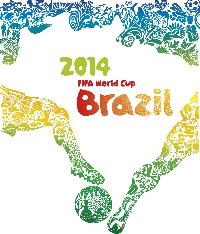
Currently, all eyes are on the World Cup in Brazil. Of course, a lot of people would like to participate in the big success of the soccer game between the different nations. But, to advertise and promote with the World Cup without a license can be a legal disaster and very expensive.
Fact is that FIFA has protected a lot of logos, words, titles, symbols and other trademarks in relation to the 2014 FIFA World Cup which it will use, or allow others to use, under a formal agreement. (one of the protected trademarks: German trademark register number: 011529311 ).
Post Date:
Categories:
The WIPO Global Brand Database offers a new search feature. The new function makes it possible to upload an image and search for visual similarities to other images.
Global Brand Database
The Global Brand Database contains about 11820000 documents with information about internationally protected trademarks, appellations of origin and armorial bearings, flags and other state emblems as well as the names, abbreviations and emblems of intergovernmental organizations. The Global Brand Database also permits without charge, synchronized, brand-related searches across multiple jurisdictions. Different search features make it easier to find the results you are looking for.
Image Search Function
Since May 2014 the Global Brand Database offers a new search function. Next to the possibilities to filter by source, status, origin, application date, expiration date, you can now filter by images. The image search function makes it possible to rank images by their visual similarity to an image you provide. The picture below shows the three steps you have to follow to use the new image search function.
 If you want to try this new function, follow the link: http://www.wipo.int/branddb/en/
 If you want to try this new function, follow the link: http://www.wipo.int/branddb/en/
Post Date:
Categories:
 On the basis of the convergence program the Office for Harmonization in the Internal Market (OHIM) is trying to align the official practice of the national trademark offices in Europe. The aim of the program is to provide transparency, legal certainty, and predictability for the benefit of examiners and users.
Background
The reason for this project are the different procedures of the offices’ handling practice in relation to black/white trademarks, which has led to confusion. While some of the offices rule that black/white trademarks are protected in every color, others assume, that the protection is only for the black/white trademarks.
Results of the Project
The project of this Common Communication deals with priority, relative grounds, and genuine use.
Priority
A trademark in black and white from which priority is claimed is not equal to the same mark in color, unless the differences in color are irrelevant.
Relative Grounds
An earlier trademark in black and white is not identical to the same mark in color except the differences in color are trivial. An insignificant modification between two marks is a difference that a reasonably observant consumer will perceive only upon side by side examination of the marks.
Genuine Use
A change only in color does not alter the distinctive character of the trademark, as long as the word/figurative elements coincide and are the main distinctive elements, the contrast of shades is respected; color or combination of color does not possess distinctive character in itself and color is not one of the main contributors to the overall distinctiveness of the mark.
Consequences
These community principles are a change for offices in some member states. For others, like the German Patent and Trademark Office there are no differences. The Swedish, Danish and Norwegian national officesdecided against implementing this project because of legal constraints.
If you want to read more, follow the link: http://www.dpma.de/docs/marke/commonprinciplesenfinal2.pdf
On the basis of the convergence program the Office for Harmonization in the Internal Market (OHIM) is trying to align the official practice of the national trademark offices in Europe. The aim of the program is to provide transparency, legal certainty, and predictability for the benefit of examiners and users.
Background
The reason for this project are the different procedures of the offices’ handling practice in relation to black/white trademarks, which has led to confusion. While some of the offices rule that black/white trademarks are protected in every color, others assume, that the protection is only for the black/white trademarks.
Results of the Project
The project of this Common Communication deals with priority, relative grounds, and genuine use.
Priority
A trademark in black and white from which priority is claimed is not equal to the same mark in color, unless the differences in color are irrelevant.
Relative Grounds
An earlier trademark in black and white is not identical to the same mark in color except the differences in color are trivial. An insignificant modification between two marks is a difference that a reasonably observant consumer will perceive only upon side by side examination of the marks.
Genuine Use
A change only in color does not alter the distinctive character of the trademark, as long as the word/figurative elements coincide and are the main distinctive elements, the contrast of shades is respected; color or combination of color does not possess distinctive character in itself and color is not one of the main contributors to the overall distinctiveness of the mark.
Consequences
These community principles are a change for offices in some member states. For others, like the German Patent and Trademark Office there are no differences. The Swedish, Danish and Norwegian national officesdecided against implementing this project because of legal constraints.
If you want to read more, follow the link: http://www.dpma.de/docs/marke/commonprinciplesenfinal2.pdf
Post Date:
Categories:
The German Federal Patent Court (BPatG) decided on 8 April 2014, that the word/design mark “München – in Bayern” cannot be registered because there is likelihood of confusion to the older word/design mark “FC Bayern – München”. Also the application was filed in bad faith (Case 27 W (pat) 546/13).
Introduction
Likelihood of confusion must be assessed on the basis of if there is a high risk that the targeted consumers assume that the relevant goods and services derive from the same or connected companies. Also, an application is filed in bad faith, if the applicant knows and deliberately wants that his trademark is confused with another, older trademark.
Background of the Case and Subject Matter
In the present case, the well-known trademark “FC Bayern München” (left, below) of the FC Bayern München AG filed an opposition against the trademark application “München- in Bayern” (right, below) of the Sky Deutschland AG. Both designations are word/design marks. FC Bayern München AG is of the opinion that “München - in Bayern” is too similar to their word/design mark. Regarding the essential points, the stylistic elements are highly similar. Therefore, it is not important, that the words “Bayern” and “München” changed their places and that Sky Deutschland AG uses a higher number of rhomboidal diamond shapes for their word/design mark. The likelihood of confusion is also especially given because “FC Bayern München” has gained a high reputation, in the field of soccer.
For that reason, they also expect that Sky Deutschland AG knows that there is likelihood of confusion between both word/design marks. As a result, they assume that “München in Bayern” was filed in bad faith and Sky Deutschland AG just wants to participate in their success. Sky Deutschland AG instead argues that their word/design mark is in color whereas, FC Bayern München AG’s mark is just black and white.
 vs.
vs.  Decision
The BPatG compared the signs and came to the result that there is likelihood of confusion. They also assume that Sky Deutschland AG knew at the date of filing the application, that their word/design mark is very similar to the mark of the FC Bayern München AG. Therefore one motivation for the filer was, to disturb the lawful possession of Bayern München AG. In reply to the argumentation of Sky Deutschland AG, the court asserts that black and white word/design marks cover similar third party marks, in color, too.
Decision
The BPatG compared the signs and came to the result that there is likelihood of confusion. They also assume that Sky Deutschland AG knew at the date of filing the application, that their word/design mark is very similar to the mark of the FC Bayern München AG. Therefore one motivation for the filer was, to disturb the lawful possession of Bayern München AG. In reply to the argumentation of Sky Deutschland AG, the court asserts that black and white word/design marks cover similar third party marks, in color, too.
 vs.
vs.  Decision
The BPatG compared the signs and came to the result that there is likelihood of confusion. They also assume that Sky Deutschland AG knew at the date of filing the application, that their word/design mark is very similar to the mark of the FC Bayern München AG. Therefore one motivation for the filer was, to disturb the lawful possession of Bayern München AG. In reply to the argumentation of Sky Deutschland AG, the court asserts that black and white word/design marks cover similar third party marks, in color, too.
Decision
The BPatG compared the signs and came to the result that there is likelihood of confusion. They also assume that Sky Deutschland AG knew at the date of filing the application, that their word/design mark is very similar to the mark of the FC Bayern München AG. Therefore one motivation for the filer was, to disturb the lawful possession of Bayern München AG. In reply to the argumentation of Sky Deutschland AG, the court asserts that black and white word/design marks cover similar third party marks, in color, too.
Post Date:
Categories:
This upcoming Munich Patent Law Conference on 27 June 2014 held in English will focus on:
“Burden of Pleading and Proof in Patent Infringement Cases”
