

On 17 March 2021, at 18:00 – 19.30 (CET), LexDellmeier - in cooperation with Reich IP - hosted its Webinar 3 of the 2021 webinar series with the topic: “IP for Start-Ups: IP rights, computer-implemented inventions & artificial intelligence”! During the approx. 90 minutes webinar, Attorney at Law / Certified IP Attorney (Germany) Alexandra Dellmeier and Patent Attorney Dr. Jochen Reich provided participants on information Start-ups need to know, such as introduction to IP rights including trademarks, designs copyrights, computer-implemented inventions and artificial intelligence.
LexDellmeier Slides: Click here to download the LexDellmeier presentation on non-technical IP rights:
[[{"type":"media","fid":"5287","view_mode":"default","instance_fields":"override","link_text":"LexDellmeier_IP for Start-Ups_Presentation"}]]
Reich IP Slides: Follow this Link for Dr. Jochen Reich’s slides.
Heute, am 3. März 2021, hat die Kanzlei LexDellmeier ihr Webinar 2 zum Thema "Marken, Designs, Patente - Überblick" gehalten. Während des ca. 60 Minuten langen Webinars haben Alexandra Dellmeier, Karolin Schech und Andrea Breier eine Einführung in IP Recht gegeben.
Hier können Sie sich die Folien runterladen (PDF):
LexDellmeier_Webinar 2_Schutzrechte - Überblick_Präsentation
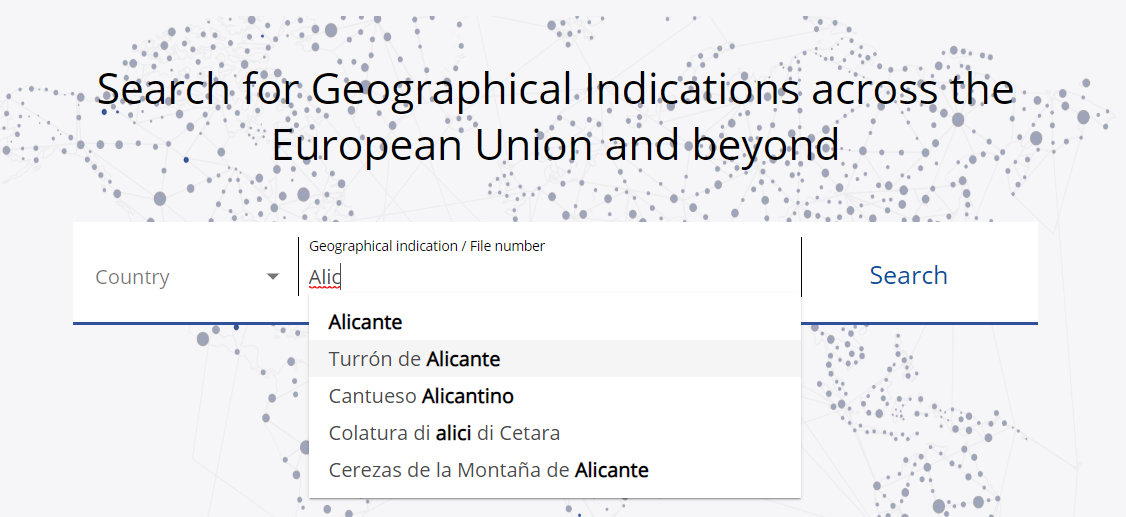
At the end of 2020, the new GIview search database for all Geographical Indications (GIs) was officially launched at the online conference “Strengthening GIs”. This new tool has been developed by the European Union Intellectual Property Office (EUIPO) and is constantly updated with official registered data from the European Commission (Directorate-General for Agriculture and Rural Development).
Source: www.tmdn.org/giview/gi/help
I. What are GIs and why are they important for the economy?
Geographical indications (GIs) are signs used to distinguish and identify products whose quality or reputation are linked to their geographical origin and are protected under intellectual property law.
They are key assets for the economy in the European Union. This is once again confirmed by a study conducted by the EUIPO and the European Patent Office, according to which companies that work intensively with GIs secure almost 400.000 jobs and contribute more than 20 billion Euro to the EU's Gross Domestic Product (GDP). Consumers trust products with GIs from the EU to be of a high-quality standard, which helps producers to market their products more effectively. The annual sales value of GI-protected products is put at about 75 billion EUR. The sales value of a product with a protected name on average is twice as high as the sales value of a comparable product without certification.
II. What does the GIView database contain?
GIview contains detailed information, such as GI type, priority date, legal status and basis of protection on all GIs protected in the EU (including GIs of non-EU countries protected at EU level by bilateral and multilateral agreements) as well as on EU GIs protected in non-EU countries by bilateral or multilateral agreements.
In addition, extended data can also be retrieved. For example, contact data of the GI producer groups, control bodies, maps and pictures of the products including descriptions or sustainability declarations. However, GIview only refers to GIs from the areas of wine, agricultural products, foodstuffs, spirit drink and aromatised wine.
III. The main advantages – How can GIview be useful?
The new GIView has quite a few advantages to offer. In general, GIview's comprehensive data makes it a useful tool for consumers, producers and intellectual property professionals. The search engine interface is designed to be user-friendly since you can set and combine filters to guarantee an effective search. For example, you can select a country and a product type. In addition, you can display the results on a map or in a list. It also has an auto-complete function and can correct simple misspellings.
GIview offers a relief for all potential trademark applicants, as they can check whether their mark conflicts with earlier GI’s. This is important for a smooth trademark application process because earlier rights can be asserted in opposition proceedings. In addition, GI applicants also benefit from the new tool, as they can easily check their current application status.
GIview also facilitates contact between GI producer groups, business contacts and other stakeholders. It can provide direct support to anti-fraud authorities, who can easily see the descriptions and photos of the genuine product and, in the event of an investigation, directly contact the relevant authorities and the genuine product producer group.
In summary, the new GIview database offers an advanced way of simplifying searching for anyone working in the field of intellectual property law, thanks to the comprehensive data it contains.
For further information please click on the links below:
https://ec.europa.eu/commission/presscorner/detail/en/IP_20_683
https://euipo.europa.eu/ohimportal/de/news/-/action/view/8389687
Am 24. Februar 2021 findet von 17.00 - 18.30 Uhr unser erstes Webinar im Jahre 2021 statt. Wir wollen Ihnen zeigen, das wir mit der IP Management Software "IP Servant" seit 12 Jahren sehr erfolgreich bei LexDellmeier arbeiten. Wir freuen uns, wenn Sie sich anmelden unter folgendem Link bei eventbrite
[[{"type":"media","fid":"5254","view_mode":"default","instance_fields":"override"}]]
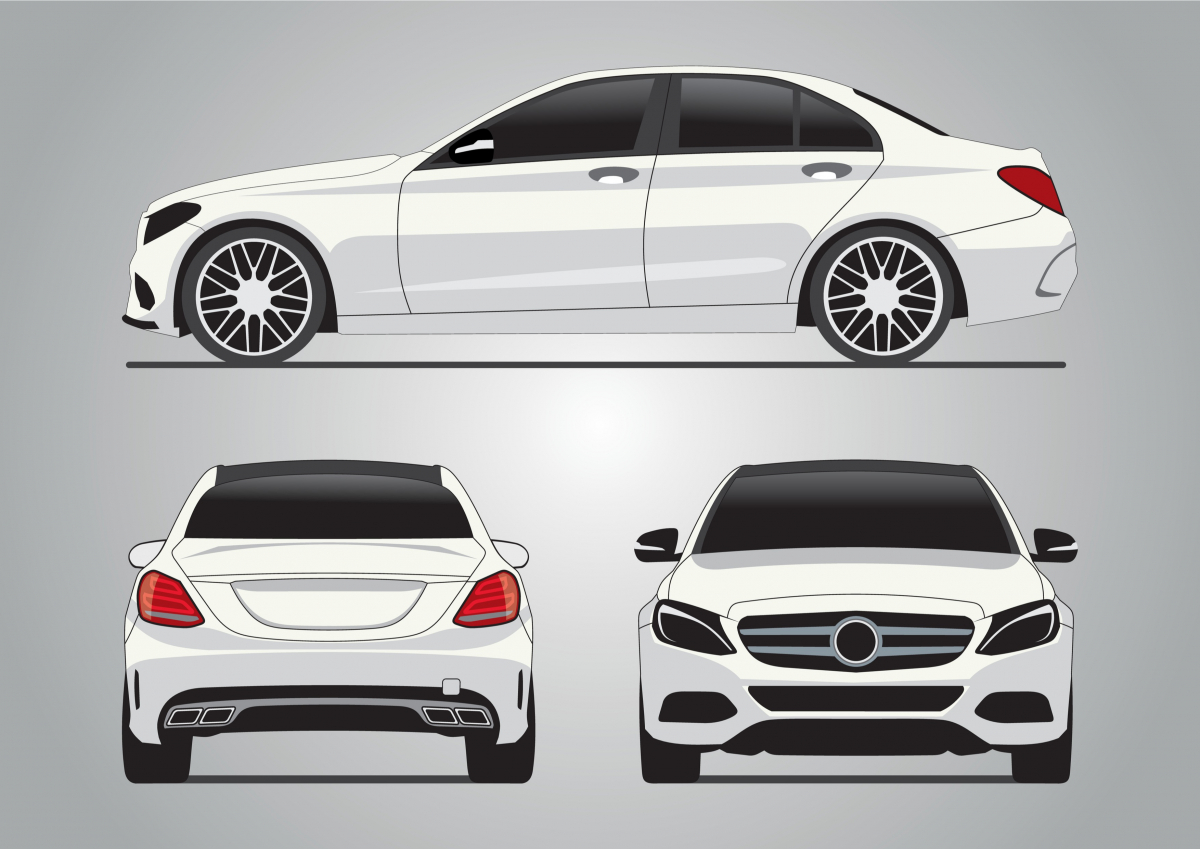
To strengthen fair competition, the German Design Law was amended on 26 November 2020. Similar to EU law, it now contains a repair clause in new § 40a of the German Design Act stating that spare parts shall in certain circumstances be excluded from design protection. The implications remain to be seen – and this will still take a couple of years as the restriction is only applicable to designs applied for on or after 2 December 2020.
(Source: Shutterstock; 1418006408)
BACKGROUND
Germany is a country known worldwide for its automotive industry and great brands like Mercedes, BMW, Audi, Porsche, Volkswagen and more. The car manufacturers form a big part of the German economy and try to protect their innovations in any way possible. Thus, there are many design registrations for all parts of cars pending which bar third party manufacturers from providing auto spare parts in the aftermarket for repair purposes. The effect is that consumers have to pay about 30 – 55 % more for design protected spare parts than they would have to pay in a free market. The spare parts aftermarket in Germany is more or less monopolized and it is nearly impossible for third party manufacturers to enter it.
NEW LAW
Despite the strong lobbying of the automotive industry, the German Design Law now includes a new § 40a of the German Design Act. It excludes design protection for component parts of complex products which are used solely with the aim of enabling the repair of the complex product and restoring its original appearance, provided that consumers are informed about the origin of the spare part, so that they can freely choose between competitors.
By referring to the necessity that the spare part must only be used to restore the original appearance of the complex product, the scope of the new provision is mainly to form-dependent, that is must-match parts which equal the original parts of the car in their exact shape and dimensions. In the automotive industry, the most affected spare parts will be car doors, hoods, fenders, mudguards, exterior mirrors, windows, headlights and taillights – basically all visible, body-integrated replacement parts that must be manufactured in a certain way to fit the original appearance of the car.
While typical examples for an application of the new repair clause are such relating to the automotive industry, it will, of course, also have effect in all kinds of other sectors with strong design protection like household appliances, consumer electronics or sanitary equipment.
CRITIQUE
Even though the German government implemented the new repair clause, it also gave in to the strong lobbying of the automotive industry. The new repair clause only applies to those designs which have been filed on or after 2 December 2020. Designs for spare parts already registered before 2 December 2020 can still claim design protection for the rest of their “life”. Thus, the intended full liberalization of the aftermarket for spare parts of cars will only become reality in 25 years, when the last design filed in 2020 for those spare parts expires.
This is, of course, criticized by the aftermarket industry that claims that there should be no design protection for spare parts – visible or not – because there is no design alternative for repairs. Other criticism comes from consumer protection groups which argue that a wider liberalization would only be to the advantage of consumers as prices for spare parts and repairs will go down. It will have to be seen if the clause will be amended again in the next years.
STRATEGIC CONSIDERATIONS
Do not stop filing designs for spare parts! The new § 40a of the Design Act only relates to spare parts used to repair and restore the original appearance of complex products. You will, however, still need registered designs to protect your products in the primary market and to keep copycats from imitating your goods.
In view of the new repair clause, we recommend that you review you design and overall intellectual property filing strategy to see if any amendments are needed. Should you like to discuss this issue and potential implications of the new repair clause for your designs, you are welcome to contact us at LexDellmeier
- by phone: +49 89 55879870 or
- by email: info@lexdellmeier.com
and we will be glad to advise further.
The European Union Intellectual Property Organization (EUIPO) regularly publishes statistics on the European Union Trademark (EUTM), providing general information on the number of applications, registrations, oppositions and renewals in a given period of time. These statistics are broken down by country, type of mark, classes of goods and services. This article is limited to the figures relating to applications.
2020 was a slightly different year in general due to Covid-19, but there was not a reduction, but rather an increase in trademark applications.

I. Number of Applications
By November 2020, an impressive total of 158.564 EUTM applications had been filed. Unfortunately, at the time of publication of the statistics, data from December 2020 was not yet available. However, it can be expected that the total number of applications from 2019 of 160.531 was significantly exceeded in 2020. Especially in the second half of the year of 2020, there were more applications each month compared to the previous year 2019.
Finally, it should be noted that since the statistics began in 1996, an impressive total of more than 2 million EUTM applications have been filed.
The type of applications is also particularly noteworthy, as over 80 percent were submitted via the e-filing function in 2020. The fast track option has also become increasingly popular since it was made available on the EUIPO website in November 2014. In 2020, very few applications were submitted by mail and not a single application was submitted by fax. This shows that legal tech is becoming increasingly popular among users.
II. Country Overview
In 2020, Germany filed a total of 22.5587 applications, which is more than one-fifth of all applications filed by countries of the European Union. Looking at the breakdown by country within the European Union, it is striking that Germany filed by far the most applications.
In second and third place are Italy and Spain, each of which submitted around 9.000 to 12.000 applications.
But even when countries outside the European Union are included in the comparison, Germany remains at the top among all countries. Only China can knock Germany off first place in 2020 with 24.817 applications.
III. Type of Marks and Classes
In 2020, the applications filed included almost exclusively figurative (43%) and word marks, with word marks ranking first (56%), as in the previous years.
The distribution among the number of classes remains without much change in 2020 compared to previous years. 40% of all applications are limited to apply the mark in one class only. There is also no deviation worth mentioning in the distribution within the classes. Top classes continue to be Class 9 (e.g. software, electronics etc.), which concerns goods, and Classes 35 (e.g. business, consulting etc.) and 42 (e.g. software development etc.), which concern services.
IV. Conclusion
In summary, although Corona slows down life in many areas, this did not affect the trademark applications in 2020. This is a good sign, because a high willingness to apply for an EUTM is an indicator of business confidence and the importance of intellectual property.
For more information please be referred to:
Lena Ertle is the latest addition to the LexDellmeier team. She is completing her legal clerkship at the Higher Regional Court of Munich and will support the team at LexDellmeier during 2021 as a legal trainee. Even though Covid-19 is still continuing to challenge everyone, we believe it is really important to help, support and train young professionals. In the past almost 12 years at LexDellmeier we have trained in total 25 Erasmus, ELSA and other law students from Germany, EU member states and other countries around the world. LexDellmeier usually engages two (2) interns and trainees per year. Let Lena Ertle introduce herself, her tasks as a legal trainee at LexDellmeier, her goals and her interest in intellectual property.

Hello, nice to meet you! I would like to introduce myself. My Name is Lena Ertle and I have joined the LexDellmeier team for this upcoming year 2021 as a legal trainee.
Last year I successfully completed my studies at the University of Konstanz by passing the First State Legal Exam. After that I started the legal clerkship and currently I am clerking at the District Administration of Augsburg. At the end of this year I will take the bar exam (Second State Legal Exam) and hopefully be a lawyer myself after that.
After many years of theoretical studies at the university I really look forward to doing some practical work and apply the theoretical knowledge that I have acquired in the “real world”.
I am delighted to have the chance to work at LexDellmeier for several reasons.
On the one hand, I appreciate being able to work in a small team with several specialized IP attorneys and trademark and design professionals whom I can ask for advice, discuss current IP issues and cases.
On the other hand, I can combine two of my interests. My preference for the English language, which is part of the daily business in this law firm, and my great legal interest in the field of intellectual property.
There is a wide range of responsibilities that I will be taking care of.
In general, I will be supporting the office organisation and administration. I hope to gain as much office experience and impressions as possible, even though at the moment many employees are working in their home office due to the difficult Covid-19 situation.
In addition, legal opinions and research will be part of my job. I am particularly looking forward to this as it will give me a closer insight into trademarks, designs, copyrights and licensing issues. Furthermore, you will soon read more articles from me here, as the creation of blog articles on current case law will also be part of my field of activity.
I will also work on some special projects during my time at LexDellmeier. As already announced, there will soon be the chatbot “BenBot” for trademarks on this website. Here it will be my task to develop the chatbot further and to continue the work of the last legal trainee, Oliwia Puto.
Another overall major project of mine will be the implementation of an online design application tool. A similar one already exists on the firm’s website at www.lexdellmeier.com.,
I very much look forward to all of these projects, insights and challenges. Especially in times of rapid change, when everything is getting faster and everyone wants to obtain specific information right away and 24/7, it is important to integrate the digitalization of legal advice into the work cycle. Legal tech has the potential to make life easier for everyone involved.
In a nutshell: I am really excited and full of energy to learn more about IP, tackle all challenges and support the whole team.
The following 45 minute webinar gives you an overview and update on Brexit and the implications on EU Trademark and EU Design Law starting 1 January 2021.
[[{"type":"media","fid":"5239","view_mode":"default","instance_fields":"override"}]]
[[{"type":"media","fid":"5234","view_mode":"default","instance_fields":"override","attributes":{"height":733,"width":794},"field_file_image_alt_text[und][0][value]":"LexDellmeier_Holiday_Greetings_2020","field_file_image_title_text[und][0][value]":"LexDellmeier_Holiday_Greetings_2020"}]]
[[{"type":"media","fid":"5231","view_mode":"default","instance_fields":"override"}]]