

As many trademark owners in Germany and other western countries have experienced in the past, the demand for their high-quality products is very high with the middle class in China. Unfortunately, it is quite difficult for Chinese customers to distinguish between genuine products that have been imported by the European manufacturer on the one hand and imitations by counterfeiters on the other hand. Particularly with food products and its health implications, it is extremely important to make sure that products are genuine. To protect consumers and to strengthen their trade relationship, the EU and China concluded an agreement on the reciprocal protection of Geographical Indications (GIs) on 6 November 2019. The corresponding press release of the European Commission can be found at
https://ec.europa.eu/commission/presscorner/detail/en/IP_19_6200

What are Geographical Indications?
Geographical Indications are product designations which have such a close link to a specific geographical place that consumers assume that goods with the product designation always originate from that specific geographical place. For instance, consumers assume that “Champagne”, the French sparkling wine, originates from the Champagne wine region in the northeast of France. If the product is instead made in another region or country like Ningxia in China, consumers are being misled which is not just a potential health threat, but also a threat to the quality expectations and the reputation of “Champagne”-products and their exclusivity.
Therefore, the name of certain foodstuffs and agricultural products like fruit and vegetables, fish, meat and meat products, cheese, bread, pastry and beer can be protected as Geographical Indications in the EU. To gain protection, the name that is used to designate a product must directly relate to the origin of the product – being a specific place, a specific region or a specific country. The essential requirement for protection is that there is a link between the properties of the product and its production in the region of origin.
In Germany, the application for registration of a Geographical Indication must be filed at the German Patent and Trademark Office which will examine the application and then forward it to the European Commission for registration. For more detailed information on the protection of Geographical Indications, you are welcome to contact us at LexDellmeier by email or phone and we will be glad to advise further (see contact details below).
EU and China landmark agreement
In the EU, there are over 3,300 names registered as Geographical Indications / Designations of Origin and for 100 of them protection will soon extend to China.
The new agreement between China and the EU guarantees protection of 100 European Geographical Indications in China and 100 Chinese Geographical Indications in the EU against imitations and usurpation. China is the second largest destination for EU agri-food exports and thus a very important and high-growth potential market for European food and drinks. At the same time, China has a well-established Geographical Indications system of its own, with specialties that European consumers will soon be able to further discover thanks to the new treaty. The agreement must still go through certain legal processes but is expected to enter into force before the end of 2020.
The EU list of Geographical Indications to be protected in China includes products such as “Bayerisches Bier” and “Münchener Bier” for beers, “Rioja”, “Sherry”, “Bordeaux”, “Chianti” and “Champagne” for wines, “Feta”, “Gorgonzola” and “Roquefort” for cheese, “Irish whiskey”, “Grappa” and ”Polska Wódka” for spirit, “Prosciutto di Parma” for meat products and “’Scottish farmed salmon” for fish. Among the Chinese products, the list includes “Baoshan Xiao Li Ka Fei” for coffee, “Shanxi Lao Chen Cu” for vinegar, “Fuzhou Mo Li Hua Cha” for jasmine tea, “Pizhou Da Suan” for garlic, “Songxi Lü Cha” for green tea and “Wuchang Da Mi” for rice. The complete lists can be found with further information at the link mentioned above regarding the press release of the European Commission dated 6 November 2019.
Importance of Geographical Indications in trademark matters
Protected Geographical Indications must be taken into consideration as absolute grounds for refusal in trademark application proceedings and can be the basis of invalidity proceedings or oppositions in trademark conflicts.
Thus, should you like to know if it is possible for you to use a certain product denomination containing the name of a geographical place or if you would like to inquire about the possibilities to protect a product denomination as Geographical Indication, we will be glad to hear from you and to advise further. You can contact us by email (info@lexdellmeier.com) or phone (+49 89 5587987 0).
If you have ever had to take your case from the EUIPO to the General Court or even to the Court of Justice of the European Union (CJEU), it might have taken you a while to get a decision. Thus, among other reasons, the European Union decided to slightly amend the judicial structure of the Court of Justice to make the system more efficient.

Background
Some time ago, the Court of Justice and the General Court reviewed the effectiveness of their work -- also in intellectual property (IP) cases. They found that many appeals filed with the CJEU were dismissed on the ground of evident inadmissibility or because they were evidently unfounded. That came as no surprise as many appeals were brought in cases which had already been considered twice. Before reaching the Court of Justice, they had already been reviewed and decided by an independent board of appeal and then by the General Court. Thus, changes in the judicial structure of the court system were deemed necessary.
New appeal requirements
Regarding intellectual property cases, one of the measures taken to make the Courts more efficient took effect on 1 May 2019. To avoid the unnecessary work involved with cases that are obviously inadmissible or unfounded, an allowance stage was newly introduced. As of 1 May 2019, any appeal in IP cases must be accompanied by a request asking that the appeal be allowed to proceed. The request must not exceed seven (7) pages and clearly state the reasons why the appeal should be decided by the Court of Justice. The appeal will only be allowed if it is significant with respect to the unity, consistency or development of EU law. Without such request, the appeal will be automatically declared inadmissible.
The request will be decided upon based on a proposal from the Judge-Rapporteur and after hearing the Advocate General. The ruling will then be published on the Court’s website with reasons on whether or not the appeal is allowed to proceed.
The introduction of an allowance stage for IP cases will most likely reduce the number of IP cases that the Court of Justice has to deal with. But to not be rejected for formal reasons when filing an appeal with the CJEU, be sure to not just file your grounds of appeal, but to also include a separate letter of no more than seven (7) pages to get your appeal allowed first!
Specialized IP chambers and increase in number of judges at the General Court
Another important change to make the European Courts more efficient is the increase in the number of judges at the General Court up to a total of 53 judges by 26 September 2019. The increase is accompanied by changes to the system for allocating cases to the Chambers. Out of the ten Chambers of the General Court, six Chambers will specialize in intellectual property matters -- with IP cases having made up about 40 per cent of the court’s cases in 2018. The cases will be allocated on a rotational system, but as regards IP cases, only the Fifth through Tenth Chamber will be involved. In very special circumstances, the rotational system may be circumvented by the President of the General Court in order to take account of a connection between cases. That can apply for instance in cases with the same or legally similar subject matters or with a view to ensuring an even spread of the workload. Let’s wait and see whether the increase in judges will speed up the time that the General Court needs to decide IP cases!
Should you be looking for legal assistance in proceedings at the General Court or the Court of Justice of the European Union, you are welcome to let us know and we will be glad to discuss your case with you. You can contact us by email to info@lexdellmeier.com or by calling +49 89 5587987 0.
Over the last few years, an increasing amount of law firms have announced that they will start using artificial intelligence (AI). However, for many it may still be unclear what the concept of AI includes and what kind of possibilities it has to offer especially in the legal field. This article aims to give an overview on how law firms can take advantage of AI and chatbots to support their daily work. At the end of the article, the possible impact that AI will have on the legal profession is shortly discussed.

Definition and benefits
There is no exact definition of artificial intelligence (AI). According to TechTarget, AI can be defined as “the simulation of human intelligence processes by machines, especially computer systems”. The processes that are referred in this definition include learning, self-correction and reasoning.
Firms in the legal field can naturally adapt AI for many different purposes depending on their needs. One practical example is to use AI for invoicing. If a firm receives for example tens of thousands of invoices all over the world every year, using AI for reading the incoming invoices and accounting their contents to the right cases can save a lot of time. In principle, AI could also be trained to read authority reports and monitor deadlines from them. (Tekniikka & Talous 2017.)
A third possibility for reducing workload in a law firm could be using chatbots. Chatbots use AI to answer simple questions and simulate human conversations. Chatbots can for example take care of dealing with potential new clients. A chatbot called “Parker” had over 1000 conversations regarding basic questions on data protection and privacy on its first day at work (Financial Times 2018). Having someone to answer basic questions around the clock seems like a perfect solution for a busy lawyer. Using chatbots can benefit both large and small businesses.
Legal Technology Survey Report
In 2018, American Bar Association (ABA) published a Legal Technology Survey Report. The report provides at least a general idea of how common it is to use AI in the legal field. The survey had 900 respondents from US. According to the report, only 10% of lawyers used AI-based tech tools for their legal work. The study showed that the use of AI was greater among large firms with over 100 attorneys. Smaller firms were uncertain over what benefits AI offers, and most of solo lawyers and lawyers at boutique law firms had no interest in purchasing an AI-based software. Similar surveys have not been conducted in Europe yet. However, it is likely that the results would be similar at least to the point that larger firms are usually the first ones to adapt new AI based tools.
Future developments
AI cannot be mentioned in the legal context without discussing its possible implications for the legal profession. What will happen to lawyers if AI will soon take over some of the routine work? Future development is of course hard to predict, but it is hard to believe that AI would put lawyers out of business. Most likely AI will help lawyers to work more efficiently. Instead of using way too much time to answering routine questions and doing other “simple” tasks, lawyers can focus on counseling, analyzing and advocacy (Law Technology Today 2018). In this way, lawyers can also provide more value to their clients.
Conclusions
It can be concluded that even though teaching AI requires time and effort, the results make the processes much more efficient and eliminate a lot of time-consuming routine work. The possibilities of AI in the legal field are limitless. Currently, use of AI seems to be greater among large firms. However, especially chatbots can benefit also smaller law firms by letting lawyers focus on higher-level tasks. AI benefits both lawyers and clients. It is important not to ignore advancements in technology that could improve legal services. AI is becoming very important for the future – also in the legal field.
Each of LexDellmeier’s trainees is assigned a theme that he/she will work on during the whole trainee period. This article is written by our former trainee, Hanna Lahtela, as a part of her overall trainee project. At the end of her traineeship, she prepared also a presentation on the main findings of the project for the entire LexDellmeier team.
The German Patent and Trademark Office (GPTO) refused registration of the trademark “Oktoberfest” – just before the Münchner Oktoberfest will start.
Munich locals and visitors from all over the world are thrilled: Oktoberfest or “Wiesn” 2019 will start on 21 September 2019 – the Munich “original” – often copied, but still unmatched. For “Münchner Kindl” (the people born in Munich) it is unthinkable that someone might not connect the terms “Oktoberfest” or “Wiesn” with beer and beer tents, brass band music and fairground rides and – of course – with Bavaria and Munich (and definitely with no other country or city). The German Patent and Trademark Office (GPTO) and the European Union Intellectual Property Office (EUIPO) say that this is also the case for the rest of the German-speaking public, and that, therefore, neither “Oktoberfest”, nor “Wiesn” are capable of being registered as trademarks (at least not for those goods and services which are of most interest for the applicant, the city of Munich).
I. Several attempts for obtaining EU- and German-wide trademark protection for “Wiesn” and/or “Oktoberfest”
In 2015, Munich had applied at the EUIPO for trademark protection of the expression “Wiesn” as a word mark (EUTM no. 014912802). The EUIPO objected the mark, arguing that the broad public will understand “Wiesn” as synonym for “Oktoberfest”. “Oktoberfest” is a very famous festival, as the broad public knows. The expression “Wiesn” allegedly implies to the addressed audience that goods and services for which the expression is used, are “somehow” related to the Oktoberfest. However, after some struggles, the mark “Wiesn” was successfully registered in 2018 for some goods and services in classes 3, 9, 38, 39, 40 and 42 – for example for cosmetics, electronic parts, telecommunication services, design of websites and software. To speak honestly: those are not the goods and services which cover the main fields of the “real” Wiesn, but indeed goods and services which will not be related to the famous beer festival. Nevertheless, the registration of “Wiesn” as a word mark for at least some goods and services is a partial success for the applicant.
While the proceedings regarding the potential mark “Wiesn” were still pending before the EUIPO, the applicant filed a word mark application “Oktoberfest” with the EUIPO (EUTMA no. 015535008), designating 27 (of 45 possible) classes of the Nice Classification, inter alia, beer and non-alcoholic beverages in class 32, alcoholic beverages in class 33, advertising services in class 35, organization of public festivals in class 35 and catering for guests in class 43. Also, this application was objected by the EUIPO Examining Division – apparently for all goods and services. For unknown reasons, the EUIPO’s online register file does not show any documents to the public. However, according to the status of the register, an appeal is pending before the EUIPO Board of Appeal; hence, the applicant obviously is further attempting to get the application registered.
In 2018, the applicant additionally tried it locally and filed an application for “Oktoberfest” at the GPTO (German trademark application no. 30 2018 008 442.3), designating only services in classes 35, 41 and 45. The GPTO also objected this trademark; the applicant withdrew the application in the beginning of September 2019, probably in order to avoid a negative official decision.
II. Comment and Forecast
As to the further developments of the proceedings, it seems like Munich’s strategy is focusing on the EU applications rather than further trying to convince the German instances of the registrability of the term “Oktoberfest” as a trademark. At least the applicant has some trademark protection for the term “Wiesn”. If the EUIPO Board of Appeal confirms that the term “Oktoberfest” is not registrable, the applicant will likely bring the matter to the Higher European instances (General Court and European Court of Justice).
As is so often the case, there are many and diverging interests regarding this matter. The annual Oktoberfest is of course an immense source of income for Munich. In addition, there are a lot of “Oktoberfest” imitations all over the world which surely do not always meet Munich’s expectations regarding how such a festive is to be celebrated and what kind of products are to be offered. In addition, those imitations do not have any connection to Bavaria and Munich. For these reasons, it is of great importance to Munich to protect the expression “Oktoberfest” and to have control over its use by third parties. Obtaining trademark rights for “Oktoberfest” for goods and services related to a public festival would put Munich in the position to prohibiting third parties to use “Oktoberfest” for their interpretations of this event and potentially also to bind and control third parties who make money with the offer of “Oktoberfest” merchandising products. This is a huge market with almost unlimited growth potential.
The question is: Should the city of Munich receive a “monopoly” for “Oktoberfest”? What would happen to all the other “little” Oktoberfests around the world? Finding a fair solution for all parties involved will be a difficult task for the offices and courts.
With the legal profession traditionally being male-dominated, Lawyer Monthly aims to recognise the struggles female lawyers overcome, in order to be the best for their clients. That is why we are very proud to have received the Women in Law Award and to be on the cover of the 2019 edition of the Lawyer Monthly Women in Law Awards Magazine.
What are the Lawyer Monthly Women in Law Awards?
The legal sector is no stranger to carrying predisposed notions on the battle of the sexes. With the legal profession traditionally being male-dominated, the fema le lawyers from Lawyer Monthly often comment on the struggles they face when trying to crack the industry. Thus, in accordance with celebrating the women who work hard to not only conquer the legal world, but also for the betterment of their clients, Lawyer Monthly presents its annual Women in Law Awards. In the 2019 edition, Lawyer Monthly not only celebrate and highlight the achievements of women in the legal profession across the globe, but also recognise the challenges they overcame. The Lawyer Monthly Women in Law Awards recognise female legal experts that have influenced the wider legal profession in their jurisdiction.
Why do we, LexDellmeier, deserve this award?
Passion, core competence, communication, integrity, creativity and teamwork distinguish the Munich-based boutique IP law firm LexDellmeier. We are small, but awesome. We love what we do. We always give our best and focus on fast, clear and effective communication. We are honest, reliable and like to go unusual ways in order to bring our clients cost-effectively to their goal. And above all, LexDellmeier is a great team of 10 highly trained and motivated women who support each other and overcome every hurdle together.
Alexandra Dellmeier is an Attorney at Law and Certified Intellectual Property Attorney (Germany), specialising in the field of Intellectual Property Law (IP). In 2009 she founded LexDellmeier Intellectual Property Law Firm in Munich, Germany. She gives a professional insight regarding the role of an IP attorney as an intermediary between clients, IP offices, customs offices and courts, current challenges and future trends in the field of IP. And, she talks about her all female IP boutique firm in Germany – and how that happened: https://womeninlawawards.lawyer-monthly.com/winners-edition/16/
“Women in law are on the rise – but the right mix, whatever gender, background or ethical roots makes a firm successful.” That is what Alexandra Dellmeier and the LexDellmeier team believe in. “Our aim is simple: Be the best at what we do.”

H’ugo’s – a famous Munich local Pizza Bar Lounge wins trademark case at the European Union General Court
With its decision dated 9 July 2019, the European General Court (T-397/18) confirmed the finding of the previous EUIPO instances regarding the likelihood of confusion between the prior word mark “H’ugo’s” and a younger figurative mark containing the word elements “HUGO’S BURGER BAR” (European Union Trademark Application No. 014608806).
H’ugo’s vs. 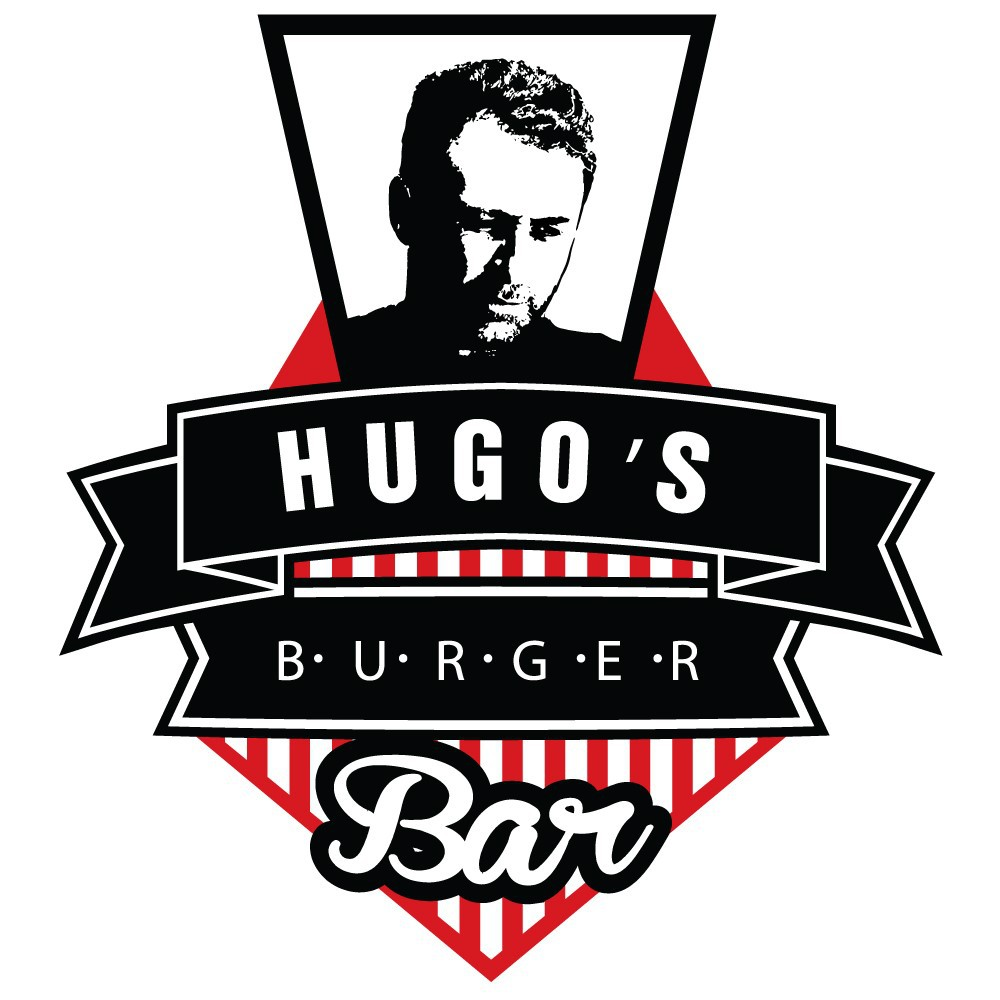
EUTM no. 006706022 EUTMA no. 014608806
(word mark) (figurative mark)
I. Background of the case
As every Munich local may know, “H’ugo’s” Pizza-Bar-Lounge is one of the city’s places to be. Not so long ago, “H’ugo’s” further improved its sophisticated reputation by opening a second premisis at glamorous Lake Starnberg.
H’ugo’s GmbH, the operating company of both restaurants, is also the owner of European Union Trademark Registration no. 006706022 “H’ugo’s” (word mark), registered for several goods in classes 21, 29, 30, 32 and 33 (inter alia "meat and preserved, frozen, dried and cooked fruits and vegetables") as well as for services in classes 41, 43 and 45. The mark was applied in 2008 and registered in 2012.
On 29 September 2019, a Maltese applicant applied for registration of the following mark as a figurative trademark, claiming protection for goods in classes 29 ("meat burgers; Meat products being in the form of burgers; Burgers; Meat burgers; Vegetable burgers; Meat products being in the form of burgers; Veggie burger patties; Uncooked hamburger patties; Soy burger patties; Turkey burger patties; Tofu burger patties; Prepared salads; Salads (Vegetable -); Salads (Fruit -); Fruit salads; Vegetable salads; Hotdog sausages) and 30 (burgers contained in bread rolls; Hotdogs being cooked sausages in bread rolls").
II. Opposition and appeal proceedings before the EUIPO
H’ugo’s GmbH opposed the above application for a figurative mark based on its EUTM registration no. 006706022 “H’ugo’s” (word mark). Both the EUIPO Opposition Division and the EUIPO Fourth Board of Appeal confirmed that there is a likelihood of confusion between the opposing marks. The opposing goods were considered to be partly identical and for the rest highly similar. Furthermore, the EUIPO instances found a similarity between the word mark “H’ugo’s” and the figurative mark containing the word element “HUGO’S BURGER BAR” due to the dominance of the distinctive word element “HUGO’S” in the latter. According to the EUIPO instances, the additional word elements in the younger sign (“BURGER BAR”) are descriptive and the graphical elements are of mere decorative character, so that they do not suffice to create enough distance to the earlier word mark and, thereby, rule out a likelihood of confusion.
III. The decision of the General Court (GC)
The GC fully agreed to the findings of the EUIPO instances and rejected the applicant’s claim that the EUIPO Board of Appeal erred in finding that there is a likelihood of confusion between the earlier word mark “H’ugo’s” and the figurative mark applied for.
The Court confirmed in particular with respect to the opposing goods that:
- the goods “meat” (covered by the earlier mark) include the goods “meat burgers; meat products being in the form of burgers; burgers; uncooked hamburger patties; turkey burger patties; hotdog sausages” (covered by the mark applied for), arguing that “meat” is a broad term which does not only designate raw meat but also encompasses processed meat, such as burgers;
- the goods “preserved, frozen, dried and cooked fruits and vegetables” (covered by the earlier mark) include the goods “vegetable burgers; veggie burger patties; soy burger patties; tofu burger patties; prepared salads; salads (vegetable -), salads (fruit -); fruit salads; vegetable salads” (covered by the mark applied for), arguing that the broad term contained in the list of goods of the earlier mark designates vegetables and other horticultural comestible products which are prepared for consumption;
- the goods “bread” (covered by the earlier mark) include the goods “bread rolls” which are indispensable for the production of “burgers contained in bread rolls; hotdogs being cooked sausages in bread rolls” (covered by the mark applied for) and that these goods are, therefore, complementary;
and with regard to the opposing signs that:
- the dominant and most distinctive element in the overall impression of the mark applied for is the word “HUGO’S”;
- the words “BURGER BAR” are descriptive and of secondary importance;
- the figurative elements have no particular meaning and are decorative – and banal – in character, whereas it is important to point out that the depicted head has no particular features and that it does not refer to any known person;
- the opposing signs are visually similar to an average degree and phonetically similar to a high degree.
All in all, the GC confirmed the EUIPO’s view that there is a likelihood of confusion between the opposing marks. The applicant’s last approach was the argument that “HUGO” is also a first name and that the proprietor of the earlier mark cannot expect to be able to prevent anyone with the same first name from using that name. In reply to that, the GC outlined very simply that a registered trademark must benefit from the protection, regardless of its components and even if one of them consists of a first name.
Finally, the GC dismissed the applicant’s action.
IV. Remarks
The GC’s confirmed the strength of registered word marks, which is, on the one hand, to be welcomed.
However, on the other hand, the strict manner in which the GC talked down the distinctiveness of the figurative elements of the mark applied for give rise for some concerns. The Court’s view that the figurative elements contained in the earlier mark are of “only decorative” and even “banal” character are not fully convincing, considering the graphical features in an overall view.
Also the Court’s opinion that it is “regardless” if a trademark component that is similarly contained in two opposing marks is a first name or any other word element seems to be too rigorous as it disregards the individuality which may be inherent to a case.
In essence, trademark applicant’s need to be careful. Taking someone else’s trademark and adding some graphic components and descriptive words will not lead out of a similarity or infringement.
For more information, please find the full decision here: http://curia.europa.eu/juris/document/document.jsf;jsessionid=AC65BAF36EA92F5C58FB8348F14462E7?text=&docid=215923&pageIndex=0&doclang=EN&mode=lst&dir=&occ=first&part=1&cid=8453645.
In June 2019, Brand Finance, an independent brand valuation consultancy with offices all over the world published its annual report ‘Beers 25 2019’ which lists the world’s most valuable beer brands – and found Budweiser’s brand value was USD 7.5 billion.
With outside temperatures of well over 30° Celsius (over 86° Fahrenheit) and the sun shining for days in a row (which is rather unusual here in Germany), it is not always easy to sit at your desk in the office and not wish you were in a nice Biergarten with a cool drink enjoying life. Some people in California obviously had the same thoughts and introduced the International Beer Day in 2008. It is celebrated on the first Friday in August and has the intention that everybody have a good time with friends enjoying a delicious beer, show appreciation to the people who brew and serve beer, and that the world be united on that special day by celebrating the beers of all nations and cultures.
What does that have to do with trademarks and intellectual property? Well, for us here in Germany and in particular in Bavaria, beer is one of the oldest cultural assets (in 2017, Germans consumed an average 101.2 liters of beer) and “Bayerisches Bier” (Bavarian Beer) is even protected as a geographical indication at the German Patent and Trademark Office under Registration No. 31 2012 000 102.4.
At the end of July 2019, a new brand valuation report was published, listing the world’s most valuable beer trademarks. It is based on the Royalty Relief approach – a brand valuation method compliant with the industry standards set in ISO 10668. The likely future revenues of a brand, the brand value, are calculated by (1) determining brand strength based on marketing investment, stakeholder equity and business performance and (2) by asking which royalty rate could be asked for in the open market for use of the brand, meaning which net economic benefit would a licensor be able to achieve by licensing the brand.
According to the report, Belgian brewing giant AB InBev dominates the list with 11 brands in the top 25. The list is led by “Budweiser” which overtook long-standing leader “Bud Light” for the first time. Budweiser’s brand value is estimated at USD 7.5 billion and is, according to Brand Finance, mainly due to the product’s “immense success of its global sponsorship campaign of the 2018 FIFA World Cup [which] reached 3.2 billion fans globally” making it easier for AB InBev to grow in new markets like South Africa, Colombia, China and Australia.
However, the report also states that currently, it is particularly the Chinese beer brands that are seeing the highest and fastest growth in value. Hong Kong based “Snow” beer is the fastest-growing brand in the chart with 51.8% growth over the last year and a brand value of about USD 3.67 billion, followed by Chinese brand “Tsingtao” jumping up nine places with a brand value change of 48.9% and an estimated USD 1.7 billion worth. “If these brands begin to expand beyond China and into new markets, we could potentially see some very stiff competition to established Western beer brands.” says David Haigh, CEO of Brand Finance in its report.
While there is still a general decline in beer consumption and an increasing preference for alcohol-free alternatives, all contributing to a slowdown in brand value growth of beer compared to previous years, the Brand Finance report is a good summary of the importance of trademarks and brands – which, in the beverages sector, can attribute to a company’s net worth with over 80% (!). Thus, Cheers!
The full report can be found at https://brandirectory.com/reports/beers-25-2019-2.
And by the way, should you be no beer lover, maybe another food celebration day is more of your taste. The following are just a couple of food days listed on Wikipedia:
- Pancake Day, 47 days before Easter
- World Nutella Day, 5 February
- International Carrot Day, 4 April
- World Cake Day, 7 May
- International Hummus Day, 13 May
- World Milk Day, 1 June
- International Sushi Day, 18 June
- World Vegetarian Day, 1 October
- World Porridge Day, 10 October
- World Pasta Day, 25 October
Whatever your favorite may be, enjoy! :-)
For more information on how to protect and develop your brand, you are welcome to contact us at info@lexdellmeier.com or by phone at 0049 89 55879870.
Guess how much growth you can achieve in case you invest in trademarks, designs, patents etc.?
Just recently this year in 2019, the European Union Intellectual Property Office (EUIPO) and the European Patent Office (EPO) released a joint study, which examines the relationship between the growth prospects of European small and medium-sized enterprises (SMEs) and their IP activity.
[[{"type":"media","fid":"5032","view_mode":"default","instance_fields":"override","attributes":{"height":334,"width":500},"field_file_image_alt_text[und][0][value]":"SME, Intellectual Property and Company Growth","field_file_image_title_text[und][0][value]":"SME, Intellectual Property and Company Growth"}]]
The new EPO/EUIPO joint study shows that companies that make more frequent use of intellectual property rights (IPRs) are more likely to grow and become high-growth firms (HGFs) than those who do not. It further examines the particular way in which HGFs shape their IPRs strategies prior to experiencing high growth.
According to the study SMEs are a fundamental pillar of the European economy, they contribute 57% of the EU’s Gross Domestic Product (GDP); a large proportion of that value is generated from high-growth SMEs. Those high-growth SMEs are defined as those that experienced an annual growth of at least 20% for over three consecutive years.
The study shows that SMEs that file at least for one IP right are 21% more likely to experience a growth period and 10% more likely to become a HGF than those who do not. Moreover the study reveals that SMEs that apply for IP rights at European level have an even greater likelihood of 17% of becoming a HGF. Furthermore the study emphasizes the chance of an SME to become a HGF increases by 33% if they uses “bundles” of trademarks, designs and patents instead of one single IP right category.
The study also analyzes the IP activity as a leading indicator of an SME’s future growth and identifies the type of IP assets that support that success in different industry sectors: the study states that SMEs in low-tech industries that have filed a European Patent are 172% more likely to experience high growth, in high-tech industries the figure is 110%.
The report concludes that patent protection especially matters to SMEs, because they can secure higher margins, license technology, establish collaboration, attract customers and also compete with larger established enterprises.
The full report can be found here. For more information how to protect and develop an IPR strategy, please contact us via email at: info@lexdellmeier.com.
With its decision dated 19 June 2019, the European General Court (T-307/17) confirms invalidity of one of adidas’ three-stripe-marks, namely European Union Trademark Registration No. 12442166.
I. Background of the case
EU trademark No. 12442166, claiming protection for the below sign, was filed by the German company adidas AG as a figurative mark on 18 December 2013.
[[{"type":"media","fid":"5022","view_mode":"default","instance_fields":"override","attributes":{"height":482,"width":168},"field_file_image_alt_text[und][0][value]":false,"field_file_image_title_text[und][0][value]":false}]]
Although the company Shoe Branding Europe BVBA filed third party observations during the examination proceedings, in particular indicating that the sign is devoid of any distinctiveness and requesting the Office to reject the application in its entirety, the European Union Intellectual Property Office (EUIPO) registered the mark as a figurative mark on 21 May 2014 for the goods “clothing; footwear; headgear” in class 25 without official objections.
II. Proceedings before the EUIPO Cancellation Division and the Board of Appeal
On 16 December 2014, Shoe Branding Europe BVBA filed an application for a declaration of invalidity of the mark, claiming absolute grounds for invalidity. After several rounds of submissions, the EUIPO Cancellation Division issued a decision in the cancellation proceedings on 30 June 2016 and ruled that the request for a declaration of invalidity of EU Trademark No. 12442166 is successful in its entirety and the mark is invalidated for all the registered goods.
The Cancellation Division dealt comprehensively with the matter and outlined, inter alia, that it considered that the contested mark is likely to go unnoticed by most consumers or that it will not be perceived as a sign denoting a connection with a specific undertaking. In reaching this conclusion the Cancellation Division noted that the sign consists of “three normal black vertical equidistant lines”; even if the lines are noticed at all, it will - according to the EUIPO - not be perceived prima facie as a trademark. The EUIPO concluded that the contested mark is not inherently distinctive.
EUIPO then examined the evidence provided by adidas in support of a finding of acquired distinctiveness. Although adidas had invested much and filed a very high amount of evidence (around 12.000 pages), including market surveys conducted in all EU countries, supporting the argument that the three stripes have acquired distinctiveness due to its significant, high profile and intensive use which has been made throughout the EU, the EUIPO was not convinced. The Cancellation Division found that this evidence establishes without question that “adidas” is a worldwide brand name in relation to sports clothing, footwear and headgear. However, the EUIPO made it clear that the evidence provided in the present proceedings by adidas relating specifically to the contested mark is not sufficient for proving that the contested mark has acquired distinctiveness throughout the EU. According to the EUIPO, adidas has not made the connection between the imposing market share figures, turnover, advertising expenditure, and notoriety of the adidas brand on the one side and the exposure of the public to the contested mark on the other.
Adidas appealed the case arguing that the Cancellation Division had carried out an incomplete review of the evidence provided in support of the argument of acquired distinctiveness through use. The EUIPO Board of Appeal re-examined the Cancellation Division’s examination of the evidence filed by adidas and found that the accusation that the first instance had made an incomplete review is baseless. The Board of Appeal highlighted that the only sensible approach possible to deal with such a sheer volume of evidence to be analyzed was to illustrate global findings through the aid of selected exhibits. The Board of Appeal upheld the contested decision and ruled that the challenged EU trademark must be declared invalid.
III. The decision of the General Court (GC)
In addition, the decision of the GC also supports the position of the previous EUIPO instances.
Before the GC, adidas claimed that the EUIPO Board of Appeal had unduly dismissed evidence based on the ground that said evidence was related to signs other than the mark at issue.
According to adidas, the Board of Appeal both in particular misapplied the “law of permissible variations”, as it had considered several of the filed examples of alleged use of the challenged mark as having failed to show genuine use of the mark, i.e. the following examples:
[[{"type":"media","fid":"5023","view_mode":"default","instance_fields":"override","attributes":{"height":640,"width":328},"field_file_image_alt_text[und][0][value]":false,"field_file_image_title_text[und][0][value]":false}]]
During the proceedings before the GC, the EUIPO had assumed that “use” in connection with the concept of acquired distinctiveness of a mark through use is narrower than “genuine use” and that therefore, in order to establish that a trademark has acquired distinctive character, the trademark proprietor can only rely on the use of the mark such as it was registered and only insignificant changes can be accepted.
The GC acknowledged that the concept of acquired distinctiveness through use is based on the assumption that use of an inherently non-distinctive sign and of a trademark which has been erroneously registered despite its lack of distinctive character may in some cases allow that sign or mark to be registered or to remain registered, while the concept of “genuine use” has a legitimate registration at its starting point.
However, the Court nevertheless outlined that the fact remains that the need to make certain changes to a trademark for the purposes of its commercial exploitation is also valid for the period during which that mark acquired distinctive character following its use. Therefore, the GC highlighted that adidas rightly claimed that the concept of use of a trademark must be interpreted as referring not only to use of the mark in the form in which it was filed and, where, relevant, registered, but also to the use of the trademark in forms which differ from that form solely by insignificant variations and that are able to be regarded as broadly equivalent to that form.
Despite this finding, the GC confirmed the Board of Appeal’s view that most of the examples contained in the comprehensive evidence material including the above examples were related to signs other than the challenged mark (different color compositions, other proportion relations etc.), in particular based on the argument that, where a trademark is extremely simple, even minor alterations to that mark may constitute significant changes. The GC concluded that to infringement of the “law of permissible variations” had occurred.
The only evidence which was in view of the GC relevant were five (5) market surveys covering only five (5) EU Member States. This was deemed insufficient to prove acquired distinctiveness throughout the whole EU.
IV. Remarks
The GC’s decision should be taken seriously as it shows that the “law of permissible variations” is connected to strict criteria.
What we learn in addition: not every kind of use and evidence submitted may help your case. The trademark owners do not do themselves a favor when they overwhelm the Office or Court with a huge amount of evidence in the attempt of convincing them of the incredible well-known status and/or extensive use of a sign. The better approach seems to be carefully collecting evidence and selecting those pieces which have a convincing probative value. In this context, the present case joins the recent “Big Mac” case of the GC, where the filing of the wrong kind of (or poor) evidence was fatal for another arguably well-known trademark.
It remains to be seen whether adidas will bring the case to the last instance, the European Court of Justice (ECJ).
IMPORTANT: Adidas is, still the owner of several other three-stripe marks which are registered at the EUIPO and which are not affected by the current decision. Therefore, competitors must still be very careful when using any kinds of stripes for clothing, footwear etc.
For more information, please find the full decision here: http://curia.europa.eu/juris/document/document.jsf;jsessionid=2922D45D72B5CF54200EC1EF7F10CBFF?text=&docid=215208&pageIndex=0&doclang=EN&mode=lst&dir=&occ=first&part=1&cid=3682167.
In June 2019, Europol and the European Union Intellectual Property Office (EUIPO) published the first EU-wide intellectual property crime threat assessment, building upon two previous joint situation reports on piracy and counterfeiting. The report confirms links between IP crime and the increasingly professionalized organized crime networks in the EU.
[[{"type":"media","fid":"5021","view_mode":"default","instance_fields":"override","attributes":{"height":300,"width":500},"field_file_image_alt_text[und][0][value]":"Threat Assessment Report","field_file_image_title_text[und][0][value]":"Threat Assessment Report"}]]
The new Europol/EUIPO threat assessment, based on EU-wide data and strategic intelligence analysis, stresses that the market of counterfeit goods still is highly profitable with only a small risk of detection.
According to the report, China remains the main source of all types of counterfeit goods, but, domestic manufacturing within Europe appears to be increasing. The report also underlines that not only traditional luxury items such as bags, clothing and footwear, but also everyday goods such as mobile phone, food and drinks and pharmaceuticals are targeted. The report stresses that especially the trade of counterfeit medicines for the treatment of serious illness and medical equipment is on the rise and emphasized the negative impact on human health, safety and environment.
The report also shows that the use of small parcels, fake goods sent mostly by post or express services, keeps growing. It also makes it more difficult for enforcement authorities to detect them.
Moreover, the report states that online, illegal digital content resumes to be distributed through BitTorrent portals and peer-to-peer networks, but also via cyberlockers. The profit is generated through digital advertisement, which frequently contains mainstream adverts from major brands.
The emerging threats through counterfeiting and piracy to human and environment is increasing.
The full report can be found here. For more information on how to tackle counterfeiting and piracy, please contact us via email at: info@lexdellmeier.com