

Post Date:
Categories:
[[{"type":"media","fid":"4424","view_mode":"media_large","instance_fields":"override","attributes":{"class":"media-image wp-image-1848 alignright","typeof":"foaf:Image","style":"","width":"196","height":"130"}}]]
Interbrand is the world’s leading brand consultancy, with a network of 33 offices in 27 countries. Since its Shanghai office first opened in 2002, Interbrand has partnered with various brands in China to assist them in creating and managing their brands’ values. In November 2014 they published the Top 50 Chinese Brands of the year.
First of all, the total brand value of this year’s 50 Best China Brands increased 22 percent compared to 2013. This is the largest increase in the table’s overall brand value since the inception of Best China Brands.
Below you can see the list of the top 20 Chinese Brands:
[[{"type":"media","fid":"4425","view_mode":"media_large","instance_fields":"override","attributes":{"class":"media-image alignnone wp-image-1849","typeof":"foaf:Image","style":"","width":"463","height":"469"}}]]
The most valuable industry in China is the financial services industry. But, the strong performance of China’s Internet brands tag the end of the long era in which the financial services dominated. But, even though the total brand value of Internet brands has increased from 11 % to 24 % compared to last year, the internet services just reached the second place. Since the second half of 2012, TAB (Tencent, Alibaba and Baidu) has acquired and invested in a lot of companies, including those representing the following sectors and industries: financial services, entertainment, education, and healthcare. As a result, these leading brands are creating a completely new brand ecosystems aimed at improving customer convenience and overall quality for lifetime.
If you want to see the whole ranking, follow the link:
http://interbrand.com/en/newsroom/16/interbrand-releases-2014-best-china-brands-report?_ga=1.91901849.266365682.1416406538
![[[{"type":"media","fid":"4425","view_mode":"media_large","instance_fields":"override","attributes":{"class":"media-image alignnone wp-image-1849","typeof":"foaf:Image","style":"","width":"463","height":"469"}}]]](/sites/default/files/2014/11/china1_1.png)
Post Date:
Categories:
In urgent cases, it makes sense for intellectual property (IP) rights owners to apply for a preliminary injunction (PI). Especially if an infringing product is launched on the market, it is important to react quickly. We take the opportunity to briefly outline the most important aspects below.
1. Introduction
A preliminary injunction is a provisional court decision establishing or maintaining a legal situation in a quick summary procedure. Regarding trademark and design infringements, a specialized IP court in Germany will take a decision within 2-3 working days. In exceptional cases, such as at trade fairs, within 1-2 hours.
2. Requirements for a preliminary injunction[[{"type":"media","fid":"4421","view_mode":"media_large","instance_fields":"override","attributes":{"class":"media-image wp-image-1836 alignright","typeof":"foaf:Image","style":"","width":"216","height":"162"}}]]
When examining the requirements for an injunction, the court has to balance the interests of both parties. On the one hand, the claimant wants to enforce his IP right as fast as possible to prevent imminent disadvantages. On the other hand, the defendant might suffer disadvantages as a consequence of enforcement of the preliminary injunction. A preliminary injunction in IP matters is in general granted, if the following three prerequisites are fulfilled:
a) Urgency
A preliminary injunction is only successful if the claimant demonstrates that urgent relief is needed. Therefore, the claimant must show that he has reacted as quickly as possible to the infringement of his intellectual property right. Although there is no time limit required by law, the claimant should not wait more than four (4) weeks from the time he receives knowledge of the infringement of his IP right. Therefore it is important that, the claimant immediately informs his attorney in order to react as fast as possible.
b) Clarity
The infringement has to be clearly and comprehensibly formulated because the competent judges of the German IP court will only take a decision in an IP proceeding, if they understand the problem without the help of experts.
c) Validity
Finally, the validity of the IP right in suit needs to be given.
The validity of trademarks will normally be suspected. Something different only applies, if the trademark not has been registered yet or is subject to a cancellation action or similar.
Contrary thereto, the validity of a design can only be established via prior art searches. Therefore, when filing for a PI, the prior out searches must also be submitted to the court.
Generally, in patent cases, it is only possible to assume a sufficient degree of validity of an IP right for a preliminary injunction to be granted if the patent has survived a first-instance opposition or nullity proceeding.
3. Procedure[[{"type":"media","fid":"4422","view_mode":"media_large","instance_fields":"override","attributes":{"class":"media-image alignnone wp-image-1837 alignright","typeof":"foaf:Image","style":"","width":"267","height":"177"}}]]
a) Warning letter
It is recommendable - but not required - to send a prior warning letter to the infringer. Otherwise, the claimant has to bear the costs of the procedure if no warning letter is sent and the infringer immediately concedes upon receipt of the injunction. On the other hand, if a warning letter is send, the infringer therefore has the possibility to move the infringing goods or destroy evidence
b) PI Request
After that, a PI request asking for the issuance of a preliminary injunction is sent to the competent court. The request explains the involved right, the accused product or process, and why there is an infringement. Characteristic for the PI is that the claimant only has to make the infringement plausible to the court and not has to prove it. Therefore, an application for a preliminary injunction can be prepared and filed at court very quickly and cost-effectively and is granted within a couple of days (or hours at trade fairs).
c) (No) Oral Hearing
The judge may consider the application with or without an oral hearing. The court will waive on an oral hearing in very clear cases. In these cases the court will usually make a determination within a few hours or a few days after receiving the application. In more complex cases, the court serves the PI on the defendant and sets a date for a hearing. At the oral hearing, the parties are able to discuss about all relevant issues and the decision is rendered afterwards.
d) Formal Aspects
As soon as a PI is issued, the claimant must serve it on the defendant within one month. Subsequently, the defendant must decide whether to accept or appeal the injunction. Thereby, the defendant is allowed to request at any time that the applicant initiates main proceedings. If the defendant does not appeal the injunction after four weeks the applicant could send the defendant a termination letter, seeking an undertaking that the defendant accepts the PI as a final injunction and renouncing all of its legal remedies. If the defendant does not sign the demanding letter the claimant has to initiate legal proceedings.
4. Costs[[{"type":"media","fid":"4420","view_mode":"media_large","instance_fields":"override","attributes":{"class":"media-image alignnone wp-image-1835 alignright","typeof":"foaf:Image","style":"","width":"145","height":"132"}}]]
It is difficult to make a general cost estimate because the court fees strictly depend on the value in dispute of the case. For the first instance the claimant has to expect costs of between 5.000 to 10.000 Euro. The losing party has to refund most of the costs to the prevailing party, whereas, the reimbursement is capped according to the codified court and attorney fees.
5. Summary
PI Proceedings in German y are very quick, effective and relatively inexpensive. Due to the fact that specialized IP judges and chambers decide, you will also receive a high quality decision.
Post Date:
Categories:
The European General Court (ECG) decided on 7 October 2014 that a likelihood of confusion between the word/device trademark “T” of Tifosi Optics and the earlier trademark “T” of Tom Tailor exists (Case No.:T‑531/12).
Background of the Case and Subject Matter
In September 2009 the American enterprise - Tifosi Optics, Inc. - filed an application for registration of the Community Trademark No. 008543183 at the Office for Harmonization in the Internal Market (OHIM) (as seen below on the right hand side). In February 2010 the German company - Tom Tailor GmbH - filed a notice of opposition because of the similarity to their word/ device Community Trademark No. 001368232 which you can see left below. Both trademarks are - among others - registered for clothing and glasses.
By decision of 17 September 2012, the Second Board of Appeal (BoA) of OHIM annulled the Opposition Division’s decision upholding the opposition: the identity and similarity of the goods concerned and the degree of similarity between the marks, considered cumulatively, were sufficiently high to justify the conclusion that a likelihood of confusion exists, even if the earlier trademark is to be considered to be of weak distinctive character.
[[{"type":"media","fid":"4418","view_mode":"media_large","instance_fields":"override","attributes":{"class":"media-image alignnone wp-image-1830","typeof":"foaf:Image","style":"","width":"242","height":"112"}}]] vs.[[{"type":"media","fid":"4419","view_mode":"media_large","instance_fields":"override","attributes":{"class":"media-image alignnone wp-image-1831","typeof":"foaf:Image","style":"","width":"259","height":"107"}}]]
Decision of the ECG:
The ECG confirmed that a likelihood of confusion between the signs exists.
The court pointed out that the relevant public contains professionals with a high level of attention and the general public with an average attention span. It also came to the conclusion that the trademarks are visually similar and aurally identical.
However, it held that the BoA was wrong in finding the letters T conceptually identical. There is well-established case law that the letters of the alphabet have no semantic meaning and that it is thus impossible to compare them conceptually.
Therefore, the ECG came to the result that the decision of the BoA must be confirmed, even if the earlier trademark has a weak distinctive character. With respect to all opposed goods likelihood of confusion exists.
Link: http://curia.europa.eu/juris/document/document.jsf?text=&docid=158372&pageIndex=0&doclang=EN&mode=req&dir=&occ=first&part=1
![[[{"type":"media","fid":"4418","view_mode":"media_large","instance_fields":"override","attributes":{"class":"media-image alignnone wp-image-1830","typeof":"foaf:Image","style":"","width":"242","height":"112"}}]]](/sites/default/files/2014/10/tom-tailor-11_1.png)
![[[{"type":"media","fid":"4419","view_mode":"media_large","instance_fields":"override","attributes":{"class":"media-image alignnone wp-image-1831","typeof":"foaf:Image","style":"","width":"259","height":"107"}}]]](/sites/default/files/2014/10/tom-tailor-21_1.png)
Post Date:
Categories:
The World Intellectual Property Organization (WIPO) launched a new, multilingual terminology portal called „PEARL“ which gives access to scientific and technical terms derived from patent documents. It helps promote accurate and consistent use of terms across different languages, and makes it easier to search and share scientific and technical knowledge.
One of the key features is that the content of the database is available in ten different languages: Arabic, Chinese, English, French, German, Japanese, Korean, Portuguese, Russian and Spanish. If there is no equivalent in the target language in the database, WIPO’s machine translation engine may offer a translation proposal. Moreover, all the content has been validated and given a “reliability score”. Furthermore, the database is integrated with PATENTSCOPE so you can search the entire PATENTSCOPE corpus for terms and their equivalents in other languages. Afterwards, the search users are able to rate the quality of the given results.
For further information please click here: http://www.wipo.int/pressroom/en/articles/2014/article_0012.html
Post Date:
Categories:
Interbrand, started in 1974 with its approximately 40 offices in 27 countries, is one of the biggest and oldest brand consultancy companies around the world. Every year, Interbrand conducts and publishes various studies relating to brands, their value and the impact on companies and consumers. Interbrand’s 15th annual Best Global Brands Report was released on 9 October 2014.
Age of You
In addition to identifying the top 100 most valuable brands, this year’s Best Global Brands report also examines three pivotal ages in brand history that have reshaped business for the better: the Age of Identity, the Age of Value, and the Age of Experience. Interbrand contends that a new, emerging era is upon the global business world: the Age of You.
Analysis
The procedure for ranking the Best Global Brands contains three key components: an analysis of the financial performance of the branded products or services, the role the brand plays in purchase decisions, and the brand's competitive strength.
Results 2014
The 30 Best Global Brands can be found below:
[[{"type":"media","fid":"4415","view_mode":"media_large","instance_fields":"override","attributes":{"class":"media-image alignnone wp-image-1820","typeof":"foaf:Image","style":"","width":"488","height":"399"}}]]
As you can see, this year Apple and Google maintain their first and second positions and each exceed 100 billion US-dollar in brand value.
Huawei Technology Co. Ltd., a Chinese telecommunications and network equipment provider is ranked place 94 with a value of 4,131 billion dollars. Therefore, it is the first Chinese company to appear on Interbrand’s Best Global Brands list in the history of the consultancy’s rankings.
The automotive sector dominated the report with 14 brands: Toyota (Rank 8), Mercedes-Benz (Rank 10), BMW (Rank 11), Honda (Rank 20), Volkswagen (Rank 31), Ford (Rank 39), Hyundai (Rank 40), Audi (Rank 45), Nissan (Rank 56), Porsche (Rank 60), Kia (Rank 74,), Chevrolet (Rank 82), Harley-Davidson (Rank 87), and Land Rover (Rank 91).
With 13 brands on the list the technology sector follows. Facebook climbed to rank 29 from No. 52 in 2013 and had the highest percentage increase in value from last year: 86 %. One of the reasons for this significant increase is Facebook’s ad business on mobile phones. For the first time in its history, the company reported that revenue from advertising on mobile phones exceeded half of all its advertising for the quarter.
For more information on the 2014 ranking, please click on the following link: http://www.interbrand.com/best-global-brands/
![[[{"type":"media","fid":"4415","view_mode":"media_large","instance_fields":"override","attributes":{"class":"media-image alignnone wp-image-1820","typeof":"foaf:Image","style":"","width":"488","height":"399"}}]]](/sites/default/files/2014/10/5001_1.png)
Post Date:
Categories:
The Court of Justice of the European Union (CJEU) has given a preliminary ruling on questions relating to three-dimensional trademarks forwarded to it by the Dutch courts (Judgment dates 18 September 2014; C‑205/13).
Background of the Case and Subject Matter
Peter Opsvik designed a chair for children called ‘Tripp Trapp’. The design allows the chair’s shape to accommodate a baby’s growth into childhood. The design of that chair has won a number of prizes and has been displayed in museums. Since 1972, ‘Tripp Trapp’ chairs have been marketed by Stokke, particularly on the Scandinavian market and — since 1995 — on the Dutch market. In 1998, Stokke applied to register the form of the Tripp Trapp chair as a three-dimensional trademark at the Benelux Trade Mark Office.
[[{"type":"media","fid":"4413","view_mode":"media_large","instance_fields":"override","attributes":{"class":"media-image size-medium wp-image-1816 aligncenter","typeof":"foaf:Image","style":"","width":"223","height":"300"}}]]
The German company Hauck GmbH introduced similar chairs named “Alpha” and “Beta” to the market. Subsequently the Stokke A/S brought a lawsuit against Hauck GmBH claiming that the chairs infringed their trademark and copyright, but Hauck filed a counterclaim to delete the trademark.On appeal, the Hoge Raad der Nederlanden (Supreme Court of the Netherlands) referred questions to the CJEU for a preliminary ruling on the laws on trademark registration and the grounds for refusal surrounding the shape of a product.
Preliminary Ruling
In its judgment the CJEU ruled that the grounds for refusal of shape marks could extend to shapes that are inherent to the generic function of a product and that the grounds for refusal relating to shapes giving substantial value to the goods could apply to products possessing several characteristics, where each characteristic could give the product substantial value. Therefore, the Hoge Raad der Nederlanden could take both grounds for refusal into account, but, may not apply them in combination. A final ruling on the case will still be taken by the Supreme Court in the Netherlands which has the jurisdiction on deciding over the validity of the two-dimensional trademark of the Trip Trap chair.
![[[{"type":"media","fid":"4413","view_mode":"media_large","instance_fields":"override","attributes":{"class":"media-image size-medium wp-image-1816 aligncenter","typeof":"foaf:Image","style":"","width":"223","height":"300"}}]]](/sites/default/files/2014/10/trip-trap_1.png)
Post Date:
Categories:
The German Federal Supreme Court decided that only Langenscheidt is allowed to use the color yellow for language training products in Germany (Judgment dated 18 September 2014; I ZR 228/12).
Background of the Case and Subject Matter
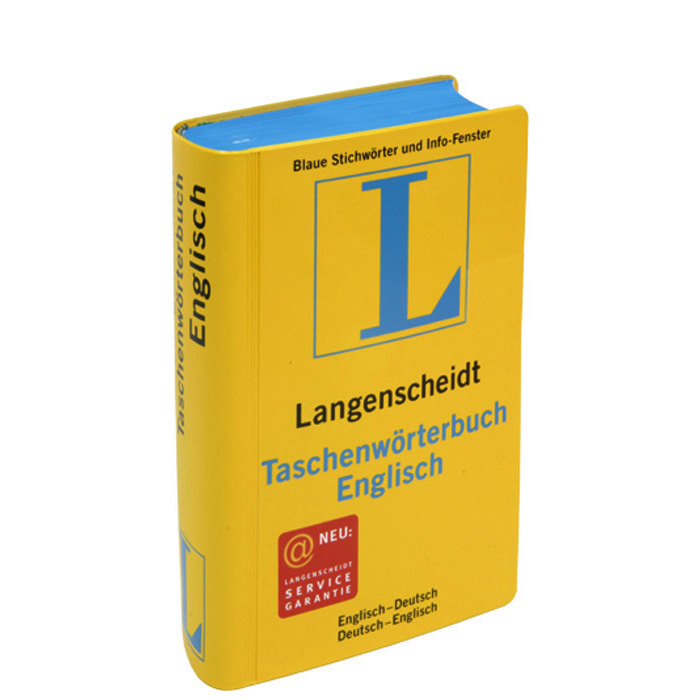
The German publisher Langenscheidt has been selling dictionaries since 1956 and other language learning products since 1986. All the products are designed in yellow color with a blue “L” on the books (see left below). Langenscheidt also uses the color yellow extensively when advertising its product.
The software company Rosetta Stone has been offering learning software in 33 languages in Germany since April 2010 – and advertises it in yellow with black lettering and a blue logo (see right below). Rosetta Stone also uses the color yellow for its website, in advertising and on packaging.
Langenscheidt was of the opinion that this is a violation of its trademark rights and successfully sued the competitors at the Higher Regional Court of Cologne on omission and damages. Rosetta Stone appealed this decision.

 Decision
The German Federal Supreme Court confirmed the decision of the Higher Regional Court of Cologne. Normally, consumers view colors as mere design or ornamental features. But, the decision is based on the fact that the German market for dictionaries is strongly influenced by colors. Therefore, consumers recognize the predominant use of a color as an indication of the origin of a product. This usage also spreads to neighboring market segments, including language learning software.
The yellow color of Langenscheidt has acquired an average degree of distinctiveness through its long and intensive use. Rosetta Stone’s yellow color is very similar to it. Therefore, likelihood of confusion is given. The court held that under the particular circumstances in which the colors have been used, the relevant public recognizes them as individually distinctive signs.
Decision
The German Federal Supreme Court confirmed the decision of the Higher Regional Court of Cologne. Normally, consumers view colors as mere design or ornamental features. But, the decision is based on the fact that the German market for dictionaries is strongly influenced by colors. Therefore, consumers recognize the predominant use of a color as an indication of the origin of a product. This usage also spreads to neighboring market segments, including language learning software.
The yellow color of Langenscheidt has acquired an average degree of distinctiveness through its long and intensive use. Rosetta Stone’s yellow color is very similar to it. Therefore, likelihood of confusion is given. The court held that under the particular circumstances in which the colors have been used, the relevant public recognizes them as individually distinctive signs.
 Decision
The German Federal Supreme Court confirmed the decision of the Higher Regional Court of Cologne. Normally, consumers view colors as mere design or ornamental features. But, the decision is based on the fact that the German market for dictionaries is strongly influenced by colors. Therefore, consumers recognize the predominant use of a color as an indication of the origin of a product. This usage also spreads to neighboring market segments, including language learning software.
The yellow color of Langenscheidt has acquired an average degree of distinctiveness through its long and intensive use. Rosetta Stone’s yellow color is very similar to it. Therefore, likelihood of confusion is given. The court held that under the particular circumstances in which the colors have been used, the relevant public recognizes them as individually distinctive signs.
Decision
The German Federal Supreme Court confirmed the decision of the Higher Regional Court of Cologne. Normally, consumers view colors as mere design or ornamental features. But, the decision is based on the fact that the German market for dictionaries is strongly influenced by colors. Therefore, consumers recognize the predominant use of a color as an indication of the origin of a product. This usage also spreads to neighboring market segments, including language learning software.
The yellow color of Langenscheidt has acquired an average degree of distinctiveness through its long and intensive use. Rosetta Stone’s yellow color is very similar to it. Therefore, likelihood of confusion is given. The court held that under the particular circumstances in which the colors have been used, the relevant public recognizes them as individually distinctive signs.
Post Date:
Categories:
 The Court of Justice of the European Union (CJEU) has ruled that European libraries may digitize books and make them available at electronic reading points without first coming to an agreement with the holder of the Copyrights (C‑117/13 dated 11 September 2014).
Background of the Case and Subject Matter
The university TU Darmstadt operates a regional and academic library in which it installed electronic reading points that allow the public to review works contained in the collection of that library. Since January 2009, those works have included the textbook of Schulze W., “Einführung in die neuere Geschichte” (“Introduction to Modern History”), published by Ulmer, a scientific publishing house established in Stuttgart, Germany.
TU Darmstadt did not accept an offer of Ulmer to purchase and use the textbooks it publishes as electronic books on 29 January 2009. Nevertheless, TU Darmstadt digitized the textbook to make it available to users at electronic reading points installed in the library. Those points did not allow for a greater number of copies of that work to be consulted at any one time than the number owned by the library. But users of the reading points could print out the work on paper or save it on a USB stick.
In view of this behavior of the TU Darmstadt, Ulmer filed a complaint in front of the Regional and the Higher Regional Court of Frankfurt. The Regional Court prohibited the possibility to get digital copies and the Higher Regional Court also regarded the opportunity to copy the book as impermissible.
TU Darmstadt appealed to the German Federal Court of Justice against the last decision. But the Court was not sure about the interpretation of the Copyright Directive, which is essential for a decision. This Directive (Directive 2001/29/EC of the European Parliament and of the Council of 22 May 2001 on the harmonization of certain aspects of copyright and related rights in the information society), permits Member States to provide for specific exceptions or limitations to the “normal” rights of copyright holders. One exception applies to public libraries which, for the purpose of research or private study, make works from their collections available to users by dedicated terminals. Therefore, the German Federal Court decided to stay the proceedings and asked the European Court of Justice to clarify the scope of this exception.
Preliminary Ruling
First the CJEU notes that under the EU Copyright Directive, authors have the exclusive right to authorize or prohibit the reproduction and communication of their works. However the Directive also allows for exceptions or limitations. This option exists notably for publically accessible libraries which, for the purpose of research or private study, make works from their collections available to users by dedicated terminals.
The Court went on to find that the Directive does not prevent Member States from granting libraries the right to digitize the books from their collections, if it becomes necessary, for the purpose of research or private study, to make those works available to individuals by dedicated terminals. The right of libraries to communicate, by dedicated terminals, the works they hold in their collections would risk being rendered largely meaningless, or indeed ineffective, if they did not have an ancillary right to digitize the works in question. The Court adds that this ancillary right of digitization does not conflict with the normal exploitation of the work and does not unreasonably prejudice the legitimate interests of the right holder, given that the German legislation at issue in this case provides that the number of copies of each work available on dedicated terminals must not be greater than that which those libraries have acquired in print format.
Even if the rights holder offers a library the possibility of licensing his works under appropriate terms, the library can use the exception to publish works on electronic terminals. Otherwise, the library could not fulfill its core mission or promote the public interest in promoting research and private study.
However, the CJEU also pointed out that it is not part of the right of communication to print out the works on paper or store them on a USB stick from dedicated terminals. This reproduction is not covered by the exception, particularly since the copies are made by individuals and not by the library itself.
The CJEU decided that the library could however permit the users to print or store the works on a USB stick if, fair compensation is paid to the rights holder.
The case will now go back to the German Federal Court of Justice to be decided.
The Court of Justice of the European Union (CJEU) has ruled that European libraries may digitize books and make them available at electronic reading points without first coming to an agreement with the holder of the Copyrights (C‑117/13 dated 11 September 2014).
Background of the Case and Subject Matter
The university TU Darmstadt operates a regional and academic library in which it installed electronic reading points that allow the public to review works contained in the collection of that library. Since January 2009, those works have included the textbook of Schulze W., “Einführung in die neuere Geschichte” (“Introduction to Modern History”), published by Ulmer, a scientific publishing house established in Stuttgart, Germany.
TU Darmstadt did not accept an offer of Ulmer to purchase and use the textbooks it publishes as electronic books on 29 January 2009. Nevertheless, TU Darmstadt digitized the textbook to make it available to users at electronic reading points installed in the library. Those points did not allow for a greater number of copies of that work to be consulted at any one time than the number owned by the library. But users of the reading points could print out the work on paper or save it on a USB stick.
In view of this behavior of the TU Darmstadt, Ulmer filed a complaint in front of the Regional and the Higher Regional Court of Frankfurt. The Regional Court prohibited the possibility to get digital copies and the Higher Regional Court also regarded the opportunity to copy the book as impermissible.
TU Darmstadt appealed to the German Federal Court of Justice against the last decision. But the Court was not sure about the interpretation of the Copyright Directive, which is essential for a decision. This Directive (Directive 2001/29/EC of the European Parliament and of the Council of 22 May 2001 on the harmonization of certain aspects of copyright and related rights in the information society), permits Member States to provide for specific exceptions or limitations to the “normal” rights of copyright holders. One exception applies to public libraries which, for the purpose of research or private study, make works from their collections available to users by dedicated terminals. Therefore, the German Federal Court decided to stay the proceedings and asked the European Court of Justice to clarify the scope of this exception.
Preliminary Ruling
First the CJEU notes that under the EU Copyright Directive, authors have the exclusive right to authorize or prohibit the reproduction and communication of their works. However the Directive also allows for exceptions or limitations. This option exists notably for publically accessible libraries which, for the purpose of research or private study, make works from their collections available to users by dedicated terminals.
The Court went on to find that the Directive does not prevent Member States from granting libraries the right to digitize the books from their collections, if it becomes necessary, for the purpose of research or private study, to make those works available to individuals by dedicated terminals. The right of libraries to communicate, by dedicated terminals, the works they hold in their collections would risk being rendered largely meaningless, or indeed ineffective, if they did not have an ancillary right to digitize the works in question. The Court adds that this ancillary right of digitization does not conflict with the normal exploitation of the work and does not unreasonably prejudice the legitimate interests of the right holder, given that the German legislation at issue in this case provides that the number of copies of each work available on dedicated terminals must not be greater than that which those libraries have acquired in print format.
Even if the rights holder offers a library the possibility of licensing his works under appropriate terms, the library can use the exception to publish works on electronic terminals. Otherwise, the library could not fulfill its core mission or promote the public interest in promoting research and private study.
However, the CJEU also pointed out that it is not part of the right of communication to print out the works on paper or store them on a USB stick from dedicated terminals. This reproduction is not covered by the exception, particularly since the copies are made by individuals and not by the library itself.
The CJEU decided that the library could however permit the users to print or store the works on a USB stick if, fair compensation is paid to the rights holder.
The case will now go back to the German Federal Court of Justice to be decided.
Post Date:
Categories:
The Higher Regional Court Celle, Germany, decided that it is misleading to add six stars next to the door of a luxus hotel (13 U 76/14 dated 15 July 2014).
Background of the Case and Subject Matter
A hotel owner added six (6) stars next to the entrance of his luxury hotel without having an evaluation by an external official hotel evaluator. Therefore, a competitor filed a law suit because, this advertisement is misleading. But, the hotel owner is of the opinion that his advertisement is not misleading because in fact his hotel is very luxurious.
 Decision
The Higher Regional Court Celle decided that it is misleading to add six (6) stars next to a hotel. The public believes that the classification of hotels with stars is given by an independent office which evaluates the hotel on the basis of objective and neutral criteria.
After all, hotels use the evaluation for their advertisement and in order to show potential guests the standard of quality of the hotel. Even if the hotel is luxurious, there must be an evaluation by an independent office and therefore this hotel owner may not continue with his advertisement.
Decision
The Higher Regional Court Celle decided that it is misleading to add six (6) stars next to a hotel. The public believes that the classification of hotels with stars is given by an independent office which evaluates the hotel on the basis of objective and neutral criteria.
After all, hotels use the evaluation for their advertisement and in order to show potential guests the standard of quality of the hotel. Even if the hotel is luxurious, there must be an evaluation by an independent office and therefore this hotel owner may not continue with his advertisement.
Decision
The Higher Regional Court Celle decided that it is misleading to add six (6) stars next to a hotel. The public believes that the classification of hotels with stars is given by an independent office which evaluates the hotel on the basis of objective and neutral criteria.
After all, hotels use the evaluation for their advertisement and in order to show potential guests the standard of quality of the hotel. Even if the hotel is luxurious, there must be an evaluation by an independent office and therefore this hotel owner may not continue with his advertisement.
Post Date:
Categories:
 The traditional Oktoberfest will take place from the 20 September to 5 October 2014 in Munich, Germany. During this time, more than 6.7 million liters of beer are sold more than 6 million visitors are expected. But, the Oktoberfest is also a showcase for patented technology.
History of the Oktoberfest
On 12 October 1810 Crown Prince Ludwig married Princess Therese of Saxe-Hildburghausen. The citizens of Munich were invited to attend the celebrations held on the fields in front of the city gates to celebrate this royal event. The fields were named Theresienwiese ("Theresa's meadow") in honor of the Crown Princess. Horse races in the presence of the Royal Family marked the closeness of the royal event that was celebrated as a festival for the whole of Bavaria. The decision to repeat the horse races in the subsequent year gave rise to the tradition of the Oktoberfest. Since 1810, nearly every year the Oktoberfest at the Theresienwiesen takes place.
Of course, the character of the festival has changed. Horse races ended in 1960 and more and more modern activities, like roller coasters, were offered. But, there are still some traditional components like the parade on the first day or the beer tents where up to 5.000 people celebrate.
Beer at the Oktoberfest
At the Oktoberfest more than 6.7 million liters of beer are usually sold. But, only Oktoberfest beer may be served. To be called “Oktoberfest” beer, a beer has to comply to the German Purity Law and contain a minimum of 13.5% original extract (approximately 6% alcohol by volume). Moreover, the beer must be brewed within the city limits of Munich.
The breweries that can produce Oktoberfest Beer under the criteria are the “six” lucky ones, namely: Augustiner-Brau (the oldest brewery in Munich, founded in 1323) , Hacker-Pschorr-Brau, Lowenbrau, Paulaner, Spatenbrau, Staatliches Hofbrau-Munchen. And, “Oktoberfest Beer” is a registered trademark by the Club of Munich Brewers.
Technology at the Oktoberfest
The Oktoberfest is not just a yearly festival, but, also a platform for new technologies and therefore a marketplace for patents. Taking a look at the collection of the European Patent Office (EPO) shows 1813 patents for beer taps, 285 patents for chicken rotisseries, and even 43 patents on Ferris-wheel technology. Most of the patents are invisible for the visitors because they are either installed with other components in rides or integrated in beer tents.
Watch this film produced by the EPO to find out how it's possible to fill a tankard in just three seconds, what Krinoline owner Theo Niederlander has to say about the latest trends in carnival rides and which pulse-racing technologies are winning over the Wiesn's ride-goers:
The traditional Oktoberfest will take place from the 20 September to 5 October 2014 in Munich, Germany. During this time, more than 6.7 million liters of beer are sold more than 6 million visitors are expected. But, the Oktoberfest is also a showcase for patented technology.
History of the Oktoberfest
On 12 October 1810 Crown Prince Ludwig married Princess Therese of Saxe-Hildburghausen. The citizens of Munich were invited to attend the celebrations held on the fields in front of the city gates to celebrate this royal event. The fields were named Theresienwiese ("Theresa's meadow") in honor of the Crown Princess. Horse races in the presence of the Royal Family marked the closeness of the royal event that was celebrated as a festival for the whole of Bavaria. The decision to repeat the horse races in the subsequent year gave rise to the tradition of the Oktoberfest. Since 1810, nearly every year the Oktoberfest at the Theresienwiesen takes place.
Of course, the character of the festival has changed. Horse races ended in 1960 and more and more modern activities, like roller coasters, were offered. But, there are still some traditional components like the parade on the first day or the beer tents where up to 5.000 people celebrate.
Beer at the Oktoberfest
At the Oktoberfest more than 6.7 million liters of beer are usually sold. But, only Oktoberfest beer may be served. To be called “Oktoberfest” beer, a beer has to comply to the German Purity Law and contain a minimum of 13.5% original extract (approximately 6% alcohol by volume). Moreover, the beer must be brewed within the city limits of Munich.
The breweries that can produce Oktoberfest Beer under the criteria are the “six” lucky ones, namely: Augustiner-Brau (the oldest brewery in Munich, founded in 1323) , Hacker-Pschorr-Brau, Lowenbrau, Paulaner, Spatenbrau, Staatliches Hofbrau-Munchen. And, “Oktoberfest Beer” is a registered trademark by the Club of Munich Brewers.
Technology at the Oktoberfest
The Oktoberfest is not just a yearly festival, but, also a platform for new technologies and therefore a marketplace for patents. Taking a look at the collection of the European Patent Office (EPO) shows 1813 patents for beer taps, 285 patents for chicken rotisseries, and even 43 patents on Ferris-wheel technology. Most of the patents are invisible for the visitors because they are either installed with other components in rides or integrated in beer tents.
Watch this film produced by the EPO to find out how it's possible to fill a tankard in just three seconds, what Krinoline owner Theo Niederlander has to say about the latest trends in carnival rides and which pulse-racing technologies are winning over the Wiesn's ride-goers: